


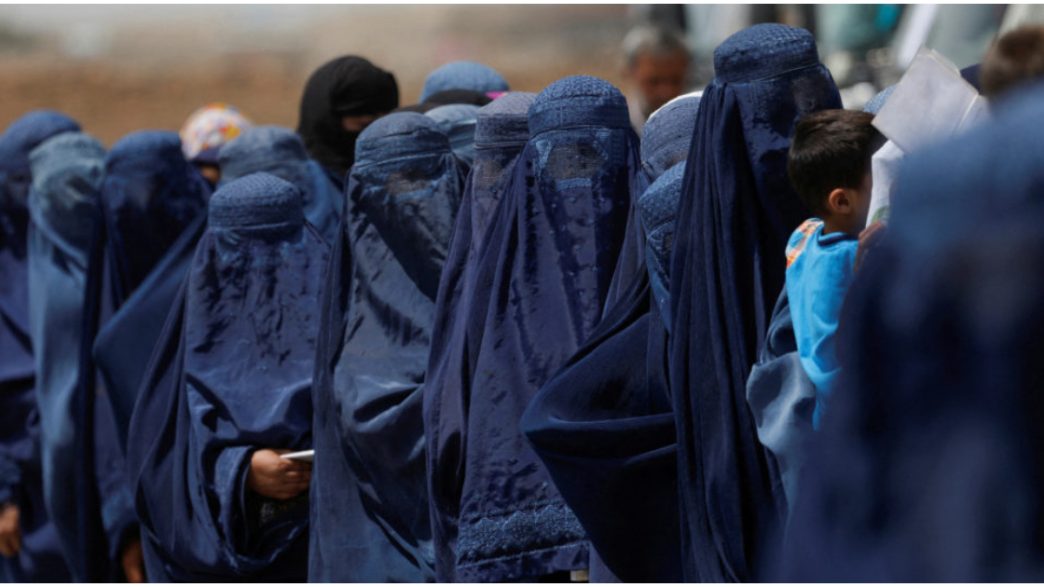
Since May 2026, Taliban authorities in Balkh province, Afghanistan, have directed government officials and healthcare workers to stop using women’s first names in official documents and medical records.
Imagine being told that your name should no longer appear on your medical records, that you cannot attend school, earn a living, visit a park, or even speak loudly in public.
For millions of women in Afghanistan, these are not hypothetical situations but restrictions imposed under Taliban rule. Instead of the names of the women, officials were reportedly instructed to use the generic term ‘Bibi’, while some women were allegedly referred to using degrading terms such as ‘goat’ and ‘cow’. 
The directive, which became widely reported in November, has raised fresh concerns about the erasure of women’s identities and dignity, especially in Afghanistan.
However, this is not an isolated incident. Since returning to power in August 2021, the Taliban have introduced more than 100 decrees affecting women and girls, restricting their access to education, employment, healthcare and public life, according to UN Women.
Dehumanising Orders the Taliban Have Imposed on Women
1. Banning girls from secondary school
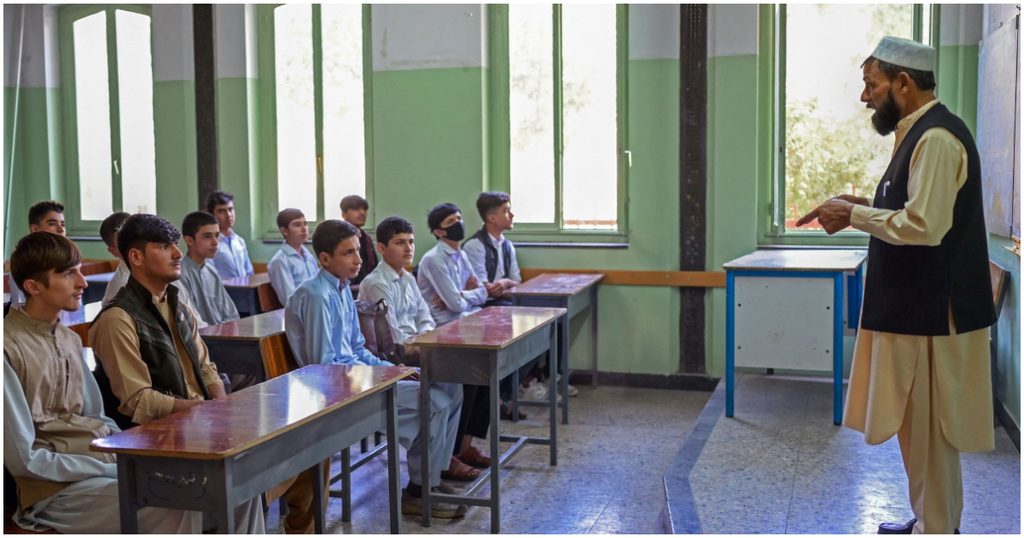
After returning to power in September 2021, the Taliban banned girls from attending secondary schools. Only boys resumed classes while girls were left out of the education system.
The authorities repeatedly promised to reopen schools to girls, but the restrictions remained in place. Hence, millions of Afghan girls have been denied the opportunity to complete their secondary education.
2. Banning women from attending universities and human rights-related courses
In December 2022, the Taliban ordered an indefinite suspension of women’s access to university education.
The directive prevented female students from pursuing degrees in various disciplines, effectively shutting them out of higher education. In September 2025, the authorities also prohibited universities from teaching over 600 books written by women.
According to the BBC, universities were also ordered to stop teaching 18 subjects, including human rights, sexual harassment, and women-focused courses like Gender and Development, The Role of Women in Communication, and Women’s Sociology.
3. The Taliban restricts women from working with NGOs
On December 24, 2022, the Taliban threatened to revoke the operating licence of any national and international non-governmental organisations in Afghanistan if they did not suspend the employment of female workers. This order later extended to women working with the UN in April 2023.
The directive, which came days after banning women from universities, disrupted humanitarian operations in a country where women and children depend heavily on aid. The Taliban stated non-compliance with Islamic dress codes and administrative rules as the reason for the order.
4. Shutting down women’s beauty salons
In July 2023, the Taliban ordered the closure of all women’s beauty salons across Afghanistan.
The decision affected thousands of businesses owned or operated by women, depriving many of their livelihoods. It also eliminated one of the few remaining spaces where women could socialise and access beauty services outside their homes.
5. Banning women from parks, gyms and public baths
Little by little, the Taliban restricted women’s access to recreational spaces. By November 2022, women were prohibited from entering parks, gyms and public baths.
Earlier restrictions had also required women to be accompanied by a male guardian when visiting certain public spaces.
6. Requiring women to travel with male guardians
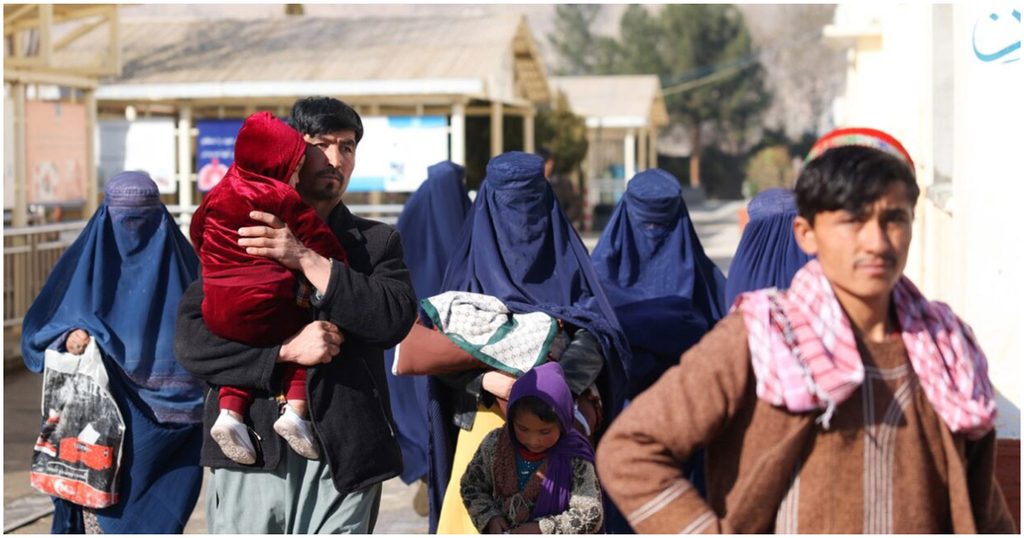
In December 2021, the Taliban banned women from travelling more than 72 kilometres without being accompanied by a close male relative (mahram).
Hence, independent travel by women has become more difficult, especially for women without available male relatives. Women cannot just up and leave.
Later in 2022, the restrictions extended to flights, and in 2024, inspections were intensified by authorities at checkpoints, bus terminals, and public spaces. Defaulters are made to pay fines, face detention, and women are turned away from travel or services.
7. Banning women from speaking and singing in public
In August 2024, the Taliban formally approved its Law on the Propagation of Virtue and Prevention of Vice, which included restrictions on women’s voices in public.
The law prohibits women from singing, reciting aloud or speaking publicly in ways classified as exposing their voices. It also introduced restrictions on women’s appearance and interactions with men.
The restrictions have particularly affected women who work in broadcasting, journalism, and other public-facing professions.
8. The Taliban forces women to cover their faces in public
On May 7, 2022, the Taliban supreme leader, Haibatullah Akhundzada, issued a nationwide decree ordering women to cover their faces in public.
Later, in 2024, the law reinforced strict dress requirements, with women facing detention and other forms of punishment for alleged violations.
In October 2026, the United Nations Assistance Mission in Afghanistan reported that at least 52 women and one girl had been arrested or detained in Kabul and Herat between July and September over alleged dress-code violations.
9. Restricting women’s access to healthcare
In December 2024, the Taliban barred women from attending medical training institutes.
Reports have documented restrictions on male doctors treating female patients, including warnings against examining women without meeting certain conditions, such as the presence of a male guardian or female medical staff.
These restrictions create additional barriers for women seeking medical attention, particularly in emergencies and communities with few female healthcare professionals.
10. Removing women’s legal equality and weakening protection against domestic violence
In 2026, the Taliban introduced further legal changes. According to Human Rights Watch, Decree No. 12 removed equality between men and women before the law. This means that husbands are in a position of legal authority over their wives.
It also narrowed the circumstances in which domestic violence could be prosecuted, recognising it only when it resulted in severe and visible physical injuries.
Another decree, Decree No. 18, made it significantly harder for women to leave marriages while preserving men’s unilateral right to divorce.
SEE ALSO: Emergency Contraceptives: What Women Should Know Before Using Them

About The Author