




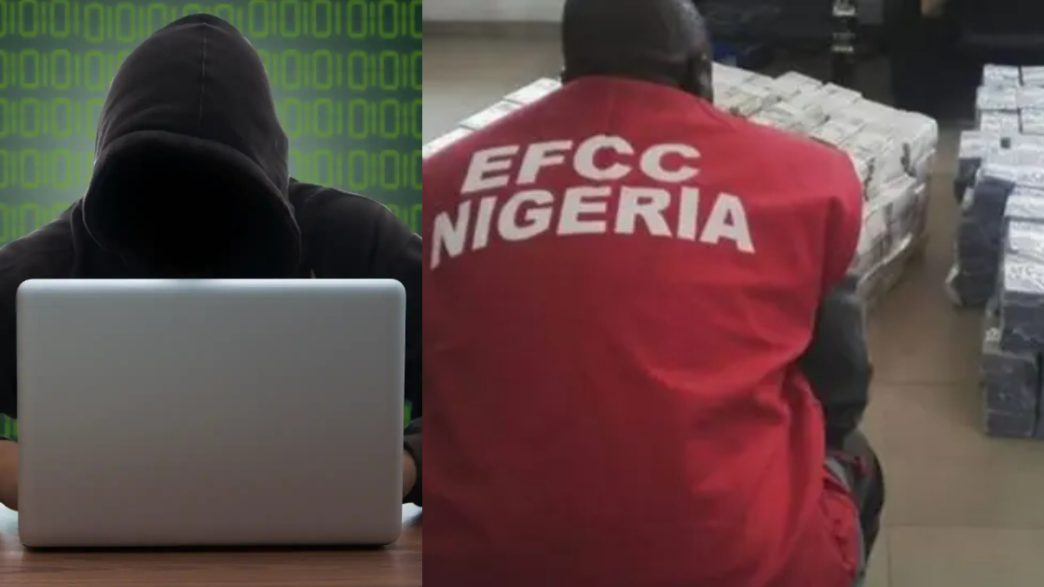
Nine people have been arrested in Nigeria, 53 electronic devices seized and $11 million in potentially freezable funds identified across several countries. Those are the latest figures from the FBI’s Operation Blackout, an international crackdown targeting cybercriminal networks accused of defrauding victims across borders. We know it as Yahoo Yahoo in Nigeria.
This latest crackdown on international cybercrime networks has once again put Nigeria under the spotlight, with the FBI announcing arrests, seized devices and millions of dollars in potentially recoverable funds following a joint operation with Nigerian law enforcement.
FBI Director Kash Patel announced the operation on October 25, thanking Nigerian law enforcement agencies for their cooperation. 
It was another reminder that Yahoo Yahoo in Nigeria has grown far beyond the days when a young man with a laptop and questionable English would email a stranger claiming to be a Nigerian prince with millions to share. The prince may have retired from the email business, but his descendants are clearly doing overtime.
NBG Africa spoke with Dele Oyewale, spokesperson for the Economic and Financial Crimes Commission (EFCC), about the agency’s battle against internet fraud. He declined to comment on Operation Blackout specifically, but his wider assessment of the problem paints a picture of an industry that has become more sophisticated, more dangerous and, unfortunately, more attractive to some young Nigerians.
And no, it is not just about foreigners falling for suspicious emails anymore.
From 419 to Yahoo Yahoo: How the scam started
Before Yahoo Yahoo in Nigeria became a familiar feature of the country’s pop culture, there was 419. The name comes from Section 419 of Nigeria’s Criminal Code, which deals with obtaining property or money through false pretences. Imagine a crime taking its name from the law created to combat it. What audacity!
The scam itself is older than the internet. Fraudsters once relied on letters, telephone calls and fax messages to convince unsuspecting people that they had stumbled upon a golden opportunity. Perhaps there was an inheritance waiting, a business deal worth millions or a wealthy official who desperately needed help moving money out of the country. All the victim had to do was pay a little something upfront. Naturally, the promised fortune never arrived.
Then came email, and Yahoo became one of the popular platforms used to reach potential victims. The name Yahoo Boys stuck.
The most famous version was the so-called Nigerian Prince scam: a stranger claiming to be royalty or a wealthy official who needed help moving millions out of the country. The internet had apparently become a royal palace, and everyone gets an invitation to become rich. All the recipient had to do was pay a small fee first.
Oh, the inherent greed of mankind, the urge to reap where one has not sown, because of course, the promised millions, naturally, never arrive.
The Nigerian Prince became an international joke, but the fraud was no laughing matter for victims. As internet access expanded, scammers moved from mass emails to more targeted schemes, using social media, dating platforms and other digital channels to build relationships and gain trust.
How Yahoo Boys Operate: Pickers, Loaders and Other Players
The popular image of Yahoo Yahoo in Nigeria is usually a young man hunched over a laptop, typing sweet nonsense to someone thousands of kilometres away. But larger fraud operations can involve several people performing different roles.
A picker typically acts as a middleman, receiving money, goods or other proceeds from victims before passing them on to the people behind the scam. A loader, meanwhile, may help move illicit funds through compromised accounts or other channels.
There can also be people who create fake identities, manage communications, provide account details or help convert and move stolen money. In other words, the person chatting up a lonely foreigner may not be the same person collecting the money. These roles help explain why internet fraud can be difficult to trace. Investigators may have to follow several people and transactions across different locations before they reach the organisers.
The methods have also changed. The old Nigerian Prince email has not disappeared, but it now shares the internet with romance scams, impersonation, business email compromise, cryptocurrency fraud and other schemes.
From Nigerian Prince to Romance Scams and Sextortion: Evolution of Internet Fraud in Nigeria
The scammer’s greatest tool of Yahoo Yahoo in Nigeria is often not a laptop but the ability to manipulate human emotions. Romance fraudsters build relationships with victims, sometimes over months, before inventing emergencies or demanding money.
Sextortion takes that manipulation into darker territory. Fraudsters threaten to publish intimate images unless victims pay. Oyewale described the practice bluntly:
“They will now call the lady and say, see your nude. If you don’t send me $2,000, I am going to blow it across on the internet.”
He warned that the consequences can be devastating, including suicide among victims who feel trapped or humiliated. He also claimed that more than 10 Nigerians had been extradited to the United States over sextortion-related cases, with EFCC cooperating with the FBI to identify suspects.
Then there is business email compromise, which is less about romance and more about making serious money disappear from company accounts. Criminals gain access to business email systems or impersonate trusted contacts to divert legitimate payments. Oyewale explained that:
“Fraudsters will hack into the system of some organised businesses, hack into their financial accounts and move money. I mean, real money from their system.”
He listed business email compromise, hacking, sextortion, impersonation and forgery among the threats facing Nigeria, adding:
“We cannot say one aspect of their criminal tendency is deadlier than others; they all pose very terrible risks.”
Yahoo Yahoo is No Longer Just About Foreign Victims
For years, public conversations about Yahoo Boys have often centred on foreigners losing money. But Nigerians are victims too, including individuals, businesses and financial institutions.
Oyewale said the EFCC had noticed criminals using internet fraud networks to facilitate money laundering. He alleged that some politicians were hiding stolen funds in cryptocurrency accounts controlled by cybercriminals.
“There was a certain operation where we discovered about ₦5 billion in the account of the yahoo fraudsters,” he said, questioning how an ordinary internet fraudster could have such a large amount.
He also claimed the EFCC had recovered ₦1.233 trillion and $684 million “this year” from activities linked to Yahoo fraudsters. Those figures, however, require a detailed breakdown from the commission to establish the reporting period and the precise categories of cases covered.
The broader point, though, is that internet fraud is not simply about one scammer tricking a foreign victim into sending gift cards. It can intersect with money laundering, stolen funds and organised financial crime.
SEE ALSO: Wangiri Scams: What Nigerian Phone Users Should Know Before They Call Back
Yahoo Plus and the changing face of internet fraud
As if ordinary Yahoo Yahoo was not complicated enough, some fraudsters have added another ingredient to the business, spirituality.
Enter Yahoo Plus, a term associated with internet fraudsters who reportedly combine online scams with rituals, charms and spiritual consultations. Some believe these practices can attract victims, improve their chances of success or protect them from arrest.
Research into cyber-spiritualism in Nigeria has examined the relationship between internet fraud, spiritual beliefs and the social environment surrounding some cybercriminal groups. It is important, though, not to treat every Yahoo Boy as a participant in such practices. Not every young man with a laptop is consulting a spiritualist before opening his browser.
The culture around internet fraud is also a concern for Oyewale, who believes the promise of quick money has become attractive to some young Nigerians.
“Everybody wants to get rich quickly through the instrumentality of internet fraud,” he said, describing the trend as “a time bomb” for the country’s future.
He added that some young people now dismiss education and hard work in favour of what they see as an easier route to wealth.
How EFCC is Fighting Yahoo Yahoo
The EFCC says it is adapting its investigations as fraudsters move into new technologies and financial channels. Oyewale pointed to staff training, capacity building, improved technology and cooperation with international law enforcement agencies.
He named the FBI, Montréal Police in Canada, Australian Police, the Metropolitan Police in the United Kingdom and Interpol among the commission’s partners.
“I am not going to give away our trade secrets, but all you need to know is that we are ahead of them,” he said.
The international partnerships are important because the people involved in a fraud may be in Nigeria, their victims somewhere in Europe or America, and the money moving through accounts in several other countries. Investigators therefore need to share intelligence, trace transactions and work across jurisdictions to identify suspects and build cases.
Oyewale also said the EFCC was developing capacity to tackle emerging crimes involving cryptocurrency and foreign exchange, alongside more familiar forms of online fraud. In short, the scammers are updating their software, and the commission says it is not exactly sleeping on the job.
EFCC’s Biggest Problem May Be Nigerians
For all the agency’s training and international partnerships, Oyewale believes one major obstacle is public distrust and the reluctance of communities to report suspicious activity.
“These fraudsters are not operating in outer space. It is a neighbourhood thing. People suddenly becoming rich, we know them in our neighbourhood, but we cover them, we don’t report them.”
In other words, the neighbour who suddenly acquires three cars, a mansion and an expensive lifestyle may not be enjoying a miraculous breakthrough. But asking questions, apparently, is where many people draw the line.
He also alleged that some women had formed what he called an “Association of Yahoo mothers”, holding prayer meetings and using spiritual practices to protect their sons involved in internet fraud.
Oyewale’s wider argument is that communities sometimes celebrate sudden wealth without asking how it was acquired. And there is also the common practice of certain young women who only exclusively date Yahoo boys; Pablo’s wives, they call themselves. Pablo being an informal generalized nickname for Yahoo boys.
Oyewale also pointed to the EFCC’s manpower constraints, saying the commission had about 5,000 personnel for a population of roughly 250 million people.
“Tackling this kind of criminality in a population of 250 million people with just 5,000 people is a very heavy task,” he said.
Can Nigeria Move Beyond Yahoo Yahoo Reputation?
The reputational damage is not abstract for Oyewale. He recalled being questioned and frisked unnecessarily by an immigration officer at Heathrow Airport while travelling to Cambridge. Even after checking his documents, the officer continued asking about his reason for visiting until Oyewale identified himself as an EFCC spokesperson.
It is an awkward experience, particularly when your job involves fighting the very crime that has made people suspicious of your nationality. Such experiences, though, have become part of the price ordinary Nigerians pay for the activities of internet fraudsters.
“Every indication, every accusation is always towards Nigeria,” he said, warning that the country’s reputation also affects businesses and foreign investment.
The fight, then, cannot belong to the EFCC alone. It requires law enforcement agencies, financial institutions, technology companies, families and communities to take internet fraud seriously. Oyewale’s final appeal was simple:
“If you see something, say something and EFCC will do something.”
The Nigerian Prince may have become a global punchline, but the consequences of Yahoo Yahoo are no joke. And until Nigerians stop treating unexplained wealth like a national achievement, the prince may never run out of subjects to recruit.
For a country that has spent decades trying to shake off the Nigerian Prince joke, that may be a sensible place to start.
READ ALSO: Concurrent vs Consecutive Sentence: Why ’39 Years in Jail’ Can Mean Five Years in Nigeria

About The Author