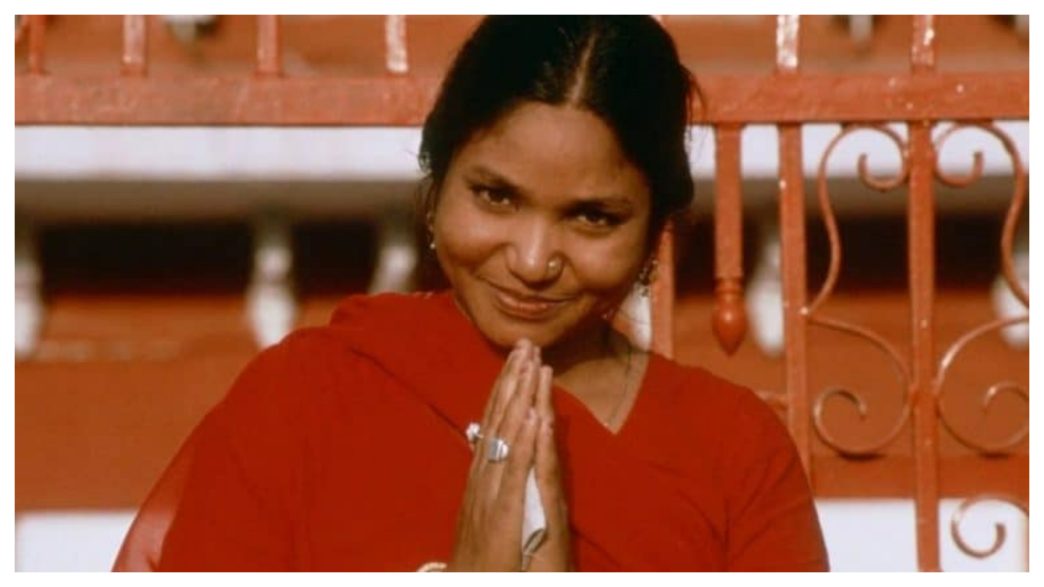
There are lives that defy easy categorisation: too violent for hagiography, too tragic for condemnation, too remarkable for either. Phoolan Devi was one of those lives. Depending on who tells the story, she was a cold-blooded killer, a revolutionary, a survivor, a goddess, or a woman who refused to disappear. She was probably all of these at different times, in different ways, depending on the day.
What is certain is that her story begins not with a gun but with a land dispute and a family on the losing side of it.
A Childhood Built on Injustice
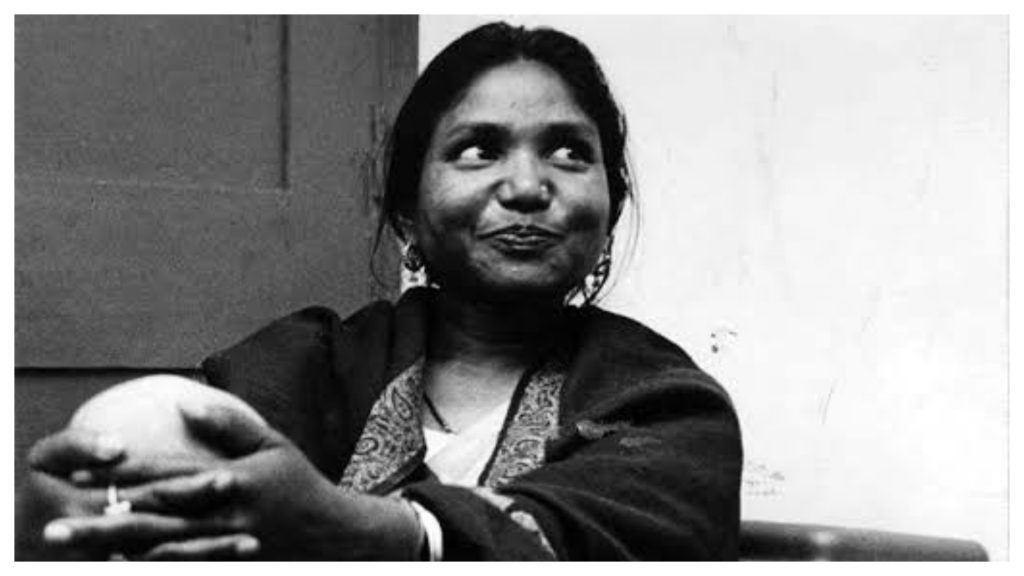
According to The Collector, Phoolan Devi was born in 1963 to a poor Mallah family, a low-caste community of traditional fishermen in Gorha Ka Purwa, Uttar Pradesh. Her village was dominated by Thakurs, a wealthy and powerful community of upper-caste landowners. 
Her first act of rebellion came before she was a teenager. At the age of ten, she confronted an uncle and cousin who had stolen her father’s land by falsifying village land records. It was a futile gesture against people with far more power, but it established something about her character that would define the rest of her life. She wasn’t the kind of person who accepted injustice silently, even when silence was the safer option.
Her arranged marriage at age 11 was to a man three times her age. A year later, having been brutalised by him, she returned home, an act her family considered disgraceful. But she had nowhere safe to go. The village that should have protected her offered little, and the caste system that governed every aspect of rural life in Uttar Pradesh ensured that a low-caste woman who had left her husband occupied the very bottom of the social order.
Kidnapped, Violated, Transformed
Her life took a dramatic turn when she was abducted by a gang of dacoits operating in the Chambal ravines. Following the death of gang leader Vikram Mallah, who reportedly treated her with respect, Phoolan Devi faced further brutal abuse at the hands of upper-caste gang members.
The village of Behmai became the site of the most defining and most disputed episode of her story. Upper-caste Thakur men took her there and subjected her to repeated gang rape over a period of weeks. The two men primarily responsible (known as Sri Ram and Lala Ram) were former members of her own gang who had murdered Vikram Mallah.
She escaped and built a new gang. But she didn’t forget.
The Behmai Massacre
On February 14, 1981, Phoolan Devi and her gang arrived at Behmai. She demanded that her tormentors Sri Ram and Lala Ram be produced. The two men couldn’t be found. She rounded up all the young men in the village and lined them up before a well. They were marched to the river. At a green embankment and were ordered to kneel. There was a burst of gunfire, and 22 men lay dead.
The Behmai massacre provoked outrage across the country. The chief minister of Uttar Pradesh resigned in the wake of the killings. A massive police manhunt was launched, which failed to locate Phoolan. Stories about her began to circulate: that the manhunt failed because poor people across the region were sheltering her, that she robbed upper-caste families and distributed them to the lower castes, and that she was a reincarnation of the goddess Durga.
Whether any of that was true, the legend had taken on a life of its own.
The Surrender
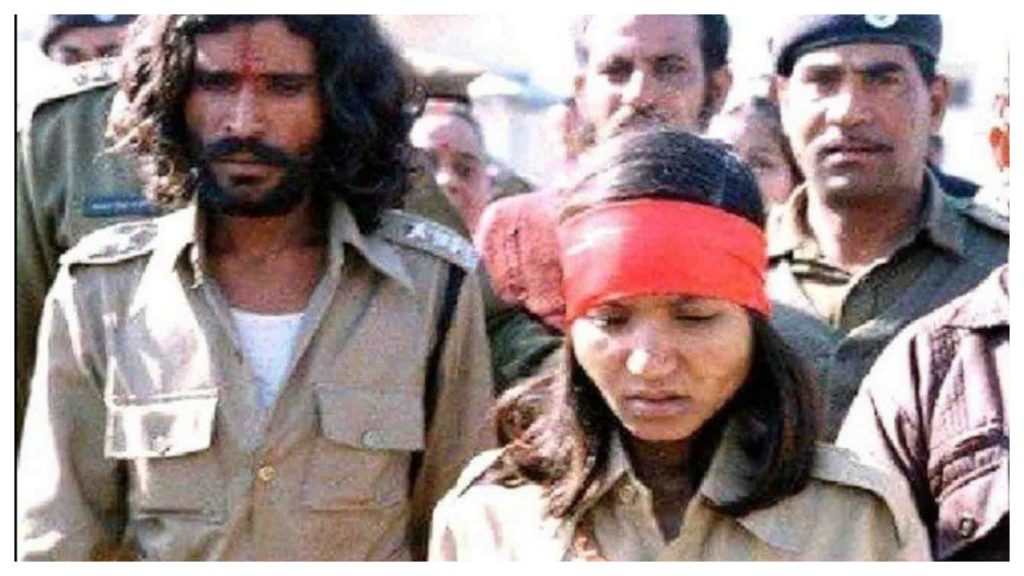
On a chilly February day in 1983, a 20-year-old woman walked out of the forested ravines of the Chambal River valley and handed over her gun. She bowed to images of Gandhi and the goddess Durga and surrendered to the chief minister and chief of police of Madhya Pradesh. As Roads and Kingdoms reported, the cheering crowd of 8,000 people gathered that day knew Phoolan Devi as a hero, a bandit, a murderer, and a goddess long before they saw her in the flesh.
By the time she walked out, she was wanted on 22 counts of murder and another 26 counts of kidnapping and looting.
She was charged with as many as 48 crimes in total. Her trial was delayed for eleven years, during which time she remained in prison as an undertrial. During this period, she underwent a hysterectomy. The hospital doctor reportedly joked that “we don’t want Phoolan Devi breeding more Phoolan Devis.” The casual cruelty of that statement (spoken about a woman who had already survived more violence than most people encounter in a lifetime) says something about the environment she was navigating even while incarcerated.
She was finally released on parole in 1994 after intercession by Vishambhar Prasad Nishad, the leader of the Nishadha community. The Government of Uttar Pradesh, led by Mulayam Singh Yadav, withdrew all cases against her.
SEE ALSO: Who’s Ariket? The Businesses and Lifestyle of Lagos Socialite Sentenced for Trafficking Cocaine
From Outlaw to Parliament
What happened next is the part of Phoolan Devi’s story that even her harshest critics struggle to fully diminish.
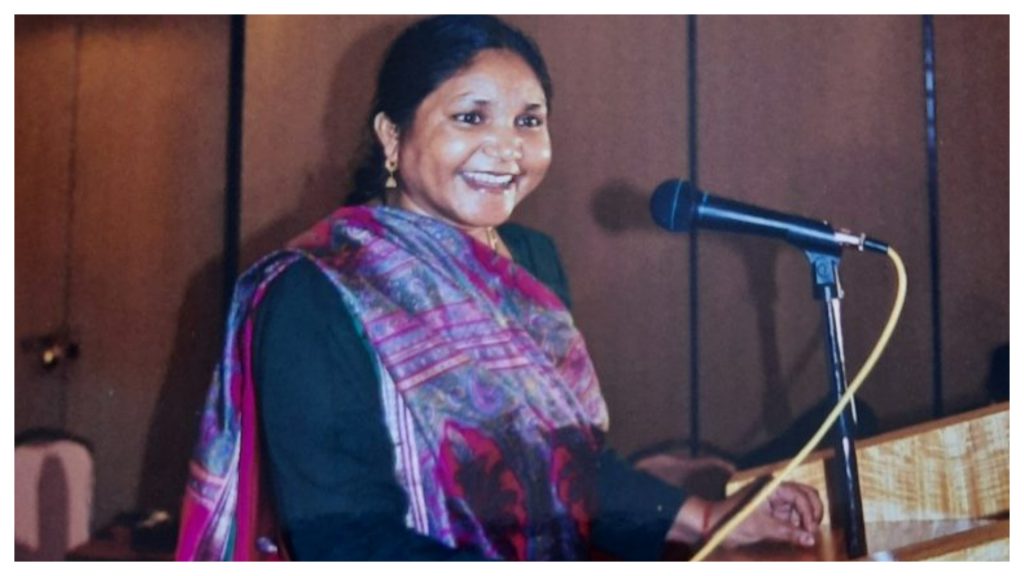
On 12 May 1996, she won a seat in the Indian parliament with a landslide majority of 37,000. She had no formal education and was the first low-caste woman to hold that distinction. She served as the Member of Parliament for Mirzapur. She lost her seat in 1998 but was re-elected the following year.
In parliament, she became a voice for millions of women, fighting for their rights and recognition. She called for women to defend themselves against men’s violence and for political action. She participated in the UN conference on the situation of women in New York in June 2000.
The woman the Indian state had hunted across the Chambal ravines was now voting on legislation in the same building as the men who had sent police after her.
The Film She Rejected
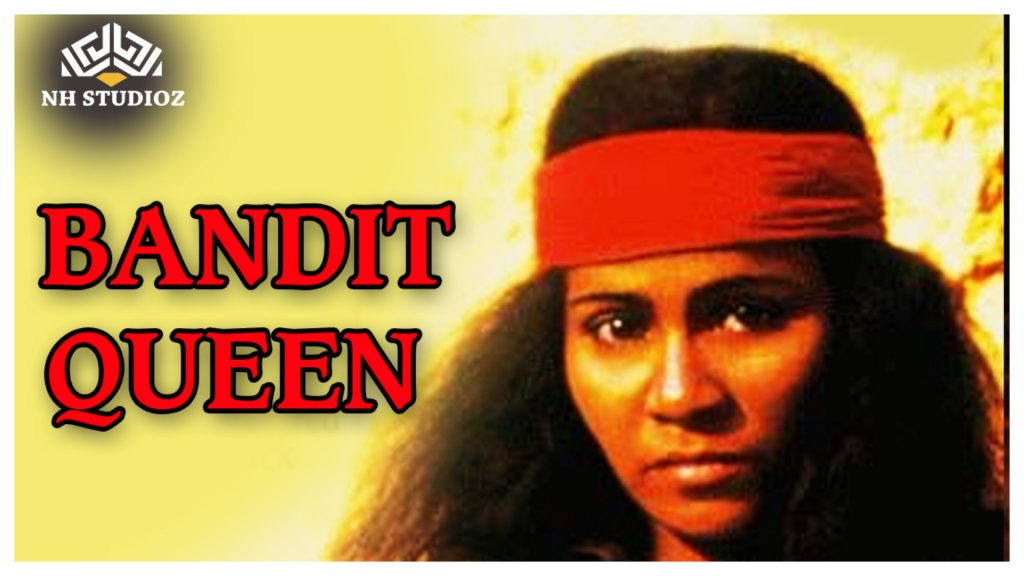
Phoolan Devi’s worldwide fame grew after the release of the controversial 1994 film Bandit Queen, directed by Shekhar Kapur. The film was praised internationally and screened at Cannes. But Phoolan attempted to block its release.
She was particularly enraged at the graphicness of the gang-rape scene, arguing that the film was “further raping a woman who had already been raped. ” Feminist writer Arundhati Roy supported her, writing a sharp critique arguing that the film reduced a complex woman to a series of violations rather than a person who took conscious decisions about her own life.
Talking to The Atlantic, Devi expressed outrage that she was depicted “as a snivelling woman, always in tears, who never took a conscious decision in her life” and that her exploits showed her “simply being raped over and over again. ” She didn’t recognise herself in it. And the world largely didn’t notice the distinction.
SEE ALSO: Amarjeet Sada: The World’s Youngest Known Serial Killer
Assassination
On 25 July 2001, Phoolan Devi was assassinated outside her house. She was shot dead by Sher Singh Rana, who was convicted of the murder in 2014. She was 37 years old and serving her second term in parliament at the time of her death.
Her cardinal sin, in the end, was to challenge the hierarchy of the Indian caste system. But it cost her her life.
What She Left Behind
Phoolan Devi does not fit neatly into any category the world has prepared for her. She killed people, but she was also a victim of violence so sustained and institutional that the country that prosecuted her had no mechanism to prosecute the men who did it to her first.
Even today, she remains a deeply polarising figure. Her life continues to raise uncomfortable questions about caste inequality, violence against women, poverty, and the failures of social and legal systems.

About The Author