



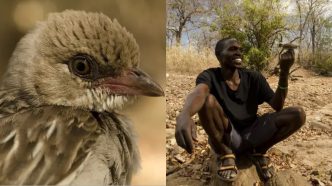
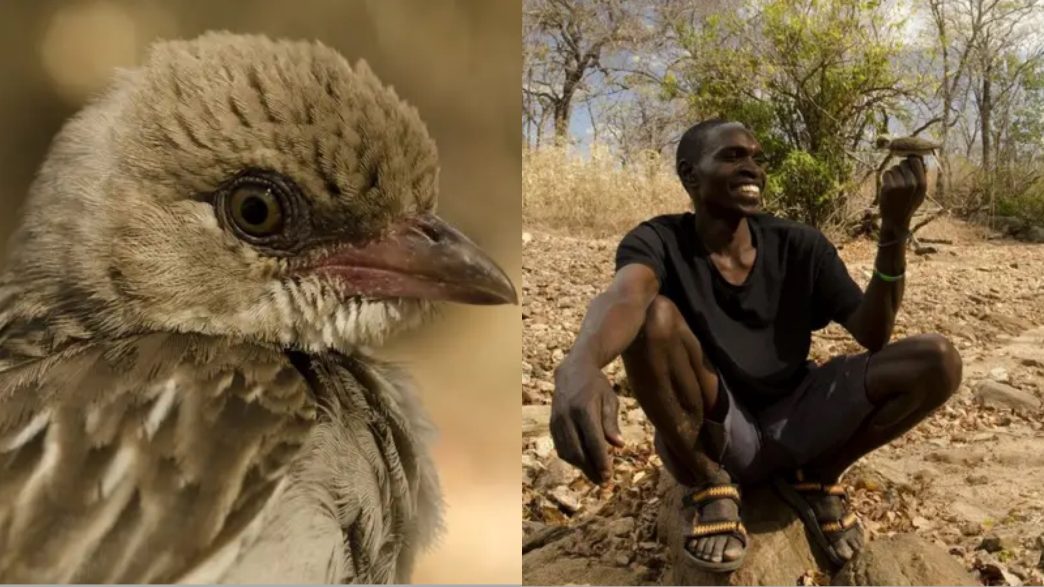
Time and time again, Africa proves why the Legend of Tarzan chose the continent. Aside from being home to some of the rarest, most legendary, and most eye-catching animals in the world, some Africans can also talk to birds.
Welcome to Mozambique, the African country where people talk to birds to help them hunt.
ALSO READ: Gorillas, Elephants and 10 Other Animals Facing Extinction in Africa 
How Do These Hunters Talk to Birds and Why?
In northern Mozambique, hunters use special calls to communicate with wild birds that help them find honey. While it sounds almost like a scene from a nature documentary, this rare human-animal partnership works. They are honey-hunters who use specific vocal calls to coordinate with wild birds known as greater honeyguides.
This culture is mostly common in the Niassa Special Reserve and surrounding communities. These wild birds (a.k.a. greater honeyguides or indicator indicator) are small brown birds with a mysterious ability to find bee nests hidden high in trees.
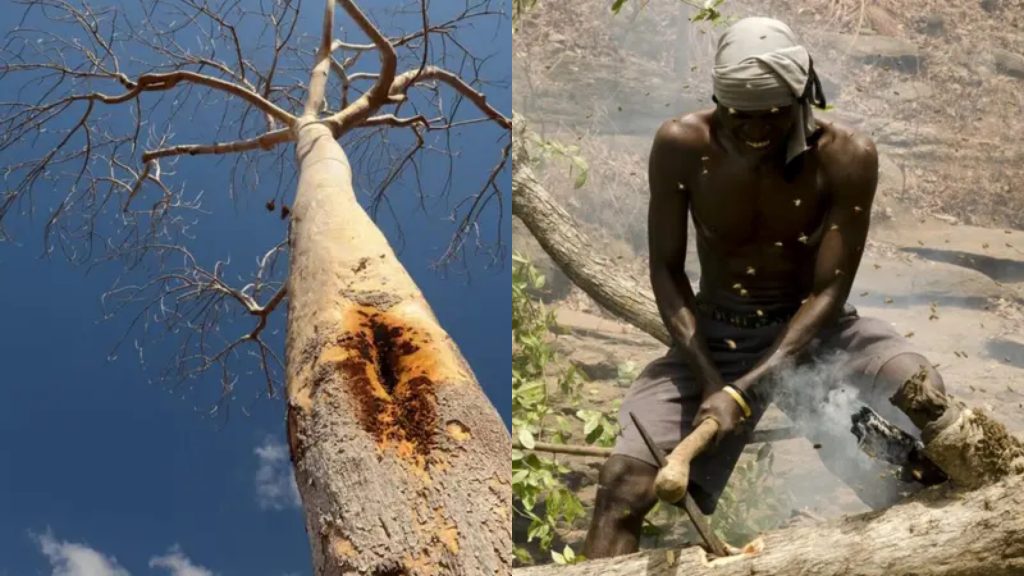
Local honey hunters call out to these birds with distinctive sounds. The honeyguides respond by flying ahead and leading them straight to the hives. Once they find the hive, subdue the bees and harvest honey, these hunters leave beeswax and grubs behind for the birds to eat. Everyone wins.
The honey-hunters’ calls aren’t random noises. Scientists have found that these calls vary across different local communities, almost like dialects. These “recruitment” and “coordination” calls can vary even between neighbouring villages. It’s similar to how human languages work.
So, these wild birds aren’t just responding to sound. They’ve learnt to recognise the particular local signals and cooperate when they hear them.
Recent research confirms that these honey-hunters in northern Mozambique use at least three different types of calls. These calls could either be trills, grunts, or sometimes whistles. They help them attract and stay in sync with the birds during the hunt.
A Nature Wonder
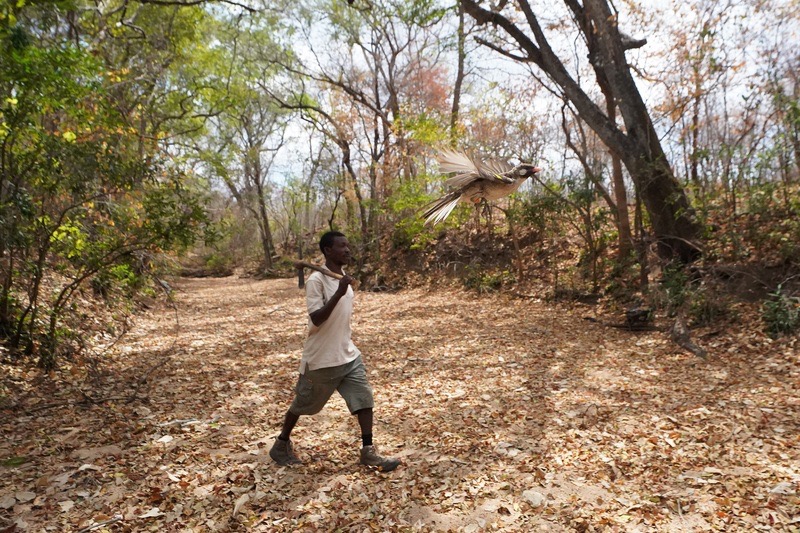
Talking to birds for these Mozambicans goes beyond survival. They talk to birds as a culturally rich practice that reflects them being more in touch with their surroundings.
Research also confirms that such a human-animal relationship is rare. In fact, there are only a few documented cases worldwide where humans talk to wild birds or any wild animals so effectively to achieve a goal.
In a world where wildlife interaction is often competitive or extractive, the Mozambique honey-hunters and their feathered guides are a hopeful and inspiring example.
About The Author