




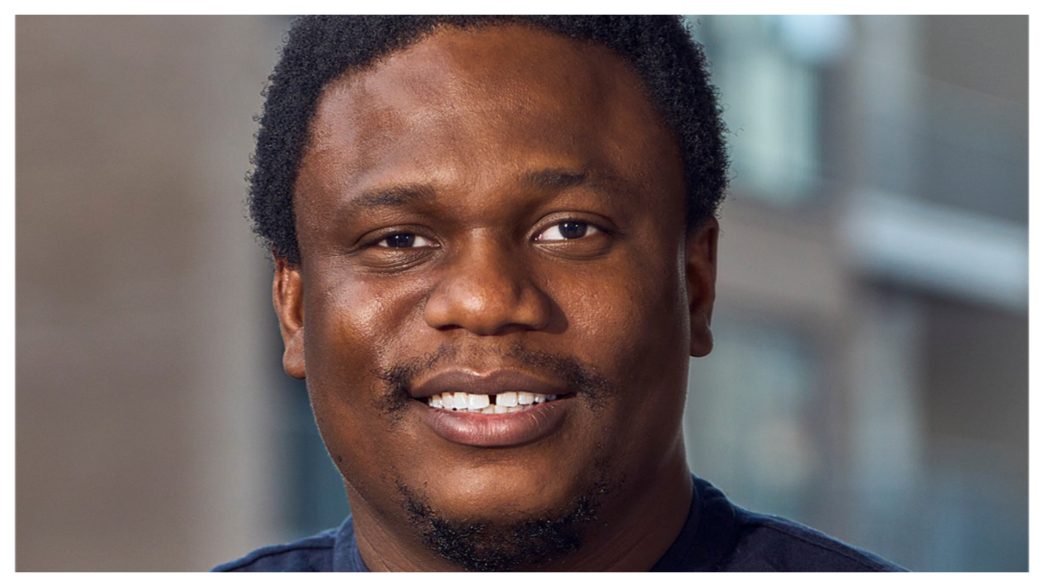
There is a particular kind of discomfort that comes when someone you respect like the CEO of Moniepoint says something you were not ready to hear.
That is what happened at The Platform Nigeria 2026 on Workers’ Day, when Tosin Eniolorunda, the man who built Moniepoint into one of Africa’s most valuable fintech companies, stood on a Channels Television stage and said, plainly, that he stopped hiring Nigerians.
Not because he wanted to. Because he felt he had no choice. 
What He Actually Said
Speaking in the people section of his address, Eniolorunda did not dress it up.
“We have probably 500 vacancies, and we’re struggling to find people to fill those roles. In 2024 we made a decision to hire only Nigerians, but we stopped by 2025. Not only could we not find people in the quantity and quality we needed them, but the few people that we found were not up to the global standard of quality that we needed.”
He continued, “We were competing globally, not locally. My biggest competitors are from China. I’m competing globally; I have to make sure that I have world-class people working in the organisation. And here I am looking for Nigerians that couldn’t meet the requirements.”
Then came the part that has lingered in the room since he said it.
“I blame our education system. I used to think that Nigerians were bright, and I think we need to do something about the general IQ of Nigerians from going lower. I am really worried. I used to feel like intelligence is equally distributed around the world, but I am realising now that the environment shapes a lot of things. We need to create good role models.”
Why This Matters More Than the Controversy
The immediate reaction from a lot of people will be defensiveness. The “IQ” comment especially will attract pushback, and some of that pushback will be fair, because the framing is blunt in ways that invite misreading. But stripping away the language and sitting with what he is actually describing, the picture is genuinely alarming.
This is not a foreign critic dismissing Nigerian talent from a distance. This is the CEO of a company that processes trillions of naira in monthly transactions, a company built entirely in Nigeria, by Nigerians, for Nigerian businesses. A man who specifically tried to hire Nigerians first made it a deliberate 2024 policy and then abandoned it a year later because the results were not there.
That is not prejudice. That is a data point.
It connects to something the numbers have been trying to tell us for years: Nigerian universities produce hundreds of thousands of graduates annually. Yet companies at the frontier, the ones competing with Chinese fintech firms, with global payment giants, and with the best engineering teams in the world, keep saying the same thing privately that Eniolorunda said publicly on Thursday. The gap between what Nigerian education produces and what a globally competitive business needs has been widening, quietly, for a long time.

What People in Tech Are Saying
We spoke to an IT person at First Bank; here’s what he said:
“Using the internet to learn tech skills simply isn’t enough, especially when you are looking for targeted, specialised knowledge. It is one thing to know what a tool does and how it works in theory; it is another thing entirely to enter a professional environment and be asked to execute. In practice, you quickly realise that implementations in different environments come with unique challenges and resolutions.
Because we don’t build many things from scratch here, that deep, integrated knowledge is rare. The companies know they can’t afford to hire those who have actually attained it, so they often just pretend that expertise doesn’t exist. Experts do exist, but not in large numbers, and you have to pay a premium for the few who are available—something most companies are unwilling to do. They want experienced labour, but they want it cheap.”
Is there anything Moniepoint does that a person in a bank’s tech department wouldn’t be able to do? Not technically. However, if they aren’t familiar with that specific environment, it will take them a while to pick it up. It wouldn’t be a long learning curve, but companies usually want someone who can hit the ground running immediately.
Look, if you pay well, people will improve. Imagine looking for a skill that took someone over a decade to develop, only to offer them ₦2 million. That same skill is likely priced at $180,000 yearly on the global market. When local companies refuse to pay well, what is the motivation for anyone to become a “global talent”?
Personally, I won’t break my back for any company that isn’t paying enough for me to afford an international vacation.”
Where the Blame Actually Sits
Eniolorunda pointed at the education system, and he is not wrong to. But the education system does not exist in isolation. It sits inside a broader environment that has been making serious intellectual development harder for decades.
Nutrition affects cognitive development. Consistent electricity affects studying. Safety affects concentration. Teacher quality affects everything. A child trying to read by phone torchlight after a NEPA cut, in a school with 80 students per classroom, facing a WAEC curriculum that rewards memorisation over critical thinking, is not operating on a level playing field with someone being trained to build systems that scale.
Eniolorunda himself said: “The environment shapes a lot of things.” That sentence contains the entire diagnosis. The problem is not Nigerian people. The problem is what Nigerian people are being asked to develop inside.
Moniepoint itself has been trying to address this. Earlier this year, the company ran its DreamDevs bootcamp, selecting 20 engineers from over 9,000 applicants for intensive hands-on training, specifically because industry-ready talent is so hard to find. That is a company building its own pipeline because the existing one is insufficient. It should not have to. But it is doing it anyway.
SEE ALSO: Peter Obi Has Left Another Party — Can You Blame Him?
What Actually Needs to Happen
The solutions are not mysterious. They are just expensive, slow, and politically inconvenient, which is why they keep getting announced and never executed.
Curriculum reform that prioritises problem-solving over rote learning. Investment in teacher training that is sustained, not ceremonial. Private sector partnerships with universities that create live industry exposure before graduation. More programmes like DreamDevs, scaled across sectors. And honestly, better internet, better power, better nutrition in schools. The basics that make advanced things possible.
Role models matter too, as Eniolorunda noted. A generation that grows up seeing the fastest path to wealth as fraud, politics, or entertainment will orient itself accordingly. That is not a moral failing. That is a rational response to the incentives the environment has set. Change the incentives and the environment, and the orientation changes with it.
On the flip side, Tosin Eniolorunda is a Nigerian talent who built his company with Nigerian talent, grew it into a billion-dollar institution with Nigerian talent, and then stood on a national stage and said that Nigerian talent is no longer meeting his standard.
The question is not whether he was right to say it. The question is whether Nigeria will still be having this exact conversation at The Platform 2036 or whether someone, somewhere, will finally decide to do something about it before then.

About The Author