



You wake up before dawn, beat traffic, work till evening, battle traffic on your way back home, and wait “patiently” for payday. Then the alert comes, and before you say NBG Africa, the money is gone. Rent, food, transport, data. Rinse. Repeat.
This isn’t poor money management. It’s Nigeria’s earning reality.
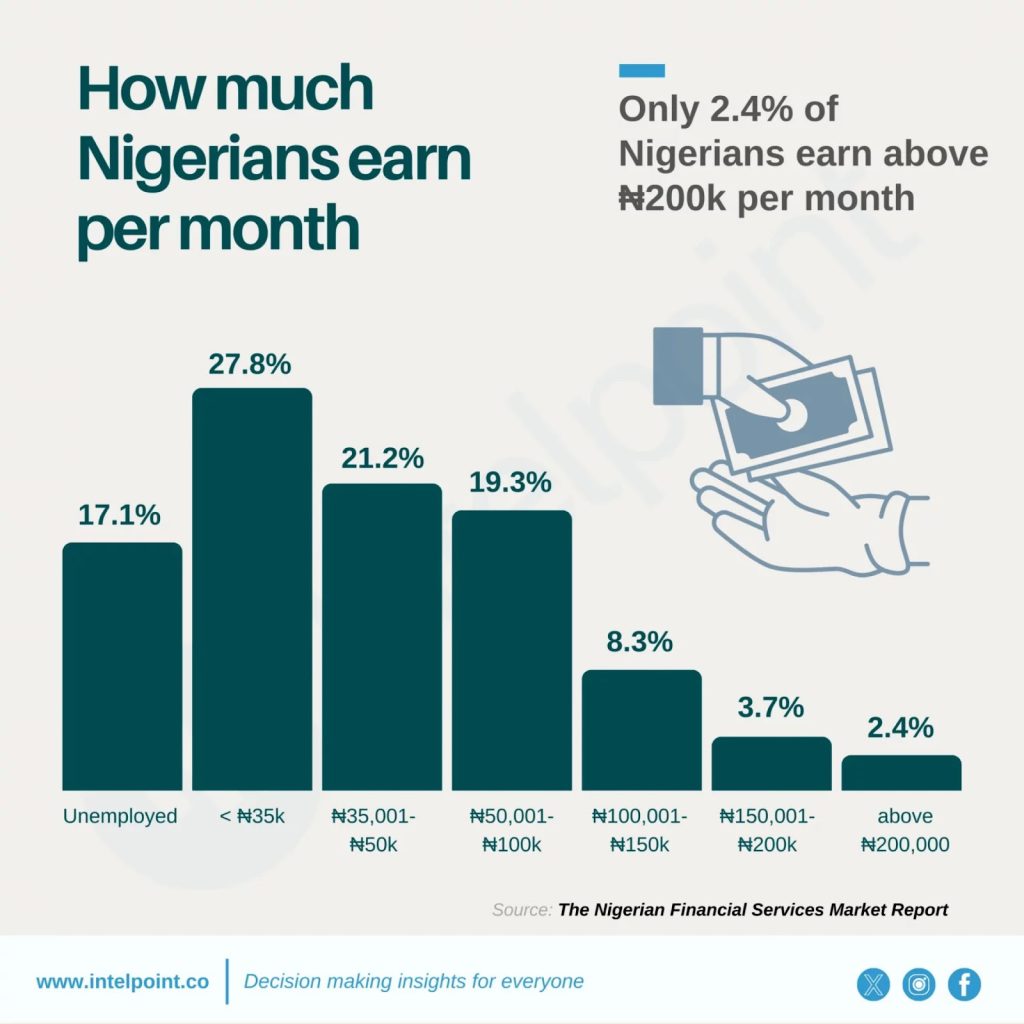
Here’s some data for you about both the formal and informal sector, according to reports from the Nigerian Financial Services Market (NFSM): 
- It’s startling that 17.1% of Nigerians are unemployed, monthly 27.8% earn ₦35,000, 21.2% earn between ₦35,000 to ₦50,000, 19.3% earn ₦50,000 to 100,000, 8.3% earn ₦100,000 to ₦150,000 and 3.7% earn ₦150,000 to ₦200,000.
- Only 2.4% of Nigerians working in formal and informal employment earn above ₦200,000 monthly.
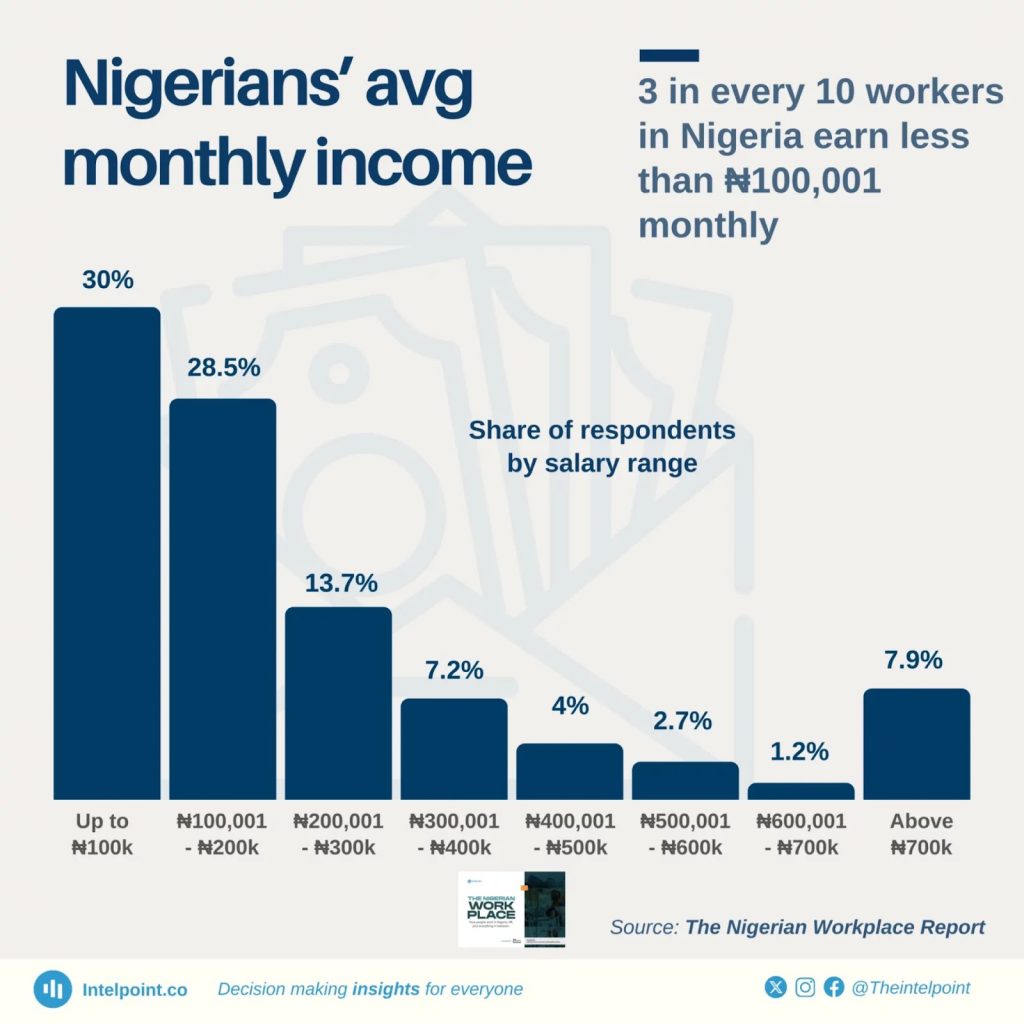
As for the formal sector, that’s salaried government regulated employment, the Nigeria Workplace reports show that:
- Well over 30% of Nigeria’s workforce earns up to ₦100,000 and 28.5% earn between ₦100,000 to ₦200,000 monthly
- While 3 in every 10 workers in Nigeria’s formal sector earn less than ₦100,001 monthly.
These numbers express the tough earning situation in Nigeria, and this piece explains why this is the case.
ALSO READ: How to Make Money on YouTube Without a Camera, Voice, or Face
What is the Average Salary in Nigeria?
The uncomfortable truth the recent data shows is that most Nigerians earn far less than it costs to live.
It’s worrying when only 2.4% of both informal and formal working Nigerians earn above ₦200,000 monthly. In cities like Lagos or Abuja, ₦50,000 can disappear into transport costs alone. That’s long before you add rent, food, healthcare, or school fees.
Take Mariam (not real name), a superstore cleaner who lives on the outskirts of Lagos. She claims her monthly pay is barely ₦30,000. By the second week, she is already borrowing for transport, stretching meals, and hoping nothing breaks or no one falls ill. Saving is not part of the plan. She just wants to survive till the next payday.
Why Do Only 2.4% of Nigeria Workers Earn Above ₦200,000 Monthly?
- Nigerians Work Hard But Earn Little
Low pay in Nigeria has little to do with effort. The country has only just increased its national minimum wage to ₦70,000 in 2024. This explains why many Nigerians work long hours across multiple jobs and still struggle.
According to Mr. Arthur Alfred (not real name), a private school teacher in Ogun State, Nigeria, he earns under ₦80,000 monthly. This figure is despite him teaching full-time and marking scripts or preparing lesson notes late into the night.
Another security guard, Mr Sunday (not real name), stationed to work in a shopping mall in Abuja, earns ₦40,000 through a third-party contractor. Worse still, he laments that he gets paid only whenever the contractor remembers.
These stories confirm that, in Nigeria, employment exists, but financial security rarely does.
- The Informal Economy Problem
Over 85% of Nigeria’s workforce operates in the informal sector, according to the International Labour Organisation (ILO). These are traders, okada riders, hairdressers, cleaners, artisans, and labourers. They earn daily income without contracts, health insurance, pensions, or job security.
For them, no work today often means no food tomorrow. Plus, one illness or price hike can push their entire household into instant debt.
ALSO READ: PalmPay, Opay, and now Paystack Microfinance Bank – What’s In The Deal?
The ‘Average Salary in Nigeria’ Headache Affects Everyone
When the average salary in Nigeria cannot sustain the least standard of living, families cut meals, children drop out of school, and small businesses lose customers. Over time, this pattern suffocates the economy. It’s only a matter of time before it gets to everyone.
Why The 2.4% is Too Small
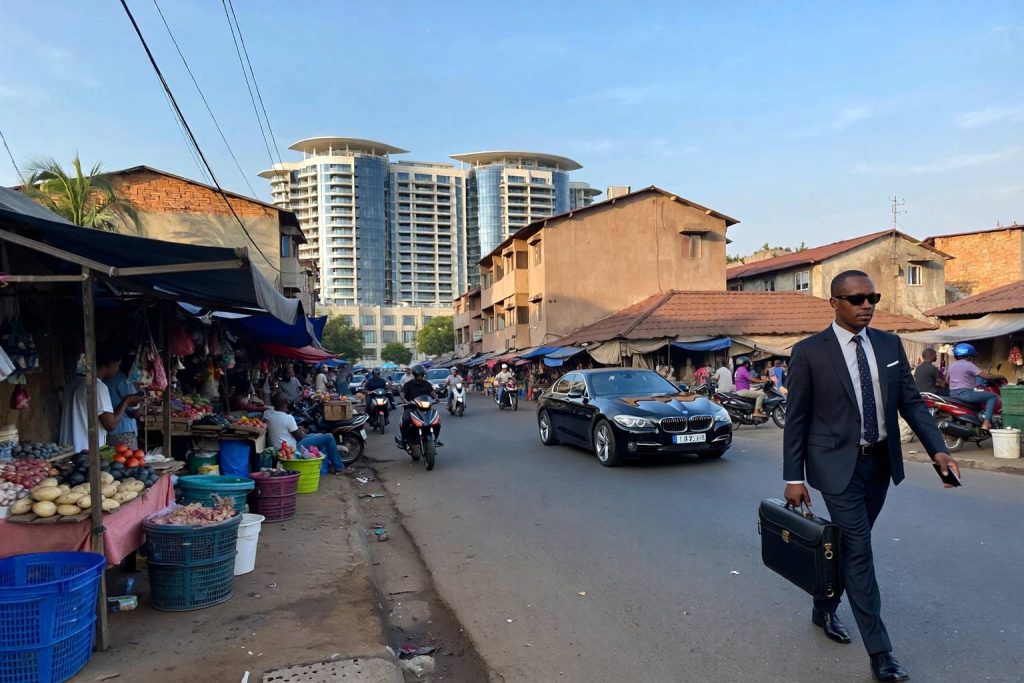
Nigeria’s income ladder is steep and unbalanced. At the top are executives, oil and gas professionals, tech specialists, consultants, and senior public servants. They earn ₦200,000 to ₦500,000 or more monthly. Below them is a middle class that is quickly disappearing. They earn from ₦70,000 to ₦150,000. Beneath that sits the majority, earning under ₦50,000 in an entire month.
With such little disposable income, there’s little to spend. The question now is not whether people are working hard enough. But why does hard work, all of a sudden, rarely pay?
This question naturally leads to the next one. If only 2.4% are earning above ₦200,000, who exactly are these few people, what do they do, and how can you get there?
All of these in the next part of the series. Watch out!

About The Author