





It’s official. From January 1, 2026, your National Identification Number (NIN) will automatically double as your Tax Identification Number (TIN) if you’re an individual, while your CAC registration number becomes your tax ID if you run a registered business.
No extra registration, no new cards, no stress. At least, that’s the official pitch and a small win for us.
According to the Federal Inland Revenue Service (FIRS), this move is meant to simplify tax compliance, eliminate multiple IDs, reduce tax evasion, and generally make Nigeria’s tax system behave like it lives in the 21st century. 
But this announcement didn’t land in a vacuum. For weeks, Nigerians have been arguing about the legitimacy of the tax reforms and whether the laws were quietly altered before the public caught on. So when the government confirmed that NIN and CAC numbers would formally become Tax IDs, it didn’t calm the noise. It amplified it.
What was meant to sound like efficiency now feels, to many, like another policy rushed ahead of public trust.
READ ALSO: How to Get Your Tax Identification Number (TIN) in Nigeria: All the Steps and What You Must Know
NIN and CAC as Tax ID in Nigeria: What Exactly Is Changing?
Under the new Nigeria Tax Administration Act (NTAA), a Tax ID will be required for certain transactions, including operating bank accounts. FIRS insists this isn’t new. It has technically existed since the Finance Act of 2019. What’s new is that it’s now being enforced with technology and integration.
Cue panic.
Will the Government Start Deducting Tax Directly From My Account?
Short answer: No, not automatically.
Long answer: Banks will be required to request a Tax ID (now your NIN) for taxable individuals, but this does not mean the government can randomly deduct money from your account or tax every single transfer you receive.
The tax system still works on declared income. Salary earners remain under the Pay As You Earn (PAYE) system. Businesses still file returns. Freelancers and remote workers are expected to self-report income. This is exactly where the anxiety lives because Nigerians know how this movie usually goes.
READ ALSO: Nigeria New Tax Laws Explained: What Changes in 2026 and Why It Matters
Then Came the Controversy

Before we had to understand the NIN-as-TIN situation, a huge drama unfolded.
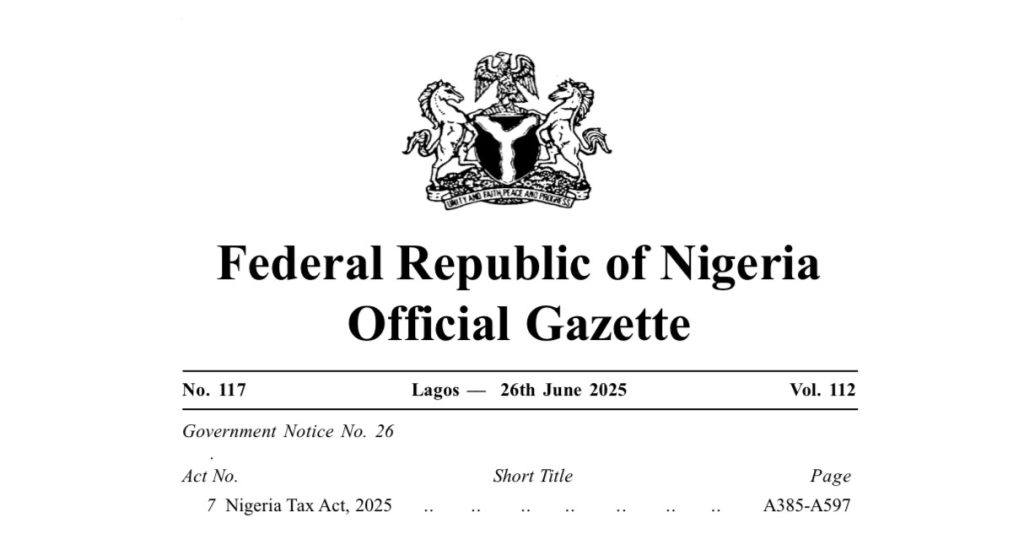
Lawmakers alleged that the gazetted versions of the tax reform laws contained provisions they never approved. We’re talking about serious claims like expanded enforcement powers, property seizure without court orders, and even a supposed requirement to pay 20% of disputed tax upfront before you’re allowed to complain.
Naturally, Nigerians saw the screenshots and did what they do best: panic, tweet, panic some more.
Civil society groups, the Nigerian Bar Association, Atiku Abubakar, Peter Obi, and half of Twitter called for the laws to be suspended.
Oyedele’s Response: “Let’s Calm Down”

Enter Taiwo Oyedele, Chairman of the Presidential Fiscal Policy and Tax Reforms Committee, who went on national television to say, essentially, that everyone should relax.
According to him, the real problem is that the officially certified harmonised bill passed by the National Assembly is not publicly available. Without that document, comparing drafts, committee reports, and gazettes is like arguing over whose WhatsApp forwarded message is more authentic.
He also dismissed claims about the controversial 20% provision, saying it existed in an earlier draft but does not appear in the final gazetted law.
Why Nigerians Are Still Side-Eyeing the Whole Thing
According to an unofficial quote: “When officials spend more time telling people not to worry than explaining what’s actually written in the law, Nigerians will worry harder.” History has trained us that way.
Yes, the idea of using NIN and CAC as tax IDs relieves us. Yes, Nigeria needs tax reform. But transparency matters, especially when laws affect bank accounts, livelihoods, and survival.
Closing Thoughts
From 2026, your NIN and CAC numbers will serve as your tax identity. That part is clear. What Nigerians want now is reassurance that efficiency won’t turn into intimidation, and that reform won’t quietly grow extra clauses after midnight.
Until then, expect questions. Clearly, when the government says “don’t worry,” Nigerians have learned to check the fine print.
At its core, this isn’t just a tax reform conversation. It’s a trust conversation. Nigerians are not rejecting structure or accountability. They are reacting to uncertainty, poor communication, and a long history of policy execution gaps.
Until the government clearly explains how income is defined, how deductions work, and what protections are in place against misuse, the controversy will persist. NIN and CAC as Tax ID may be settled policy on paper, but in the public mind, the argument is far from over.

About The Author