


Imagine holding a cup of coffee, picking up your phone and opening a door with one hand. Now imagine having an extra thumb to make these tasks easier. Researchers are exploring this possibility through human augmentation, a field that uses technology to extend human abilities. It sounds like science fiction, but researchers are finding ways to make it a reality.
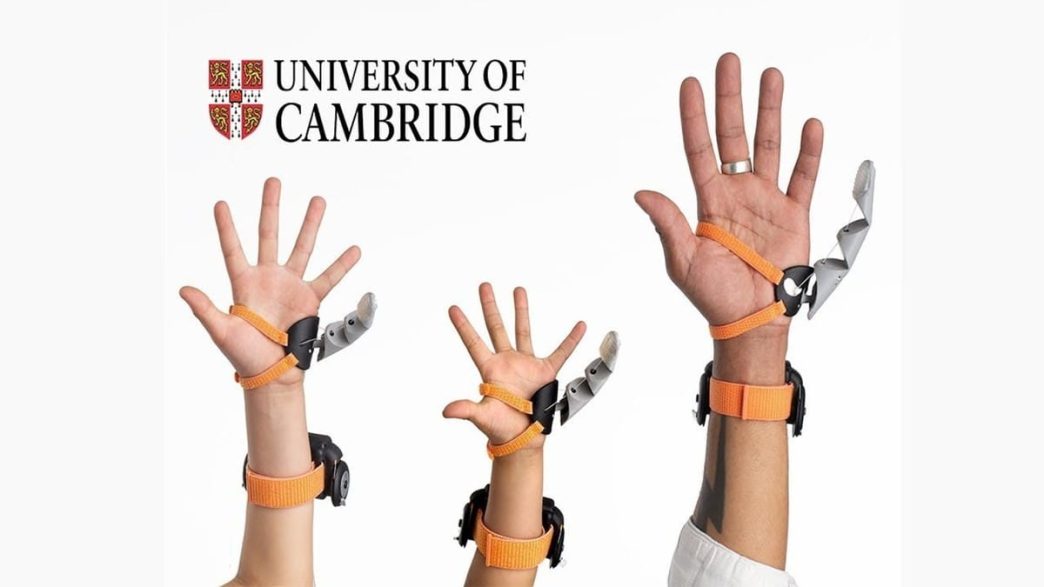
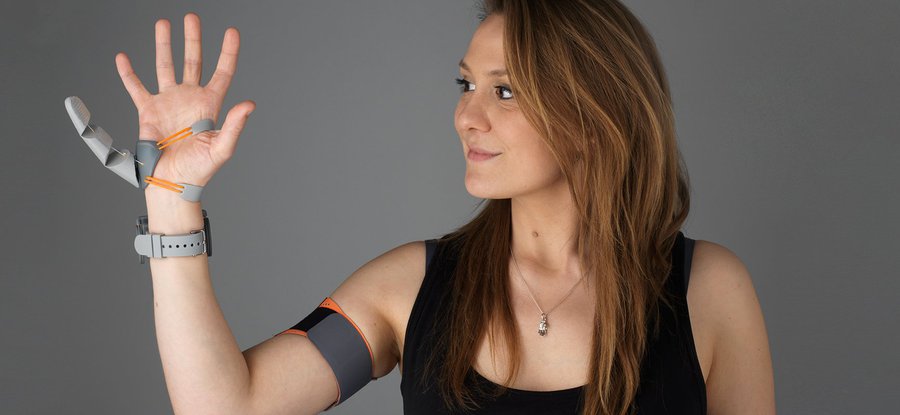
At the University of Cambridge in the United Kingdom, researchers have explored the potential of a wearable robotic device known as the Third Thumb. Developed by designer Dani Clode, the device challenges conventional ideas about the limits of the human body.
However, the bigger story is not simply about having an extra thumb. It is about how technology could extend our physical abilities and change how we live, work and interact with our environment. 
How Does Human Augmentation Work Through Third Thumb?
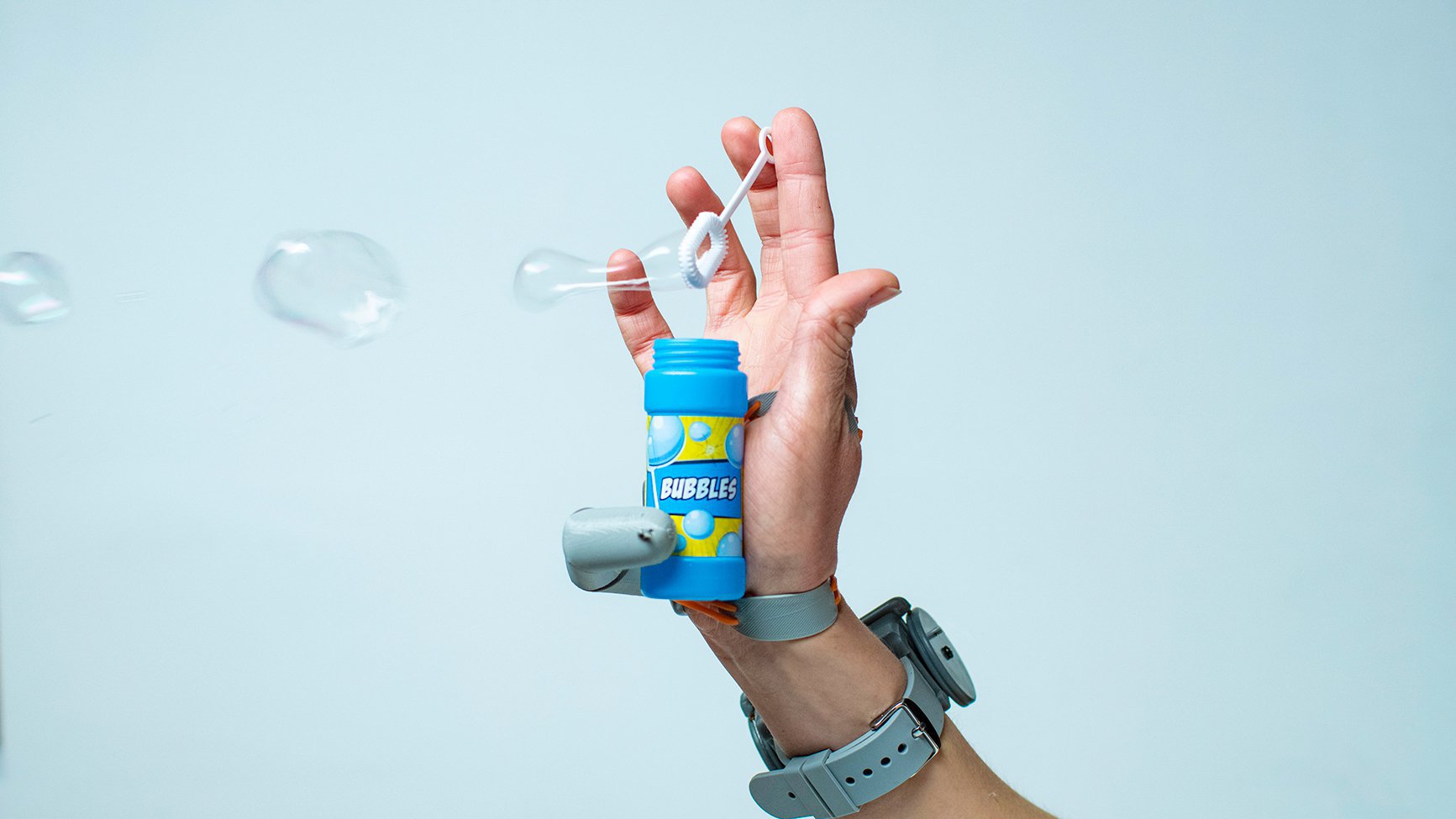
Unlike a conventional prosthetic that replaces a missing body part, the Third Thumb adds a new capability to the hand.
The device sits on the opposite side of the palm from the natural thumb, near the little finger. Motors power its movements, while pressure sensors beneath the wearer’s big toes control it.
According to the University of Cambridge‘s research team, pressing one toe moves the robotic thumb across the hand. Pressing the other moves it towards the fingers. This allows users to control the extra digit with their feet while performing other tasks with their natural fingers.
The idea is fascinating because it challenges the assumption that our hands must remain limited to the digits we were born with. More importantly, the technology raises questions about how easily people can learn to coordinate their natural body parts with an artificial addition.
What Does the Research Reveal?
In 2022, researchers demonstrated the Third Thumb to members of the public at the Royal Society Summer Science Exhibition. The findings appeared in the journal Science Robotics in May 2024.
Over five days, researchers tested 596 participants aged between three and 96. Almost everyone could operate the device, while 98 per cent successfully manipulated objects with it within their first minute of use.
The study also highlighted the importance of inclusive design. Even an impressive device must work comfortably for people with different physical characteristics and abilities.
Nevertheless, the findings show that participants could use the device under test conditions. They do not prove that people can use it widely in everyday life.
The research forms part of a growing field known as human augmentation, which explores how technology can extend people’s physical or cognitive abilities beyond their natural limits.
READ ALSO: China’s Robot Olympics: Why the World is Watching Humanoid Machines
Beyond Laboratory: How Could This Change Work, Daily Life?
The potential applications of wearable robotics are intriguing.
Consider a worker assembling a product who needs to hold several components at once. A craftsperson might also need to handle delicate materials with precision. Additional robotic digits could eventually help people perform such tasks. However, researchers still need to demonstrate these benefits in real working environments.
Furthermore, human augmentation could create new possibilities for people living with disabilities. Depending on their needs, assistive technologies could offer alternative ways to grasp objects and interact with their surroundings. They might also help people carry out activities they would otherwise find difficult.
However, we must distinguish augmentation from rehabilitation and conventional prosthetics. The Third Thumb aims to extend hand function rather than replace a missing body part. Researchers would need to assess its suitability for specific medical or disability-related needs.
The technology also has limitations. Users must learn to coordinate their movements, while the device needs to fit comfortably and respond reliably. Furthermore, cost, maintenance, accessibility and safety will determine whether these innovations can move beyond research settings.
ALSO SEE: How Silas Adekunle Became the Highest Paid Robotics Engineer in the World
What Does Human Augmentation Mean for Africa?
For African countries, the conversation about human augmentation must go beyond the excitement of scientific discovery.
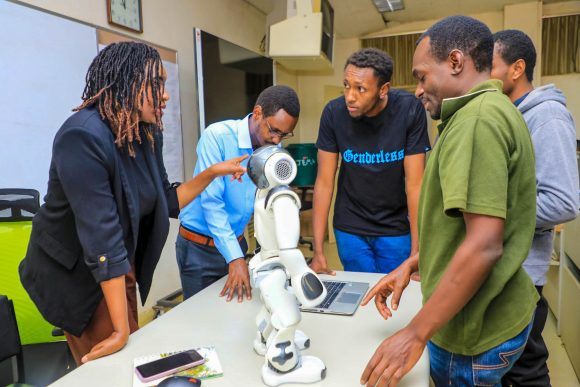
Across the continent, technology features in discussions about healthcare, education, industrial development and employment. Wearable robotics could eventually contribute to these areas. However, the benefits will depend on local needs, infrastructure, affordability and technical expertise.
For instance, could African engineers and designers adapt these technologies to address practical challenges in manufacturing, specialist training or assistive technology? What would they need to develop, maintain and distribute such devices locally?
These questions deserve exploration, but they are not proof that the technology already delivers these outcomes.
Equally important is affordability. If advanced wearable devices remain prohibitively expensive, only a small group of users may benefit. Inclusive research and development must therefore consider two questions: who can operate these devices, and who can afford to access them?
Africa’s role in this emerging field need not stop at adopting technologies developed elsewhere. Local researchers, universities and innovators could develop ideas that reflect the continent’s own priorities and circumstances.
The Future of Human Augmentation: How Far Can We Go?
The Third Thumb offers a fascinating glimpse into the future. Technology may eventually help people do more than replace lost abilities. It could also help them develop new ones.
Yet, as these innovations advance, society must consider safety, privacy and accessibility. We must also examine the boundaries between human ability and machine assistance.
A device that works in a controlled experiment may not prove useful in everyday life. It must also be affordable and dependable.
For now, the robotic thumb remains a research-driven example of human augmentation. Its significance goes beyond the idea that everyone will soon need an extra digit. Instead, it shows how designers and scientists are exploring new relationships between the human body and technology.
Ultimately, the future of wearable robotics will depend on more than what engineers can build. It will also depend on how thoughtfully they design these innovations and who gets to benefit from them.
Perhaps the most important question is no longer how much our bodies can do on their own. Instead, it is how responsibly we can use technology to expand those possibilities.
READ MORE: Redeemer’s Health Village: Why Robotic Surgery Could Be Better Than Conventional Procedure

About The Author