


African traditional designs and patterns are among the world’s richest visual languages.
In recent years, both luxury labels and major global fashion houses have drawn from this heritage, elevating it onto international runways and high-end wardrobes.
However, many times, luxury brands that have drawn inspiration from African textiles, patterns and motifs. They have done so without clear benefit-sharing or acknowledgement. Here are some luxury fashion pieces inspired by African designs: 
Louis Vuitton and the Maasai Shuka
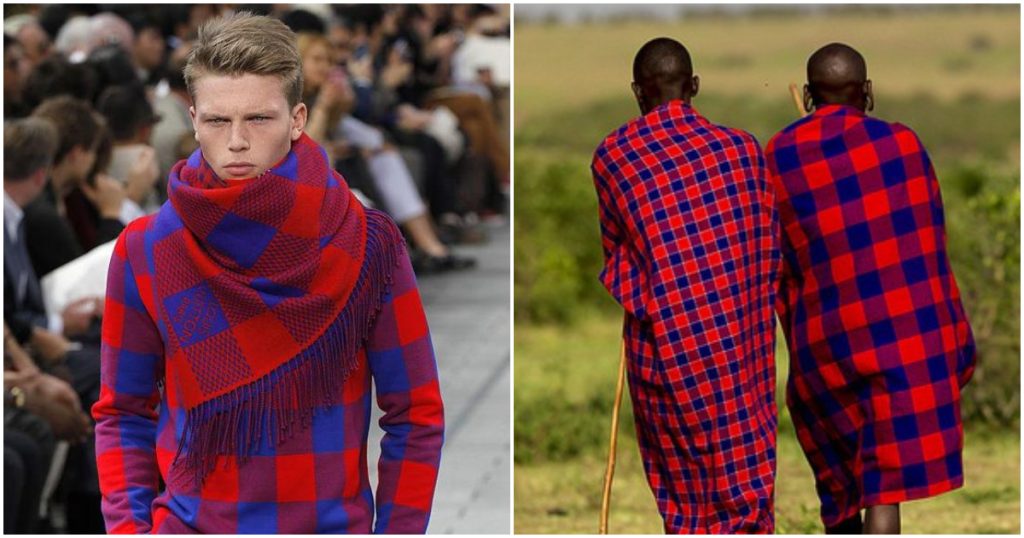
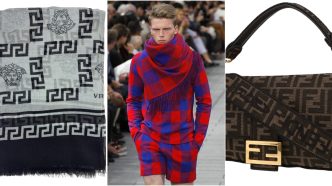
In 2012, Louis Vuitton had models walk down the Paris runway in red-and-blue checked pieces that closely mirrored the Shuka. The Shuka is an iconic traditional clothing of the Maasai people of Kenya and Tanzania.
Kim Jones (who grew up in Kenya) designed the collection and framed the reference through travel, safari imagery, and the photographer Peter Beard.
The pattern appeared on shirts, scarves, shorts, and other pieces, however, the brand presented the work as artistic inspiration without formal acknowledgment or benefit-sharing.
This forced the formation of the Maasai Intellectual Property Initiative (MIPI), created to challenge companies referring to or copying the signature Maasai style without a licensing agreement.
Louis Vuitton and the Basotho Blanket from Lesotho
SEE ALSO: 13-Year-Old With 168 IQ Set to Begin Master’s Programme at NYU
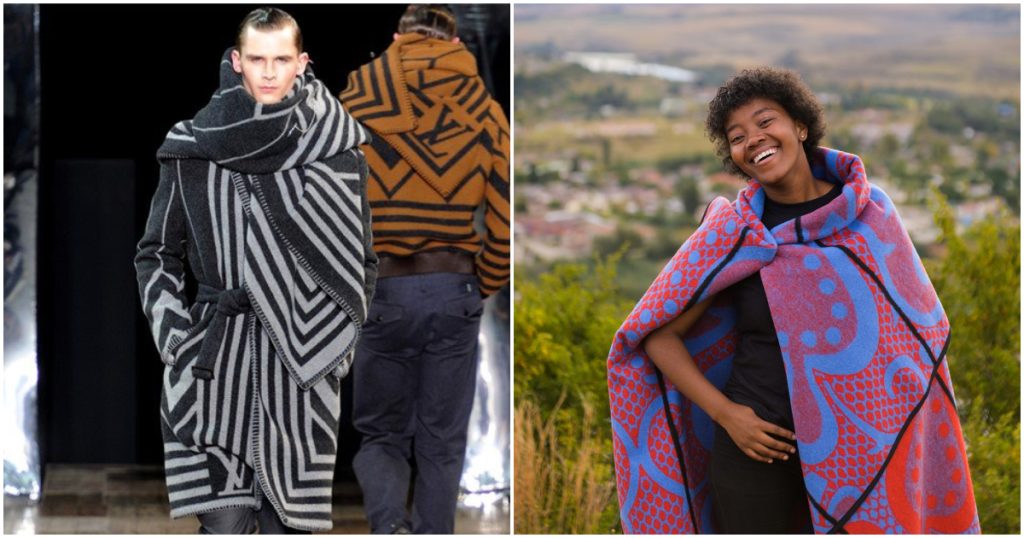
In its 2017 men’s collection, Louis Vuitton released silk shirts and cashmere throws under the “Basotho Plaid” name.
The designs closely mirrored traditional Basotho blankets from Lesotho. The collection particularly had the Seanamarena-style motifs featuring maize cobs, geometric elements, and the distinctive yellow “wearing stripes.”
Authentic Basotho blankets, which carry deep ceremonial and cultural meaning, typically retailed for around R1,000 or less. The Louis Vuitton’s versions, however, carried price tags of about R33,000.
According to the Web Archive, that didn’t stop sales. The pieces sold out rapidly in Johannesburg and Cape Town stores in South Africa.
Local designers and commentators in South Africa and Lesotho largely received the collection as cultural appropriation rather than appreciation.
Critics, like designer Maria McCloy, described it as “outright theft.” She noted that the Basotho community and Lesotho were neither consulted, credited, nor involved in any partnership or benefit-sharing.
Louis Vuitton presented the work simply as abstract African-blanket inspiration without formal acknowledgment of Lesotho origins.
Valentino Spring/Summer Collection 2016
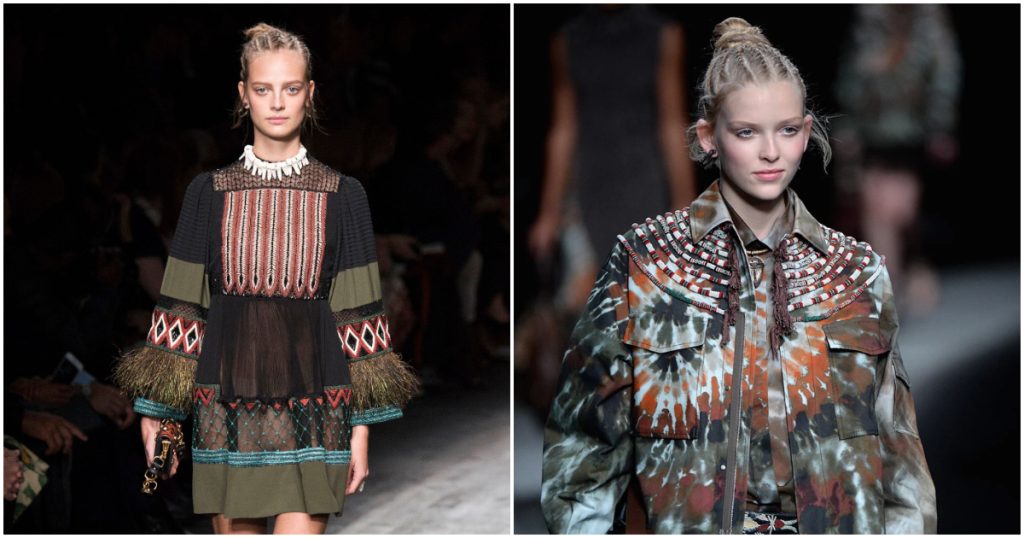
Valentino’s Spring/Summer 2016 ready-to-wear collection, designed by then-creative directors Maria Grazia Chiuri and Pierpaolo Piccioli, drew heavily on African visual references.
Valentino described it as inspired by “wild, tribal Africa” and labelled the work “primitive, tribal, spiritual, yet regal.” The looks featured beading, feathers, raffia-like textures, bone-inspired jewelry, animal and geometric prints, and models (the large majority white) wearing cornrows and dreadlocks.
Many praised the intricate craftsmanship and elegance of the clothes. Much more criticism focused on cultural appropriation and stereotyping. The reduction of an entire continent to vague “tribal” tropes, the scarcity of Black models on the runway, and the absence of meaningful collaboration with or credit to African designers or communities.
In defence, the designers later framed the collection as an exploration of tolerance, cultural mixing, and the visibility of African migrants in Italy.
No specific African ethnic groups, artisans, or traditions were formally credited or partnered with in the way that would have distinguished it from the Maasai or Basotho cases.
Versace and Cameroon’s Foumban (Bamum) Designs
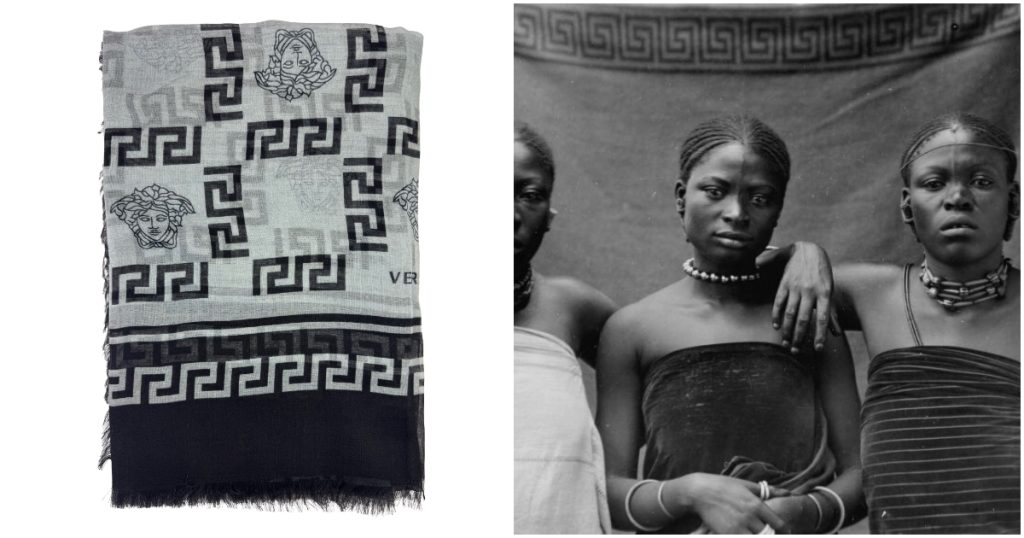
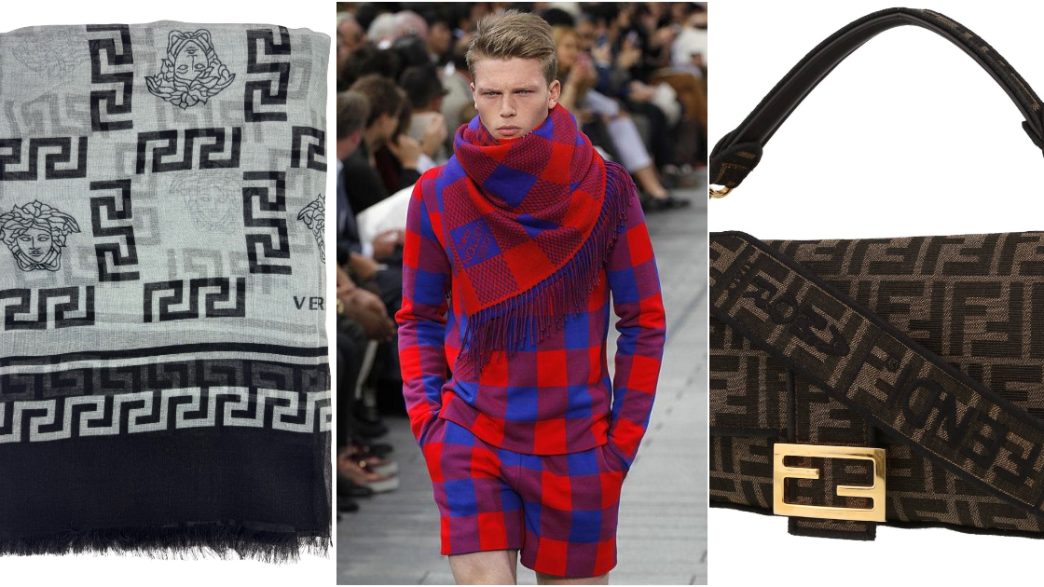
Versace (founded in 1978) has always had a signature use of bold geometric, labyrinthine, and repetitive key-like patterns. This patterns have repeatedly drawn comparisons to traditional designs from Foumban. Foumban is the historic capital of the Bamum kingdom in Cameroon’s Grassfields region.
There have been continual discussions online, and in African fashion forums, placing images of Bamum textiles, wood carvings, and fabric patterns (some documented as early as a 1909 photograph from Foumban) next to Versace scarves, prints, and motifs.
Commentators note the visual similarities in geometric keys, interlocking lines, and rhythmic symbols. They argue that the resemblances are not merely references made to generic “classical” or Greco-Roman often cited by the brand.
SEE ALSO: Fave: Female Artists Face Harsher Scrutiny Than Men in Nigeria’s Music Industry
Fendi and Kuba Patterns
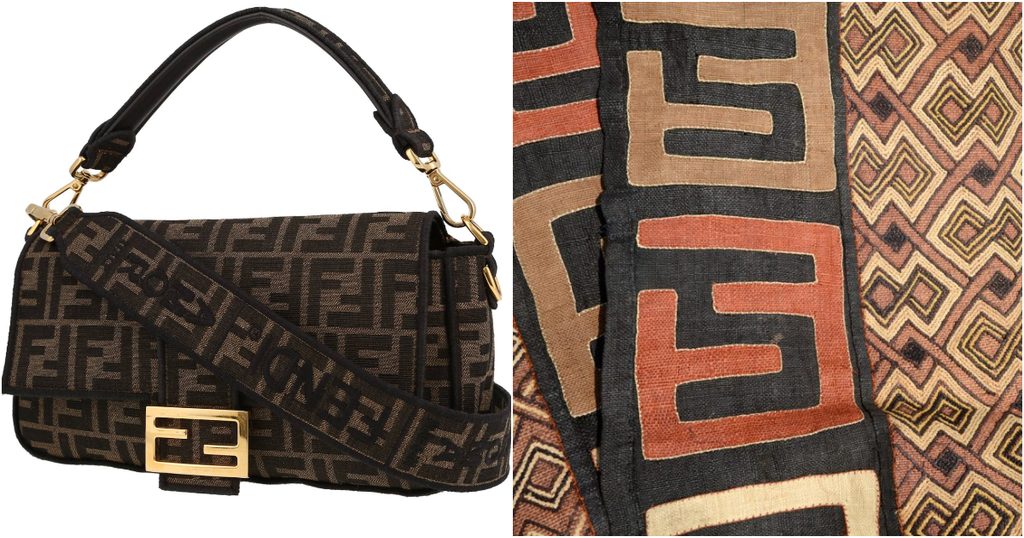
Unlike the clearly dated Maasai, Basotho, or Valentino cases, Fendi’s connection to West and Central African patterns is different.
For Fendi, intricate geometric raffia textiles of the Kuba people of the Democratic Republic of Congo raises recurring questions. This question are usually about some of the brand’s prints. The fashion house’s double-F monogram logo, created by Karl Lagerfeld in 1965 as “Fun Fur,” isn’t left out of the design comparisons either.
When the Kuba and Bamum textiles are put side-by-side with Fendi monogrammed pieces, commentators in African fashion forums argue that the similarities cannot be just coincidence.

About The Author