




In many Nigerian workplaces, respect is not always defined by an employee handbook. It is often taught at home.
You greet an older person properly. You use their title. You do not casually call someone much older than you by their first name, especially when they are also your superior.
But the workplace can teach something different. Some organisations encourage employees to use first names, regardless of age or position. The aim is often to create a more open environment and reduce unnecessary hierarchy. 
So what happens when an employee follows that workplace culture but meets a senior person who expects traditional Nigerian respect?
A recent exchange involving Tony Elumelu and a UBA graduate trainee has brought that question into public view.
When “Tony” Became “Mr Elumelu”
During the graduation ceremony of UBA’s Graduate Management Accelerated Programme on August 20, a trainee began her interaction with Elumelu by saying, “Good morning, Tony.”
Elumelu initially appeared to think she had said “Toyin.” When she clarified that she had called him Tony, he stopped her and asked her to address him as “Mr Elumelu” or “TOE.”
He also said he did not subscribe to that kind of “Oyinbo life.” The trainee corrected herself and continued with her speech. The exchange lasted only a few seconds but the reaction lasted much longer.
Some Nigerians saw it as a simple lesson in respect. To them, calling an older executive by his first name, particularly in a formal setting, crossed a line. Others saw the trainee differently.
A woman identified as Precious, who said she had previously worked at UBA, argued online that first-name usage formed part of the bank’s workplace culture. Her account suggested that the trainee may have followed what she had been taught rather than deliberately showing disrespect.
If it reflected a written rule or an organisational practice, it points to a bigger problem. Employees cannot be expected to guess which version of respect applies in a particular room.
SEE ALSO: Lizzy Jay, Daddy Freeze React as UBA Trainee Calls Tony Elumelu ‘Tony’
When Workplace Culture Meets Nigerian Upbringing
The disagreement is about two different ideas of professionalism.
In a traditional Nigerian setting, age and position often influence how people address one another. “Sir”, “Ma”, “Mr”, “Mrs” and professional titles do more than identify a person. They signal respect.
A corporate workplace may take a different approach.
A company can decide that employees should call their managing director by his first name. It can encourage junior staff to speak freely and reduce the distance between management and employees. That does not automatically erase the cultural expectations employees grew up with.
A young Nigerian may spend years hearing that they should never call an older person by their first name. Then they enter an office where the opposite practice feels normal. That adjustment requires more than an employee handbook.
It requires clarity. The situation becomes more complicated when workplace culture and individual preference differ.
An organisation may encourage first-name communication, while a senior executive may personally prefer a title. Both positions can exist. What matters is whether employees understand the expectation.
Mo Abudu’s View Shows the Cultural Divide
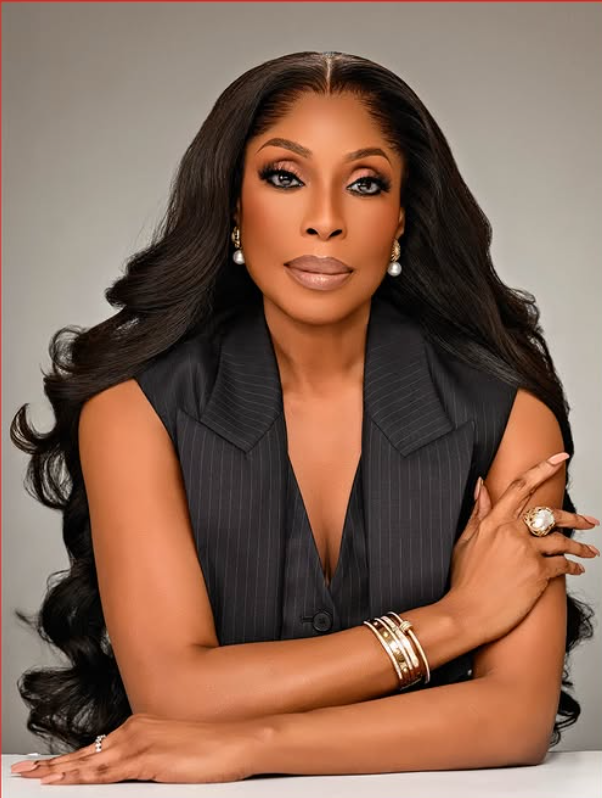
The debate has also resurfaced through media executive Mo Abudu, who recently said she does not want younger people addressing her by her first name.
Abudu linked her position to her upbringing and the respect traditionally shown to older people in Nigerian society. Her position is not unusual.
For many Nigerians, particularly those raised in more traditional homes, respect remains closely tied to age.
But younger professionals are entering workplaces shaped by a different culture. They work in companies with flatter structures. They communicate with managers on messaging platforms. They may report directly to senior executives. Some are encouraged to challenge ideas rather than simply accept instructions.
The language of the workplace has changed with the structure of the workplace. The culture outside it has not necessarily changed at the same speed.
So Who Decides What Is Respectful?
This is where employers have a responsibility. If an organisation wants employees to use first names, it should make that expectation clear. If a senior executive prefers a title, employees should know that too.
The burden should not fall entirely on a young employee trying to navigate conflicting expectations.
The same applies in reverse. An employee cannot assume that because a company generally uses first names, every person in the organisation has agreed to the same arrangement in every setting.
There is also a difference between informality and disrespect.
Calling someone by their first name is not automatically disrespectful. Calling someone “sir” is not automatically more professional either. Context matters.
The real workplace problem comes when those expectations remain unclear and an employee gets judged for choosing the wrong one.
It raises a question Nigerian workplaces still need to confront: how do modern workplaces respect individual preferences without ignoring the cultural values employees bring with them?
Perhaps the answer is not to choose between Nigerian culture and workplace policy.
It is to make the expectations clear enough that employees do not have to choose between the two.
READ ALSO: How Tony Elumelu Plans to Create Luck for 27,000 African Entrepreneurs

About The Author