



When people think about Nigerian culture, colourful weddings, masquerade festivals and traditional rulers often come to mind.
What people rarely talk about are the customs that quietly disappeared over time. Some were abandoned because society evolved. Some ended during the colonial rule under the law of repugnancy while others after the colonial rule, new religions and modern laws reshaped communities across the country.
Long before Nigeria became a nation, hundreds of ethnic groups developed traditions that reflected their beliefs about justice, family, leadership and survival. Looking back today, some of those customs seem almost impossible to imagine. 
Here are seven Nigerian traditions that sound more like fiction than history but they were real.
FEMALE HUSBANDS
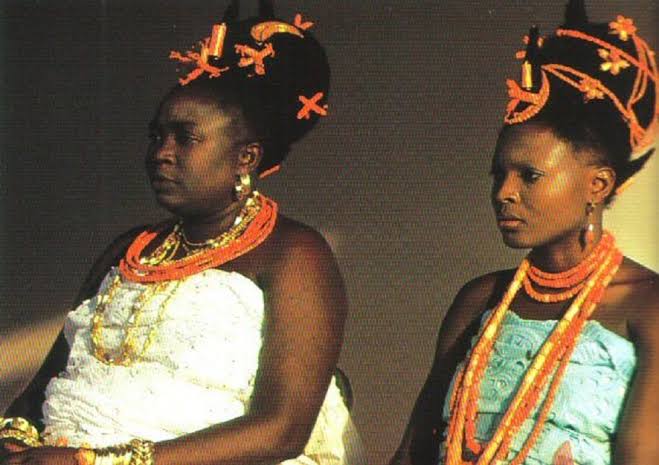
Imagine attending a wedding only to discover that the groom was a woman.
As unusual as that sounds today, the institution of the female husband existed in several Igbo communities and formed an accepted part of customary law.
The arrangement had nothing to do with sexuality. Instead, it was created to solve a practical problem.
In many traditional societies, land, titles and family property passed through male descendants. A wealthy woman without sons or a widow whose husband had died without an heir risked seeing her family’s lineage disappear.
To prevent that, she could become a female husband.
She paid the bride price, married one or more wives and assumed the social and legal responsibilities of a husband. A chosen man fathered children with the wives, but under customary law, those children belonged to the female husband’s family rather than the biological father’s.
To outsiders, the practice appears extraordinary. Within the communities that observed it, however, it was viewed as an innovative way of preserving inheritance and protecting family lineage.
MONEY WIFE
Today, unpaid debts usually lead to court cases or financial penalties. In parts of the Becheve community in present-day Cross River State, the consequences were once far more personal.
Under the practice known as “money wife,” a family could give a young girl to a creditor as payment for an outstanding debt or as part of an agreement between families. The girl becomes the man’s wife regardless of her age or wishes. In some cases, she could later be inherited by another male relative within the same family.
To modern readers, the practice is deeply disturbing. Yet within the society that created it, it was seen as a legitimate way of settling obligations and strengthening family alliances.
Human rights organisations spent years campaigning against the custom, while local traditional leaders gradually worked to eliminate it. Although officially outlawed, reports suggested isolated cases survived well into the twenty-first century before sustained intervention finally brought the practice close to extinction.
SEE ALSO: 5 Most Shocking African Traditions
KILLING THE KING
Most people assume a king rules until death. That was not always the case.
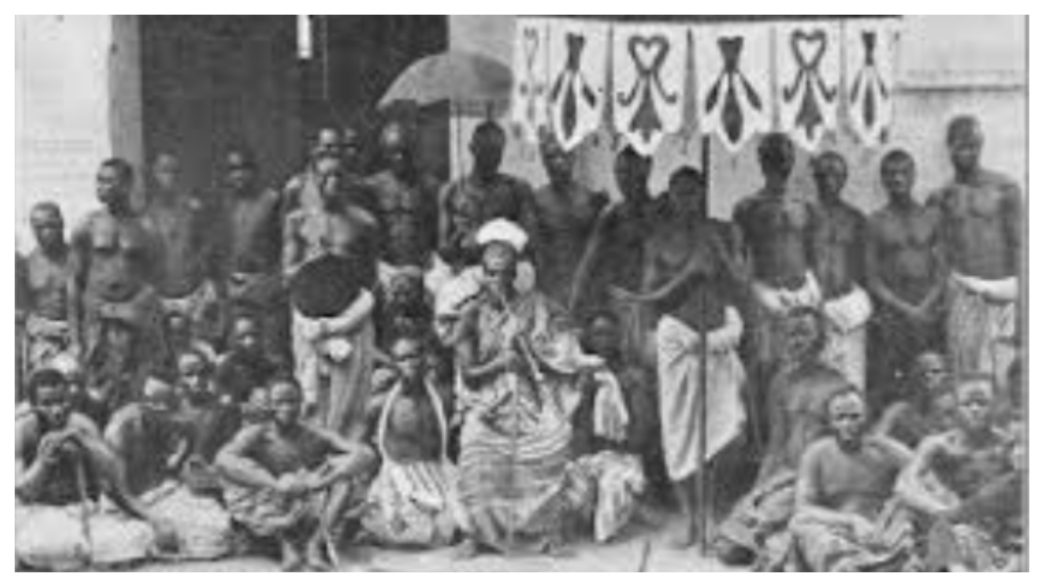
In parts of pre-colonial Nigeria like the old Oyo empire, Jukun Kingdom and Benin Kingdom , a ruler was believed to represent the physical and spiritual health of the entire kingdom. If he became weak, seriously ill or unable to perform his duties, many believed the kingdom itself would also become vulnerable.
Some historical accounts suggest that these kingdoms expected ageing rulers to end their reign before natural death. In a few documented traditions, ritual death formed part of that process, while in others, kings quietly abdicated under immense pressure.
Historians continue to debate how widespread these practices actually were. What remains clear is that kingship was viewed less as a personal privilege and more as a sacred responsibility tied to the survival of the community.
TRIAL BY POISON
Imagine standing before your entire community after being accused of theft. There are no police officers, no judges and no forensic laboratories. Instead, someone hands you a calabash filled with a poisonous concoction.
In several traditional societies across what is now Nigeria, this formed part of what became known as trial by ordeal. The belief was simple. If the accused survived after drinking the mixture, the gods had declared that person innocent. If death followed, guilt was considered proven.
From today’s perspective, the practice appears both dangerous and unjust. Yet for communities without formal courts, it represented an appeal to supernatural justice when witnesses or evidence could not settle disputes.
As colonial legal systems spread across Nigeria, practices such as trial by ordeal gradually disappeared and were eventually prohibited under modern law.
THE LEOPARD SOCIETY
Few stories from Nigeria’s past are as mysterious as those surrounding the Leopard Society.
Colonial officials described a secret organisation whose members allegedly dressed in leopard skins and carried specially designed claw-like weapons. Victims often appeared to have been attacked by wild animals, making investigations even more difficult.
British colonial records linked the society to ritual killings in parts of southeastern Nigeria like Abia, Cross river and Akwa Ibom, although historians still debate the full extent of its activities and whether some accusations were exaggerated during the colonial era.
Regardless of where the truth ends and legend begins, the Leopard Society remains one of the most fascinating and least understood chapters in Nigeria’s traditional history.
THE FATTENING ROOM
Not every forgotten tradition was violent. Among the Efik and Ibibio people, young women approaching marriage often entered what became known as the fattening room.
The name has led many people to assume the practice focused only on gaining weight.In reality, it served as an intensive school for married life.
During weeks or months of seclusion, older women taught future brides cooking, childcare, family etiquette, cultural values and household management. They were also encouraged to eat well because a fuller body symbolised beauty, good health and prosperity.
As beauty standards changed, many communities abandoned the seclusion and weight-gain aspects. However, elements of the educational tradition continue to survive during modern marriage ceremonies.
A HISTORY MANY NIGERIANS HAVE NEVER BEEN TAUGHT
Nigeria’s history stretches back thousands of years and spans more than 250 ethnic groups. Along the way, communities created customs that reflected the world they understood at the time.
Some traditions protected families. Others enforced justice as people then perceived it. Some would later be condemned and abandoned as society evolved, while a few transformed into modern cultural practices.
Whether shocking, ingenious or difficult to comprehend today, these forgotten traditions reveal one important truth.
Nigeria’s past was far more complex than most history books ever suggest. Sometimes, the most fascinating stories are not the ones that survived- they are the ones almost everyone forgot.
ALSO READ: Shadi: The Nigerian Tradition of Beating Men to Prove Their Love

About The Author