



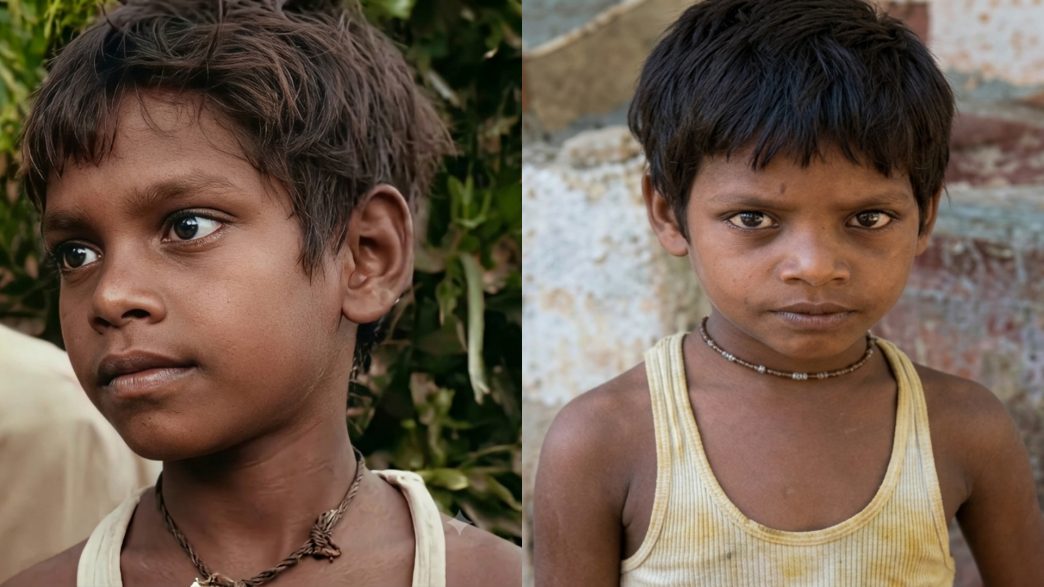
When most people think of serial killers, they picture adults- people shaped by decades of trauma, rejection, and darkness. But the case of Amarjeet Sada completely challenges that image.
In 2007, a boy from the village of Musahari in Begusarai district, Bihar, India, was arrested for murder. He was only eight years old. By the time police caught him, he had already committed three murders. He is now recognised as the youngest known serial killer in recorded history.
The Village Where It Happened
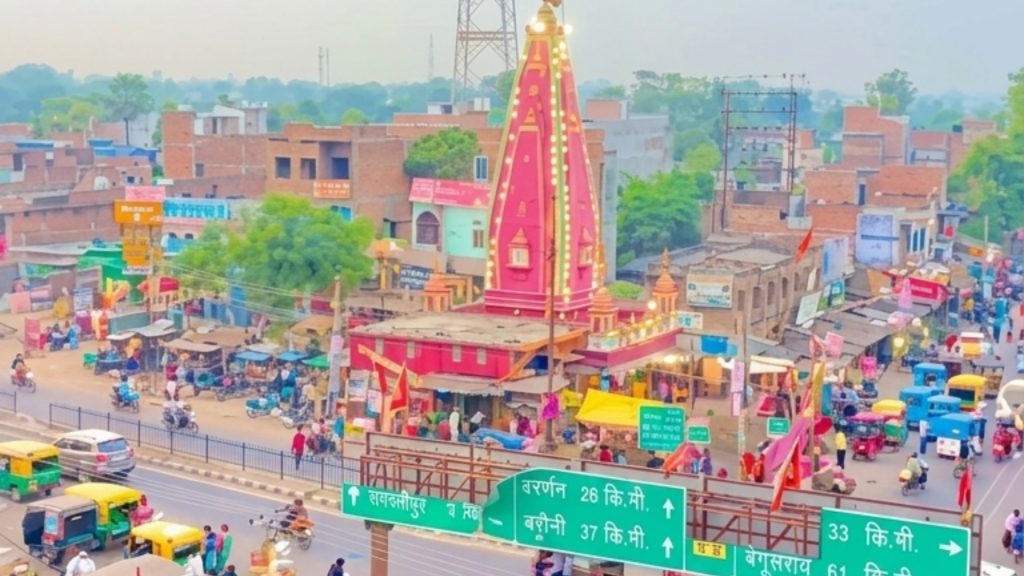
Musahari is a small, impoverished village where everyone knows each other. Families share space, children play together, and the kind of anonymity that allows violence in cities simply does not exist. That is partly why what Amarjeet did is so hard to understand; he was not a stranger. He was a familiar face. And that familiarity was exactly what he exploited. 
The Three Victims
The murders took place between 2006 and 2007, when Amarjeet was seven and eight years old.
His first victim was his six-month-old cousin. He waited until the family was busy with chores, then lured the infant away. Nobody paid attention; he was a child they knew, carrying a baby they knew. He took her to a nearby field, strangled her, and struck her skull with a brick. Then, he walked home calmly.
His second victim was his own eight-month-old sister, killed while their parents were away. The method was the same: strangulation and blunt force.
His parents discovered both deaths. What they chose to do next is one of the most disturbing parts of the entire story. Afraid of shame and community ostracism, they covered up both killings. They said nothing to anyone, hoping, perhaps, that whatever had happened inside their son would not happen again.
It happened again.
His third victim was six-year-old Khushboo, a neighbour’s child who was playing outside when Amarjeet lured her into a field. He strangled her and struck her face and head with a brick, then hid her body in nearby bushes.
What followed was the detail that brought him to the attention of the world. Rather than disappearing or showing distress, Amarjeet walked back to the village. When people began asking questions about where Khushboo had gone, he led them directly to her body himself.
The Arrest
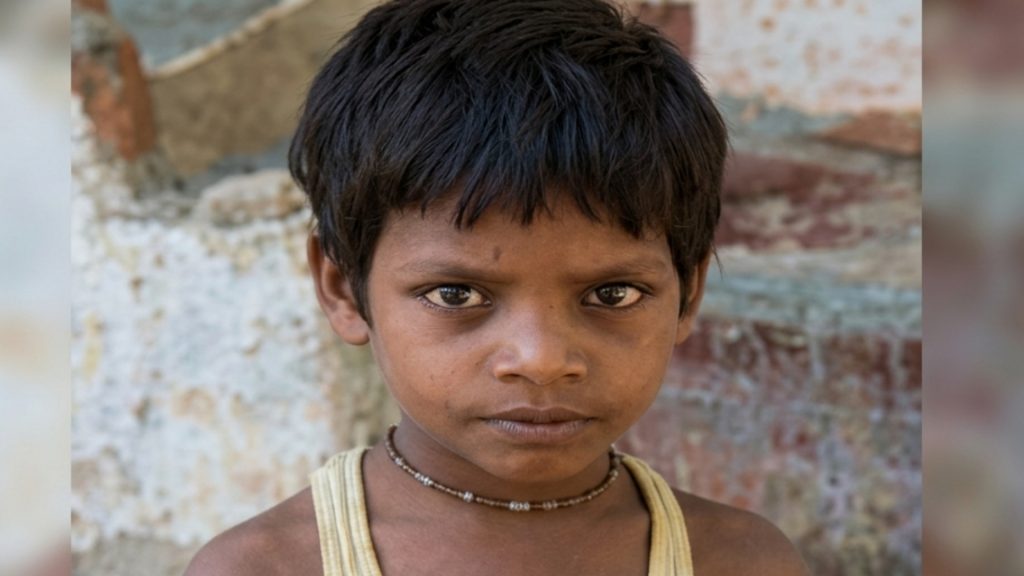
When police arrested him, he didn’t cry or resist. He confessed to all three murders calmly and without apparent emotion. One officer who was present later recalled that Amarjeet described the killings the way a child might describe completing a school task; matter-of-factly, without weight, sometimes with a smile.
The officer’s account, disturbing on its own, raises questions that go beyond this individual case. What happens inside a child that produces that response? Is it the absence of something (empathy, fear, consequence) or the presence of something else entirely?
What Experts Said
Child psychologists and criminologists who reviewed the case suggested Amarjeet might have exhibited traits of conduct disorder or early-onset psychopathy. His family lived in extreme poverty, in an environment with little access to mental health support or early intervention of any kind.
The decision by his parents to conceal the first two murders adds a layer of complexity that is uncomfortable to sit with. Their choice was not malicious in a calculating sense; it came from terror of what their community would do if they knew. But their silence gave Amarjeet the space to kill again. A six-year-old girl died because two adults chose to protect themselves from shame.
SEE ALSO: 7 of Africa’s Deadliest Serial Killers (Part 1)
What Happened to Him
Because of his age, Amarjeet could not be charged as an adult under Indian law. There was no life sentence, no death penalty, and no adult prison. Under the Juvenile Justice system, he was placed in a children’s home and remained there until he turned 18.
What happened after that is unknown. Upon his release, he was reportedly given a new identity for his own safety. As of 2025, he would be approximately 26 years old. There is no publicly available information about whether he was rehabilitated, where he lives, or who he has become.
SEE ALSO: Flight Instructor Jumps From Plane Mid-Air, Leaving Student to Land Alone
The Questions That Do Not Go Away
The case of Amarjeet Sada sits at the intersection of several conversations the world has never fully resolved.
Can a child be evil? Can a person born into poverty, with no intervention, no diagnosis, and no support, be fully held accountable for what they become? Does the juvenile system (which chose rehabilitation over punishment) serve justice for the families of three children who were killed? Can it?
The Indian legal system made a choice based on the principle that a child, however extreme the circumstances, deserves the possibility of rehabilitation rather than permanent punishment. Whether that choice was right is not something the law settled, but it is something each person who encounters this story has to decide for themselves.
For the families in Musahari, the answers might never come. Three children are gone; one of them was killed twice, first by a boy who was eight years old, and again by the silence of people who knew and said nothing.

About The Author