


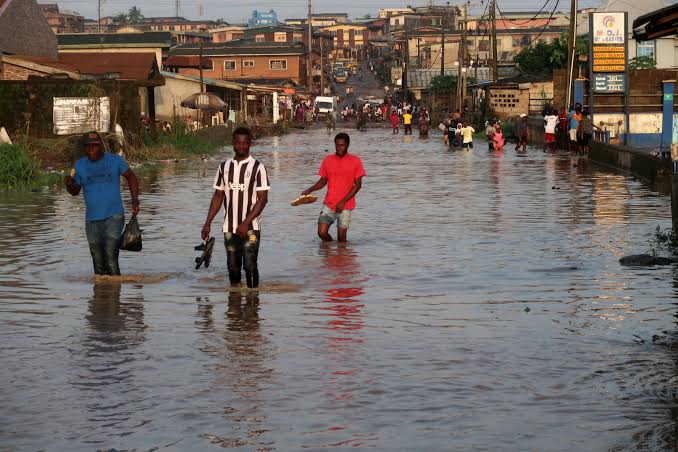
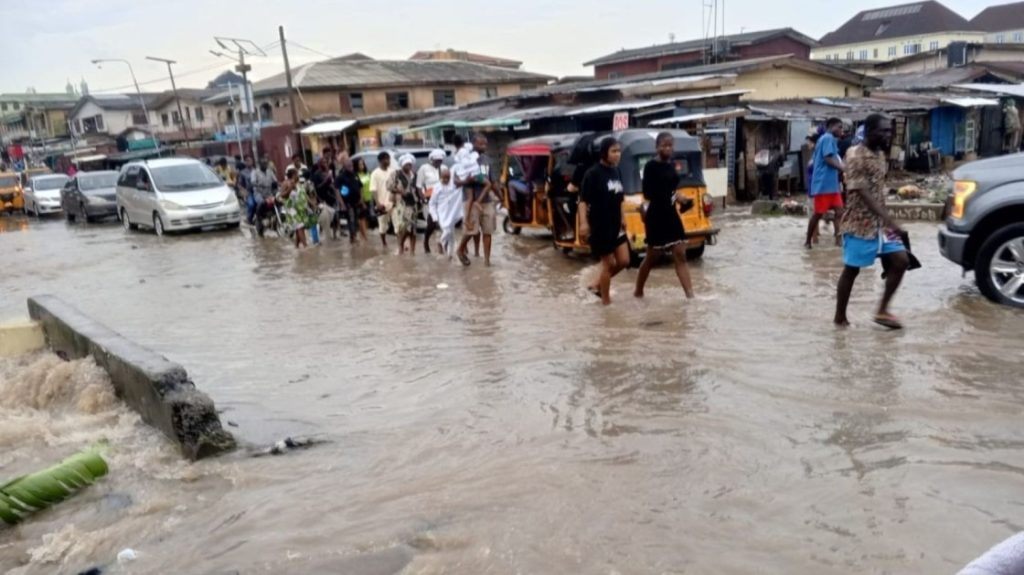
When heavy rain swept across Lagos recently, the images that flooded social media were all too familiar. Cars sat helplessly in murky water. Commuters rolled up their trousers to wade through flooded streets, while traders watched anxiously as floodwater crept toward their shops.
For many Nigerians, these scenes have become an almost predictable part of the rainy season. Yet, behind every viral video is a story of disrupted livelihoods, lost income, and families struggling to cope with another reminder that flooding remains one of Lagos’s biggest urban challenges. 
According to the Lagos State Government, residents in several parts of the state had already been warned to prepare for heavy rainfall, flash floods, and rising water levels between June 14 and June 21, with communities in Apapa, Eti-Osa, Lekki, Ikorodu, Surulere, Ikeja, and other locations identified as vulnerable.
Despite these early alerts, the latest downpour once again disrupted movement and business activities across Africa’s largest city.
A Rainstorm That Stops Business
Lagos is Nigeria’s commercial capital, where millions depend on daily movement to earn a living. When floodwaters take over major roads, the economic impact is immediate.
Workers arrive late or are unable to reach their offices. Ride-hailing fares increase as fewer drivers are willing to navigate flooded streets. Delivery services slow down, while traders lose customers and, in some cases, valuable goods.
For many small business owners who depend on daily sales rather than monthly salaries, even a few hours of disruption can determine whether they make a profit or leave empty-handed.
These hidden economic losses, often overlooked in the news, represent some of the most painful consequences of recurring floods.
More Than an Environmental Problem
Flooding is not only about damaged vehicles and impassable roads. It is also a public health concern.
Floodwater often mixes with waste from blocked drainage systems, exposing residents to waterborne diseases such as cholera and typhoid. Pools of stagnant water also create ideal breeding grounds for mosquitoes, increasing the risk of malaria during the rainy season.
Researchers studying flood resilience in Lagos have identified poor drainage infrastructure, rapid urbanisation, indiscriminate waste disposal, and climate change as major factors driving the city’s recurring floods.
Why Lagos Keeps Flooding
Lagos faces a unique challenge. As a low-lying coastal city experiencing rapid population growth, it receives intense seasonal rainfall while also dealing with increasing pressure on existing infrastructure.
Experts argue that blocked drainage channels, construction along waterways, and poor waste management make heavy rainfall far more destructive than it should be.
While the Lagos State Government has continued year-round clearing of drainage channels, experts believe lasting solutions will require better urban planning, stricter enforcement of environmental regulations, and greater public cooperation in keeping drainage systems free of refuse.
Flooding impacts approximately 90,000 residents in Lagos annually, with 4,000 evacuations reported in 2021. The city is among the 50 most vulnerable to extreme sea levels and ranks 30th among 136 port cities for population exposure to flooding based on a past climate scenario (2005), and 15th for a projected future scenario (2070s).
SEE ALSO: See Every Building That Collapsed in Lagos From 2025 to 2026
How Much Does Lagos Lose to Floods?
The latest flooding also comes amid fresh warnings from the Federal Ministry of Environment, which identified Lagos among states at significant risk of flooding this rainy season. The ministry urged residents in vulnerable communities to remain on flood watch, identify evacuation routes, and avoid trading or settling within flood-prone areas.
Earlier this month, The Guardian also reported that Nigeria suffered an estimated ₦13 trillion in flood-related losses in recent years, with Lagos remaining one of the states most vulnerable to severe flooding because of its dense population and coastal location.
According to Business Day, in 2025 The Nigerian Meteorological Agency (NiMet) estimates that Lagos lost over ₦200 billion to flooding in a single year. Meanwhile in 2022, Lagos State lost ₦100 billion in transport costs due to the infrastructural damage caused by flooding.
Beyond the Headlines
When the floodwaters eventually recede, they leave behind more than muddy streets.
They leave traders counting losses, commuters calculating wasted hours, parents worrying about their children’s safety, and thousands of families hoping the next rainfall will not bring another day of disruption.
For Lagos, the challenge is no longer whether it will rain. The real question is whether Africa’s busiest commercial city can finally build the resilience needed to ensure that one afternoon of rainfall no longer brings millions of lives and livelihoods to a standstill.
ALSO READ: The Only Way Lagos Can Stop Smelling Badly

About The Author