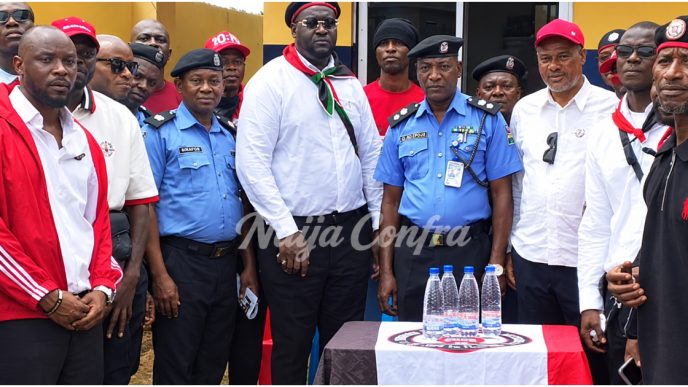



Angry protesters in South Africa’s Eastern Cape, reportedly mobilised by members of ActionSA, have taken to the streets in a series of violent demonstrations.
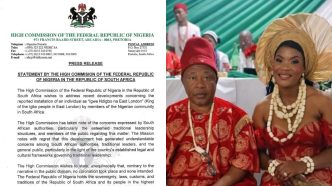
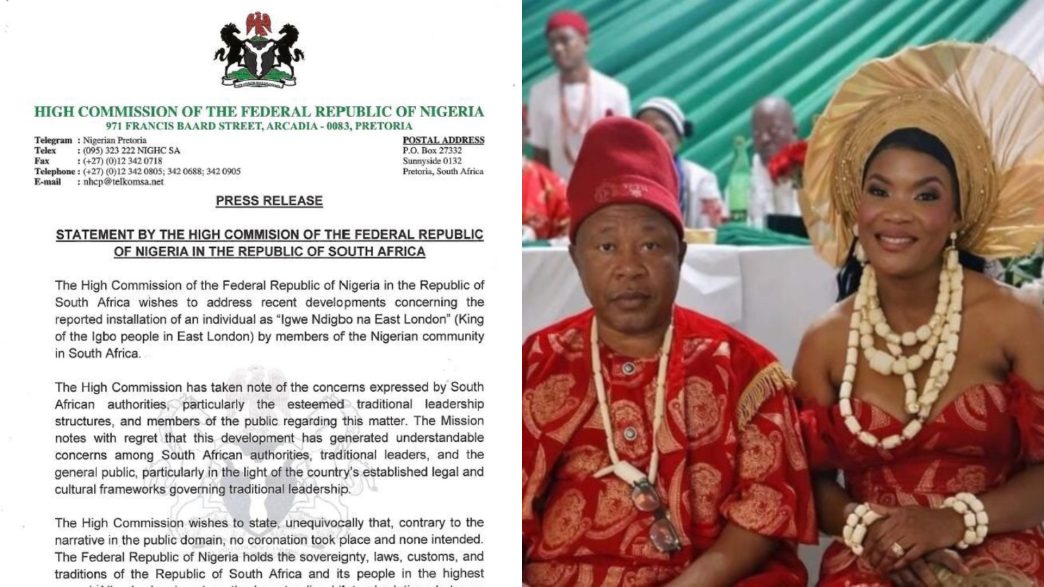
The unrest is said to be in response to claims that Solomon Ezike was crowned as an “Igbo King” in the province. The alleged coronation has been condemned as disrespectful and a breach of local customs and national sovereignty.
According to Newsroom Afrika, up to 10 vehicles and a building were torched. Other vehicles and properties allegedly belonging to foreign nationals were also destroyed. However, in a statement by the High Commission of the Federal Republic of Nigeria in South Africa, it was clarified that no Igbo king coronation took place in South Africa. 
SEE ALSO: A Nigerian Man Was Crowned King in South Africa
“No Coronation Took Place”
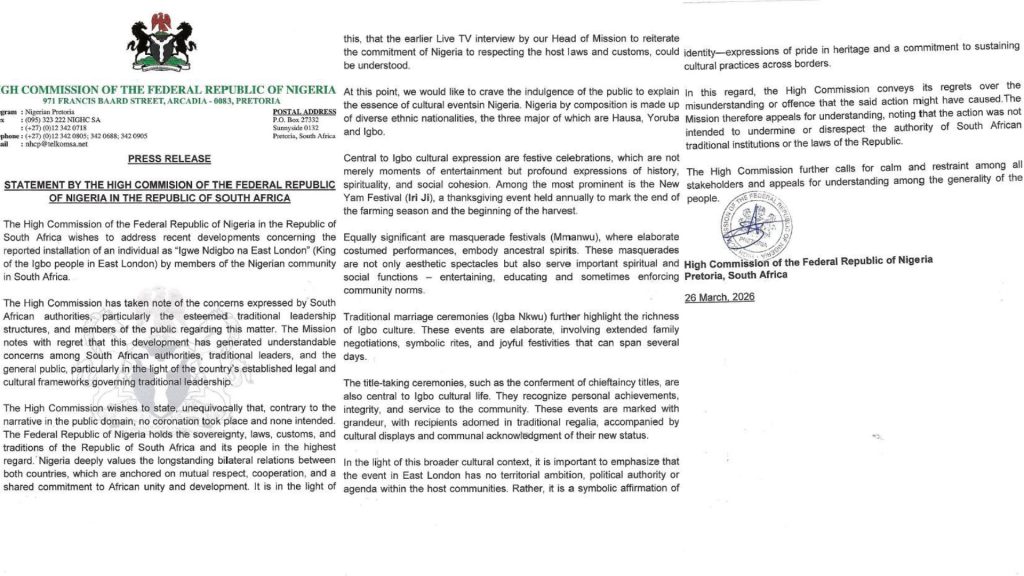
The High Commission of the Federal Republic of Nigeria has said there was no Igbo king coronation in South Africa. In a statement released on March 26, it stated that “contrary to the narrative in the public domain, no coronation took place and none was intended.”
It further explained that Nigeria values its relationship with South Africa, which is built on mutual respect, cooperation, and a shared goal of developing Africa and keeping the continent united. Hence, it respects the government, laws, culture, and people of South Africa.
The statement added that Nigeria is a diverse country with many ethnic groups, including the Hausa, Yoruba, and Igbo, and cultural events are central to their way of life. Among the Igbo, festivals like the New Yam Festival (Iri Ji), Masquerade festivals (Mmanwu), and Traditional Marriages (Igba Nkwu) reflect history, spirituality, and community values. Title-taking ceremonies also highlight Igbo culture through rituals, recognition, and celebration. It stated that, in this context, the event in East London was purely a cultural expression with no political or territorial intent.
What Now?
As tensions rise in the country over the alleged coronation, the Nigerian High Commission in South Africa issued a 10-point advisory to Nigerians living there.
In a report by The Cable, Nigerians have been advised to stay safe and remain cautious amid rising hostility. The commission urged them to limit their movements, avoid strangers, keep a low profile, and strictly obey local laws. Nigerians were also told to suspend social and cultural activities and avoid making statements that could further inflame tensions, especially on social and mainstream media.

About The Author