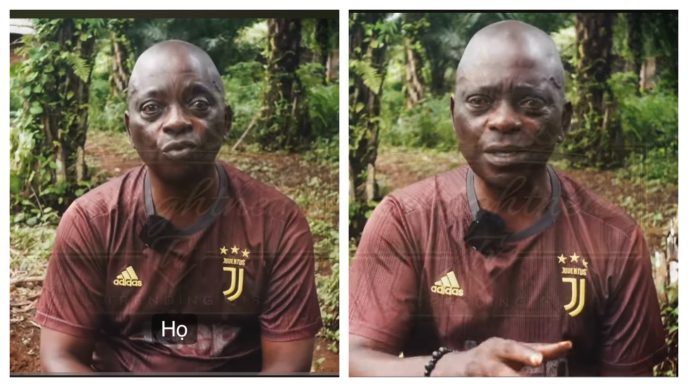




You cannot wash off a stain as sturdy as a conviction for sexually assaulting a minor with an interview, however carefully the questions are framed or how measured the answers sound. This, clearly, is unknown to the actor, Olanrewaju James AKA Baba Ijesha.
Since his release, Baba Ijesha has not slipped quietly back into public life or allowed time to do the slow work of softening public anger. Instead, he has stepped forward with a narrative, deliberate and sustained, built around a series of appearances, most notably a widely circulated interview with actress Biola Adebayo, in which he attempts not just to explain what happened, but to reshape how it is remembered. Adebayo has since apologized for the interview, following an almighty public backlash.
Baba Ijesha does not deny the conviction because he cannot and because the record is too clear to be wished away. In 2022, a Lagos court found him guilty on charges linked to the sexual assault of a minor, a case that had already gripped the country the year before, when disturbing videos surfaced showing the young girl confronting him in a sting arranged with the involvement of Princess Adekola. The videos yielded images that fixed the incident firmly in public memory and made abstraction almost impossible. 
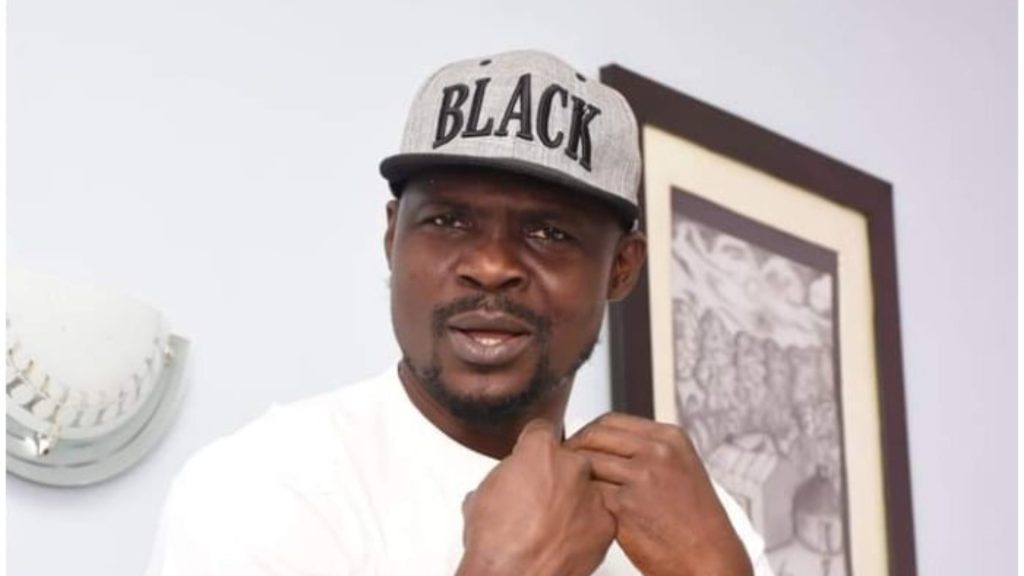
It is against that backdrop that the interview unfolds and it is precisely why the tone and content of what he says matter. Rather than challenge the conviction directly, he leans into explanation, offering a version of events that shifts attention away from the act itself and toward the circumstances around it. He speaks of a “set-up,” of betrayal, of enemies who, in his version of events, played a decisive role in his fall and suggesting at various points that what happened has been stretched beyond its true scale. He does not deny outright, but reframed in a way that invites doubt without fully confronting the facts.
Prison, in this account, becomes more than punishment. It becomes transformation, a place where suffering is reframed as growth, where hardship is presented as evidence of change and where faith is brought in as both shield and proof, with references to prayer, reflection, and spiritual renewal serving to support the claim that he is no longer the man who committed the offence.
Running through it all is a request, sometimes direct and sometimes implied, for forgiveness, accompanied by the suggestion that he has already paid a price heavy enough to close the matter. What remains missing, however, is clarity. The wrongdoing is acknowledged, but only in broad, softened terms that avoid the full weight of what happened, with no sustained effort to name the act plainly or to sit with its seriousness, leaving it instead at the edge of the conversation, as though precision itself would make the narrative harder to hold together.
It is not quite an apology. That distinction matters because what is offered feels measured to concede just enough while holding something back, creating the impression of remorse without the discomfort of full accountability. This pattern is not unique to him and, in fact, follows a well-worn path used by public figures attempting to recover from scandal, where partial admissions are paired with claims of personal growth and emotional appeals to produce a version of events that sounds reflective and forward-looking while carefully avoiding the hardest truths.
Around him, the response has begun to shift, not dramatically, but steadily and in ways that are easy to miss if you are not paying attention. Parts of the industry are adjusting, as they often do, with Nollywood’s long history of uneven responses to controversy once again on display. Some colleagues offer open support framed in the language of forgiveness and second chances, often drawing on religious ideas that carry deep resonance in a society where redemption stories are both familiar and powerful. Others remain more cautious, choosing silence or neutrality that, in its own way, still leaves room for his return.
Beyond public statements, there are quieter signals that matter just as much, if not more, including invitations, appearances, and the gradual re-opening of professional pathways, all of which suggest that resistance is softening and that the idea of reintegration is being tested, step by step, in spaces where decisions are made long before they are announced. The issue here is not whether a person should be allowed to rebuild his life because the possibility of change is something any society must preserve if it is to remain humane, but rather how that rebuilding is attempted and whether it rests on truth or on careful reconstruction.
What we are seeing looks like the latter. In the interview and in the broader effort around it, he presents himself not only as someone who has done wrong, but also as someone who has suffered deeply in the aftermath, a shift that subtly redistributes sympathy by placing his hardship alongside the harm he caused and, in doing so, invites the audience to weigh both in the balance.
It is a familiar strategy, one that relies on time to blur sharp edges and on repetition to make a revised narrative feel settled, even when its foundations remain contested. But this is not a case that yields easily to that kind of softening. The conviction was no rumour or gossip or a dispute of competing stories. It was a legal finding grounded in evidence, involving a child, and that fact alone fixes the moral stakes in a place that cannot be easily negotiated or reframed without consequence. Sadly, the environment around him is shifting in ways that make such reframing possible.
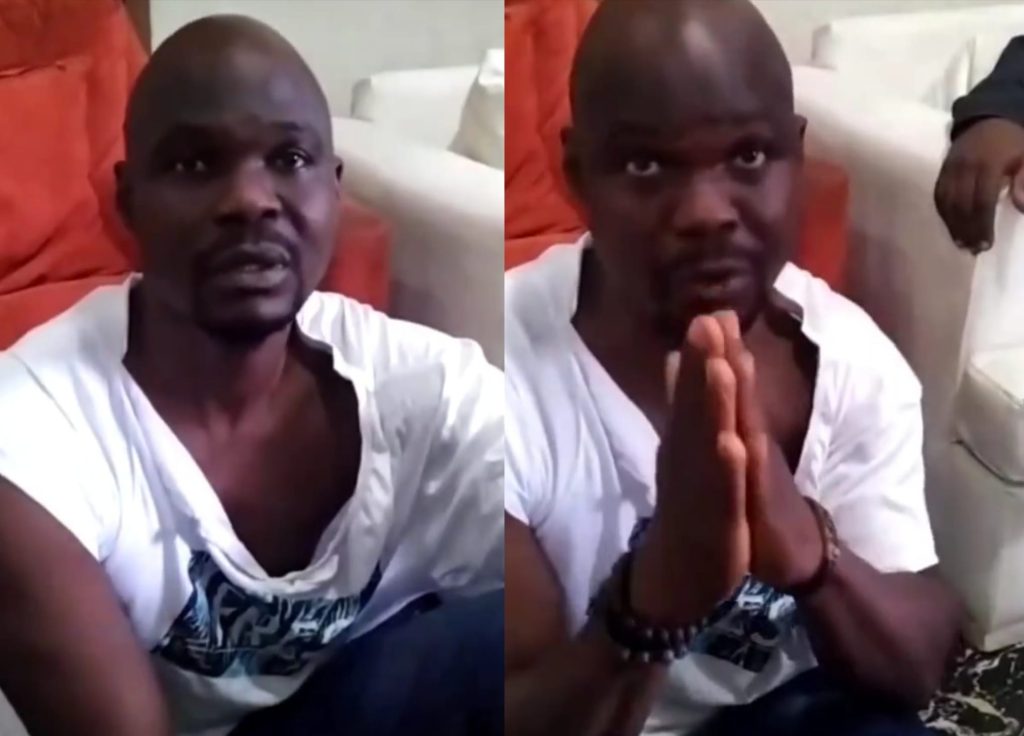
The interview itself becomes part of that process, not because it fails to ask questions, but because it allows enough space for answers to stretch and reshape the story to create a tone that moves between scrutiny and empathy but ultimately gives room for image repair without requiring full confrontation. Then there are the voices that follow, from public figures to fans, some loud and explicit, others quieter but still meaningful, each one adding to a gradual shift in perception, where what once seemed unacceptable begins, over time, to feel less so.
This is how accountability erodes, not in a single moment of collapse, but in a series of small adjustments that, taken together, change the ground beneath our feet. But there is still a victim, still a record, still a line that should not be blurred into something vague or negotiable. At the centre of all this is a young person whose life was altered in a way that no interview, no matter how carefully managed, can undo, and whose experience risks being pushed aside as the focus turns increasingly toward the rehabilitation of the man who caused that harm.
A person can rebuild his life without rewriting the truth of what happened, can seek redemption without staging it and can return without asking the public to participate in forgetting. Until that happens, what we are watching is not redemption, performance
About The Author