


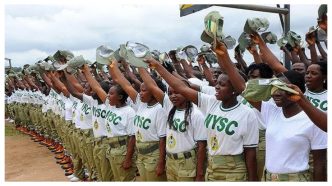

After 53 years without a meaningful review, the National Youth Service Corps is finally getting one. The Federal Executive Council has approved a comprehensive overhaul of the scheme (the first since its establishment in 1973), repositioning it as a civilian-led, skills-focused institution aligned with Nigeria’s broader economic goals.
The approval came during the FEC meeting in Abuja on Monday. As part of the directive, the Attorney-General of the Federation and the Ministry of Youth have been instructed to amend the NYSC Act and related regulations, clearing the path for the changes to take immediate effect.
Speaking on the reform, Special Adviser to the President on Policy Coordination, Hadiza Bala Usman, explained that government intervention was necessary to align NYSC with Nigeria’s ambition of building a $1 trillion economy, shifting the scheme from its traditional role into something more productivity-orientated and youth-empowering.
It helps to remember why NYSC exists in the first place. The scheme was created by Decree No. 24 on May 22, 1973, in the aftermath of the Nigerian Civil War, to reconcile the nation, foster unity among Nigerian youths, and promote national cohesion. Over five decades later, that founding mission is being rebuilt for a very different Nigeria.
Here are the eight new reforms you should know.
1. A Technology-Driven Call-Up Process

The days of paper-based mobilisation are coming to an end. The federal government will roll out a technology-driven call-up system built to improve efficiency, transparency, and the overall process of recruiting prospective corps members. Anyone who has dealt with the frustrations of the old system – lost documents, unclear timelines, confusing portals – knows exactly what this is trying to fix. The goal is a faster, more trackable process from start to finish.
2. The Scheme Will Now Be Headed by a Civilian

This is probably the most symbolically significant change on the list. Under the reform, NYSC will be led by a civilian in its operational leadership, while the military continues to handle security for corps members nationwide.
NYSC has operated under a military-style leadership structure since 1973, born out of a post-war Nigeria that needed strong, centralised oversight to enforce national unity. More than five decades later, the government is acknowledging that the institution’s needs and Nigeria’s needs have changed. The military is not being removed entirely. It will still provide security support across the country. What changes is who actually runs the scheme day to day, and that responsibility now sits with civilians.

3. Camps Will Now Receive Grading Certifications

Anyone who has been through an NYSC orientation camp knows the standards swing wildly from state to state; some camps run smoothly with functioning facilities, and others barely have running water. The government is introducing a national grading and certification system to bring some consistency to that picture.
This creates a layer of accountability that simply was not there before. Camps will be measured against a national benchmark instead of being left to inconsistent regional standards, which should push every state toward a baseline of basic decency.
4. A New Graduation Ceremony Will Replace the Passing-Out Parade

The Passing Out Parade (the marching, the uniforms, and the military-style send-off) has been the defining image of completing the NYSC for generations of Nigerian graduates. This tradition is being replaced with a new graduation ceremony, marking a deliberate move away from the militarised tone the scheme has carried since its founding toward something that better reflects its new civilian, skills-based identity.
SEE ALSO: Why Nigeria Should Scrap NYSC Due to Rising Insecurity
5. A Six-Week Orientation Programme With a New Focus

The orientation camp experience is being extended and reshaped from the ground up. Under the new structure, the first two weeks will focus on civic responsibility, national values, and leadership, while the remaining two weeks will shift toward financial literacy, business planning, career development, and access to finance.
In practice, this moves the camp experience away from something purely ceremonial and towards something young graduates can actually use: skills meant to outlast the service year itself.
6. Skills-Based Primary Assignments Aligned With Academic Background

For years, one of the most common complaints about NYSC has been the mismatch between what graduates actually studied and where they ended up being posted: engineers sent to schools and accountants sent to clinics, with little thought given to their training. This reform is a direct response to that frustration.
Corps members will now be deployed based on their academic background, skills, and career interests across 11 specialised streams, covering agriculture, education, medical services, technology and digital services, legal services, public service, infrastructure, green economy, enterprise, creative economy, and paramilitary and security.
Eleven distinct streams are not a small adjustment. It means the service year can finally build on what a graduate actually studied, instead of working against it.
7. A Redesigned NYSC Uniform

The reforms also bring a redesigned NYSC uniform meant to reflect professionalism and national pride. Khaki has been part of Nigerian youth culture for decades, instantly recognisable, occasionally mocked, but unmistakable wherever you see it. The redesign is an attempt to modernise that visual identity, keeping pace with everything else changing underneath it.
SEE ALSO: How a Fake Job Offer Cost Nigerian Graduate His Job and NYSC Plans
8. Risk-Sensitive Deployment to Protect Corps Members
Given Nigeria’s ongoing security challenges, this reform speaks directly to one of the most persistent worries among corps members and their families. Risk-sensitive deployment strategies are being introduced specifically to protect corps members during their service year.
This formalises something that has already been happening in pieces at the state level; NYSC has previously suspended postings to certain Kebbi local government areas because of rising insecurity and relocated orientation camps for safety reasons. Turning this into national policy means deployment decisions will now follow documented risk assessments, rather than reacting case by case after something has already gone wrong.

About The Author