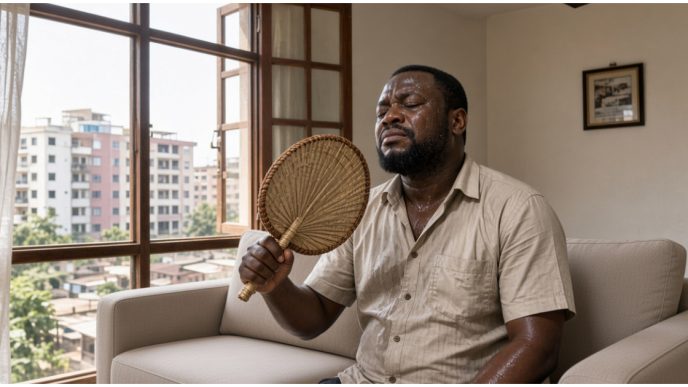





The 2026 World Cup is different from any tournament before it. First, there are three host nations: the United States, Canada, and Mexico. Second, it’s forty-eight teams instead of thirty-two. Finally, a halftime show at the final. Football has never looked quite like this.
It has been four years since Lionel Messi lifted the trophy in Qatar in one of the most emotionally charged finals the sport has ever witnessed. Four years since France fell agonisingly short on penalties. Four years since a generation of players across Europe and South America have been building, consciously or not, toward another shot at the biggest stage in football.
But beneath all the changes, one question remains unchanged: who will lift the trophy on July 19 at MetLife Stadium in New Jersey? 
No crystal ball can give a perfect answer. Form fluctuates. Injuries happen. A red card in the quarter-final can destroy four years of planning. Still, some teams arrive with better odds, deeper squads, and fewer weaknesses than others.
Here are the five teams most likely to win the 2026 World Cup, based on current form, squad depth, and historical tournament pedigree.
1. Spain: The Defending Champions of Europe and the Bookmakers’ Favourite

According to tournament simulations, Spain enters as the main favourite with a 24% chance of winning the tournament. That number is backed up by everything you see when you watch them play.
Spain are the reigning European champions and lead the World Cup outright market heading into the tournament. The spine of their squad: Rodri controlling tempo from midfield, Pedri driving forward, and Lamine Yamal terrorising defenders on the right flank represents arguably the most balanced combination of youth and quality in world football right now.
There are question marks, though. Yamal suffered a significant hamstring injury, and while he is expected to recover in time, any setback could fundamentally change Spain’s attacking threat. Rodri also has not quite looked like himself since returning from injury this season.
There is also the Euro winner’s curse to consider. Since 1988, the team that won the Euros has advanced past the quarterfinals of the following World Cup only once. Spain has the quality to break that pattern. Whether they do will largely depend on whether their three biggest stars arrive healthy and sharp.
Key players: Lamine Yamal, Rodri, Pedri, Dani Olmo, Unai Simón
2. France: The Squad That Has No Obvious Weakness
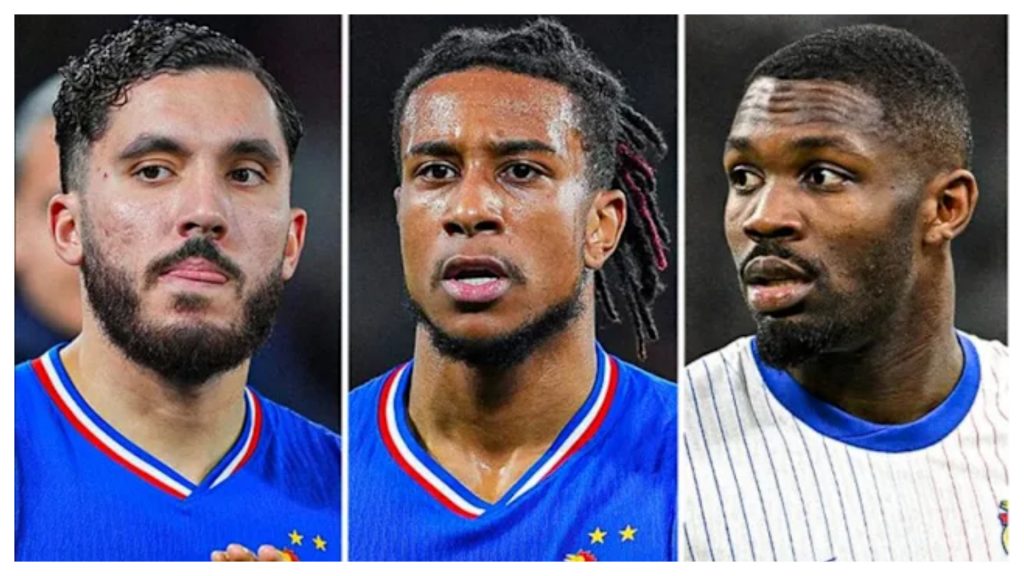
Every tournament France enters, the same conversation happens. The squad is too good and is the deepest in the world, but something will go wrong because things always go wrong with France.
France are joint favourites with Spain heading into the tournament. They won the World Cup in 2018 and reached the final in 2022, losing to Argentina on penalties after an extraordinary comeback.
This is manager Didier Deschamps’ last hurrah, having run Les Bleus since 2012. There are some creeping concerns about their campaign, and they do not have an easy group in which to find form.
Kylian Mbappé is 27 years old, entering what should be the peak years of his career, and he has never won a World Cup. That motivation is real, and it is visible every time he plays for his country. Behind him, France have Ousmane Dembélé, Antoine Griezmann, and a defensive unit built around Dayot Upamecano and William Saliba that is as solid as any in the competition.
The honest assessment is that France on paper should win every tournament they enter. The honest follow-up is that football is not played on paper.
Key players: Kylian Mbappé, Ousmane Dembélé, Antoine Griezmann, William Saliba, Mike Maignan
3. England: The Generation That Has Run Out of Excuses
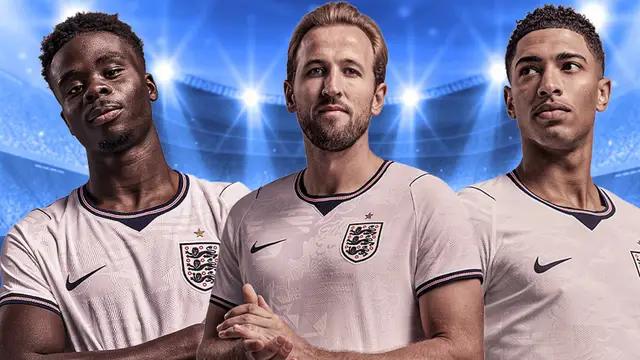
England have been building toward this for a decade. They reached the World Cup semi-final in 2018. They reached the Euro final in 2021 and lost on penalties. They reached the Euro final again in 2024 and lost again. The tournament pedigree is there. The near-misses are there. What is missing is the trophy.
England is priced as a genuine contender at +600 in the outright market, behind only Spain and France.
Harry Kane has never won a major trophy. At the international level, the trophies have not come for the England captain despite the goals accumulating year after year. He will arrive at this tournament knowing it may be his last realistic chance at a World Cup winner’s medal.
Thomas Tuchel’s squad selection left some observers surprised. The amount of creativity omitted from the squad, with players like Cole Palmer and Trent Alexander-Arnold absent, raised questions about England’s ability to break down organised defences.
The talent is there. Jude Bellingham has grown into one of the two or three best midfielders in the world. Bukayo Saka and Phil Foden offer genuine quality in wide areas. The question, as it has always been with England, is whether the sum of the parts actually delivers when it matters most.
Key players: Harry Kane, Jude Bellingham, Bukayo Saka, Phil Foden, Jordan Pickford
4. Argentina: The Defending Champions and the Messi Question
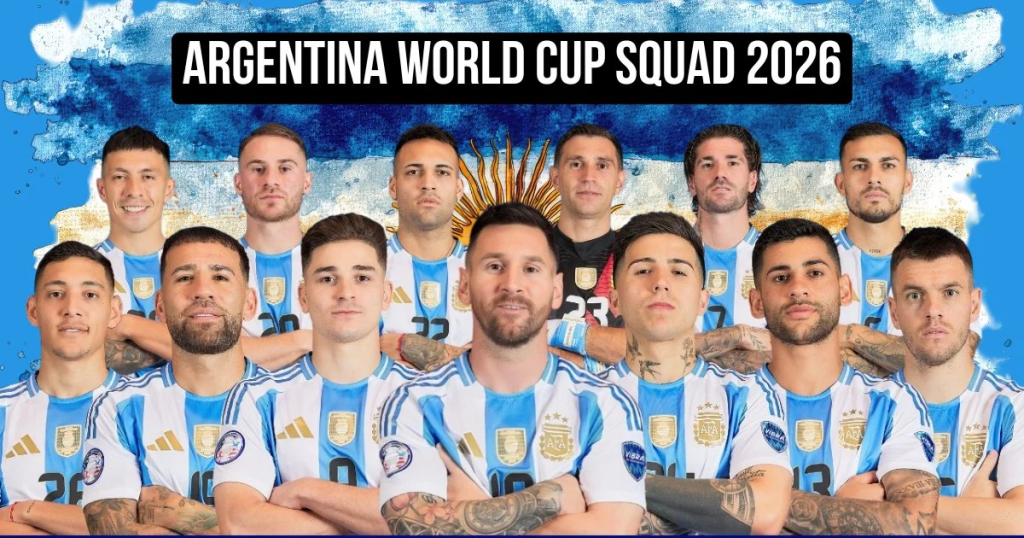
Argentina will arrive as the defending champions. Ten of the players who started the 2022 World Cup final are still in the squad. Nearly all of them are four years older. The question hanging over everything is Lionel Messi.
It remains unknown whether Messi will be playing for Argentina when the tournament begins. He will be 38 years old. He has battled injury in the months leading into the competition. The Argentina team that won in Qatar was built around him in a way that no team in modern football has been built around a single player, and that player is now on the far side of his career.
If Messi plays and is fit, Argentina are dangerous. Julian Álvarez has grown into one of the most complete forwards in the world. Rodrigo De Paul and Enzo Fernández provide genuine quality in midfield. Lautaro Martínez offers a physical forward option.
The risk is simple. Almost all of these players are four years older than they were at the last World Cup. The group that won in Qatar was special. The question is whether they have ridden that wave-one tournament too far.
Key players: Lionel Messi, Julian Álvarez, Lautaro Martínez, Enzo Fernández, Rodrigo De Paul
SEE ALSO: Why the 2026 World Cup is Special – and How to Catch Every Minute of it
5. Brazil: The Sleeping Giant Finally Stirring
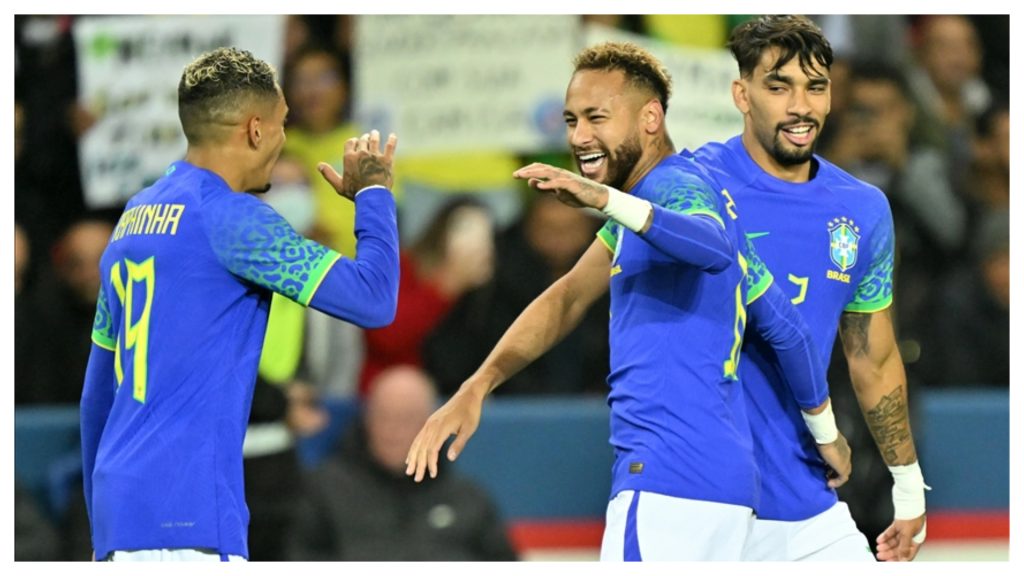
It is rare that Brazil enter a World Cup this low in anyone’s rankings. The low expectations attached to them might actually make them more dangerous.
Brazil have not won a World Cup since 2002. For a nation that defines itself through football more than any other on earth, that absence hurts in ways that go beyond sport. The pressure on every Brazilian squad is unlike anything any other team carries into a tournament.
Neymar’s Inclusion
In a surprise move that divided the nation, veteran forward Neymar was included in Brazil’s 26-man World Cup squad. The 34-year-old, now playing in Brazil’s domestic league, has struggled with fitness and form over the past year. Many called for younger players to take his place.
His inclusion came at a cost. João Pedro, the Chelsea forward who many believed had earned his spot through consistent Premier League performances, was left out. The decision sparked heated arguments across Brazilian media and social media. Fans questioned whether sentimentality had won over merit.
Neymar brings experience and star power. He is Brazil’s all-time leading goalscorer. He knows what it takes to perform on the biggest stage. But his injury history is extensive. His pace has diminished. His inclusion feels more like a farewell tour than a tactical necessity.
João Pedro’s omission stings because he represents the future. He is 24 years old. He has scored goals in England’s top flight. He has the physical presence and work rate that tournament football demands. Many Brazilian fans believe he deserved the spot more than an ageing Neymar.
Vinicius Jr remains one of the best players in the world when he is right. Rodrygo, Endrick, and Raphinha provide attacking options that can hurt any defence. The midfield, built around Bruno Guimarães, gives Brazil a physical and technical balance they have sometimes lacked in recent tournaments.
Brazil is priced at +800 in the outright market, level with Argentina. The talent is there. The hunger is there. Whether the tournament structure, now expanded to 48 teams, gives Brazil the path they need to peak at the right moment is the question only June and July will answer.
The Neymar question will follow them everywhere. If he plays well and Brazil win, the gamble will be called ‘genius’. If he gets injured or underperforms, and João Pedro is sitting at home watching, the critics will never let the federation forget.
Key players: Vinicius Jr, Neymar, Rodrygo, Raphinha, Endrick, Bruno Guimarães
SEE ALSO: Easiest Countries African Fans Can Visit for the 2026 FIFA World Cup
The Verdict
If you had to put your money on one team lifting the trophy in New Jersey on July 19, the honest answer based on squad depth, current form, and tournament pedigree is Spain, with France as the closest challenger and England as the team most capable of the surprise.
Argentina’s age profile is a genuine concern. Brazil’s inconsistency at tournaments has been a pattern for twenty years.
The World Cup has a way of making nonsense of predictions. But the five teams on this list share one thing in common: they all have the squad, the experience, and the quality to be the last team standing.

About The Author