
The salary alert arrives. For a few minutes, everything feels possible.
Then the calculations begin. Transport. Food. Rent. Electricity. Data. Healthcare. Family obligations. Before long, a salary that looked reasonable on a pay slip can feel surprisingly small.
That is the question behind Nigeria’s latest conversation about wages. What does a Nigerian salary actually buy in 2026? 
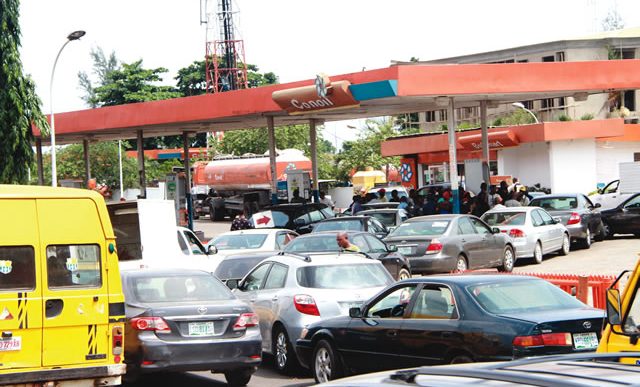
The question has become particularly relevant as public-sector workers begin a three-day warning strike from October 2 to October 4, citing economic hardship and concerns over wages, petrol prices and workers’ welfare.
But beyond the strike is a more personal calculation that happens in millions of Nigerian homes every month:
How much of the salary is left after the necessities have been paid for?
The ₦70,000 Starting Point
Nigeria’s national minimum wage is currently ₦70,000 per month.
Workers under the Joint National Public Service Negotiating Council have been calling for measures to cushion the pressure on incomes, including a wage award, lower petrol prices and the commencement of negotiations towards a new minimum wage.
But the most revealing way to understand the pressure may be to compare ₦70,000 with what it costs to live.
And that comparison produces a striking number.
The ₦372,300 Question
A recent analysis by The Guardian estimates that a single worker living in an urban Nigerian centre would need about ₦372,300 every month to cover a basic, cost-reflective lifestyle.
That figure is more than five times the current ₦70,000 minimum wage.
Importantly, the ₦372,300 is not an official government wage benchmark. It is an analytical estimate based on a hypothetical single worker who supports himself or herself and has modest needs. The calculation includes accommodation, food, transport, healthcare, utilities, personal care, clothing and a small contingency savings contribution.
So where does the money go?
Housing: ₦125,000
Housing takes the biggest share of the estimated budget.
The Guardian’s model allocates ₦125,000 a month for accommodation, based on an assumed annual rent of ₦1.5 million for a modest one-room apartment.
That doesn’t mean every Nigerian worker pays this amount. Rent varies dramatically by city and neighbourhood.
But the calculation illustrates a problem many renters understand: rent may be paid annually, while the salary arrives monthly.
A worker therefore has to set aside money every month for a bill that may arrive once a year. At ₦70,000 a month, simply putting aside ₦125,000 for rent is impossible. At ₦200,000, it is still a substantial commitment.
Transport: ₦99,000
Then comes the journey to work.
The analysis puts average daily commuting costs at ₦4,500, based on a range reported by workers of roughly ₦3,000 to ₦6,000 a day. Over 22 working days, that becomes approximately ₦99,000 a month.
Again, this is an estimate rather than a universal Nigerian transport cost. But it demonstrates something important:
For some workers, almost half of a ₦200,000 salary could theoretically disappear simply getting to and from work.
And the worker has not eaten yet.
Food: ₦47,670
Food takes another sizeable portion.
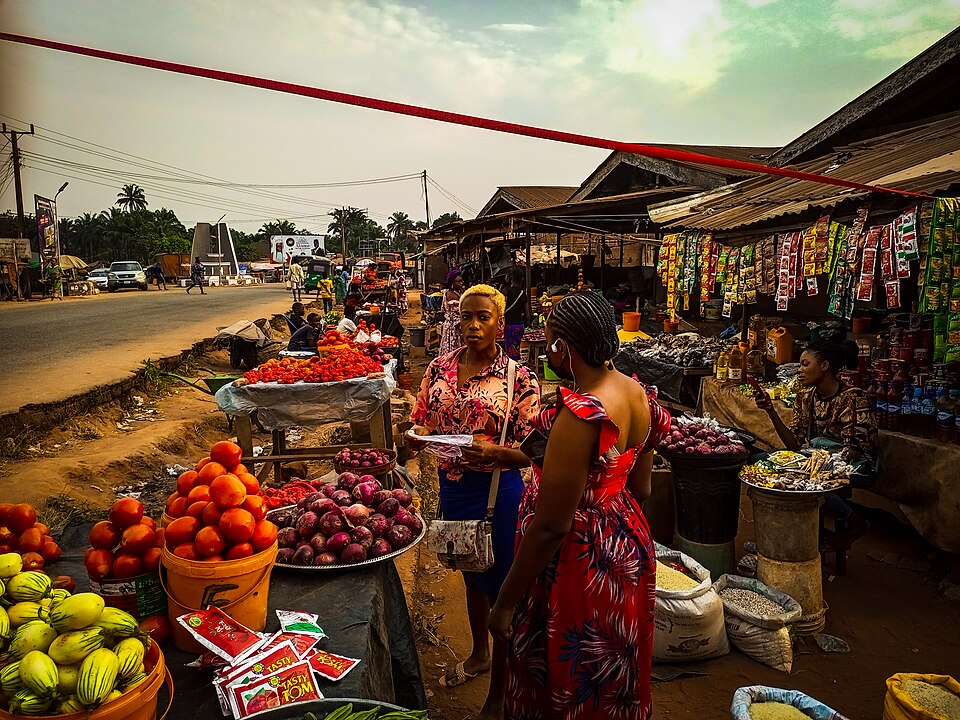
Using the NBS cost of a healthy meal of ₦1,589 per adult per day, the analysis puts basic monthly food expenditure at approximately ₦47,670.
That assumes a worker keeps food spending at a relatively modest level and does much of the preparation at home.
Eating lunch outside the home can push the cost considerably higher. The Guardian noted that a plate of food at a typical local restaurant can cost around ₦2,000.
And food remains one of the biggest sources of inflationary pressure.
Nigeria’s headline inflation eased marginally to 15.39 per cent in August 2026, but food inflation remained considerably higher at 19.57 per cent year-on-year.
So while inflation may be slowing, Nigerians are not suddenly buying food at old prices.
Healthcare, Utilities and Personal Care
The calculation doesn’t stop with the obvious expenses.
The estimated budget includes about ₦3,958 monthly for health insurance, based on an annual subscription of approximately ₦47,500.
It also allows ₦15,000 for utilities and ₦20,000 for personal care.
These may appear small beside rent and transport. But that is precisely the point.
A salary doesn’t disappear through one enormous bill. It disappears through many necessary bills arriving at the same time.
Clothing and Savings
The analysis also sets aside approximately ₦30,000 for clothing and ₦32,326 for savings.
The savings component is particularly important. The model assumes the worker needs to build a contingency fund capable of supporting him or her during a period without employment. That means savings are not treated as money for luxury. They are treated as protection against the future.
Add everything together and the estimated monthly requirement reaches ₦372,300.
What Happens at ₦70,000?
Now return to the current national minimum wage.
₦70,000 versus ₦372,300. The difference is ₦302,300.
But it is important not to interpret that gap as saying every Nigerian worker literally needs ₦372,300 to survive.
The Guardian model describes a particular hypothetical urban worker and includes assumptions that will not apply equally to everyone.
A person may live with family and pay no rent. Someone may work from home and spend far less on transport. Another worker may receive employer-provided healthcare or accommodation.
And millions of Nigerians support children, parents or other relatives, which could make their actual household requirements considerably higher. The value of the calculation lies elsewhere.
It shows how quickly basic expenses can consume income.
READ ALSO: Labour Unions Set October Strike Over Petrol Price Hike
So, What Does ₦200,000 Buy?
Consider a worker earning ₦200,000.
Using the Guardian model’s categories, the worker could theoretically face expenses far beyond that income. Even before considering family support, debt repayments, school fees or emergencies, housing and transport alone in the model amount to ₦224,000.
That is already more than the entire salary. This is where the question in our headline becomes clearer.
A salary doesn’t simply buy food, shelter or transportation. It buys access to the things required to remain employed and live a reasonably stable life.
And when those things cost more than the salary, something has to give. Savings may disappear. Healthcare may be postponed. Food choices may change. Family members may be asked for help. Debt may increase.
What Does a Nigerian Salary Actually Buy?
There is no single answer.
A ₦70,000 salary, a ₦200,000 salary and a ₦500,000 salary represent very different financial realities.
Location, housing, family size and employment benefits can completely change the calculation. But the ₦372,300 estimate provides a useful lens. It reminds us that earning a salary and having enough money to live are not necessarily the same thing.
Nigeria’s inflation rate has moderated, but food prices remain significantly higher than a year earlier. Meanwhile, public-sector workers are now taking industrial action over the pressure on wages and living costs.
Perhaps, therefore, the better question is not: “How much does a Nigerian earn?”
It is: “After paying for everything necessary to live and work, how much is actually left?”
Because that final figure may tell us much more about the value of a Nigerian salary in 2026 than the number printed on a payslip.

About The Author