





Talking about STD testing with your partner often feels like stepping on a social landmine. One wrong word and suddenly you’re labelled accusatory, paranoid, or accused of killing the mood. Yet, according to sexual health experts, silence is far riskier than discomfort medically and emotionally.
Global statistics show that more than one in four sexually active adults will contract an STI at some point. Yet, many only find out while already in committed relationships. That reality alone reframes the conversation.
We spoke with Dr Oluwadunsin Oluwaseyitan Adesopo, a medical doctor and reproductive health educator passionate about population health and public awareness. 
ALSO READ: Boxers or Briefs: Which is Healthier? Science Has the Answer
The Truth is STDs Are Common Even in ‘Serious’ Relationships
One of the biggest misconceptions Dr Adesopo encounters is the belief that commitment equals safety. From a medical standpoint, that isn’t true.
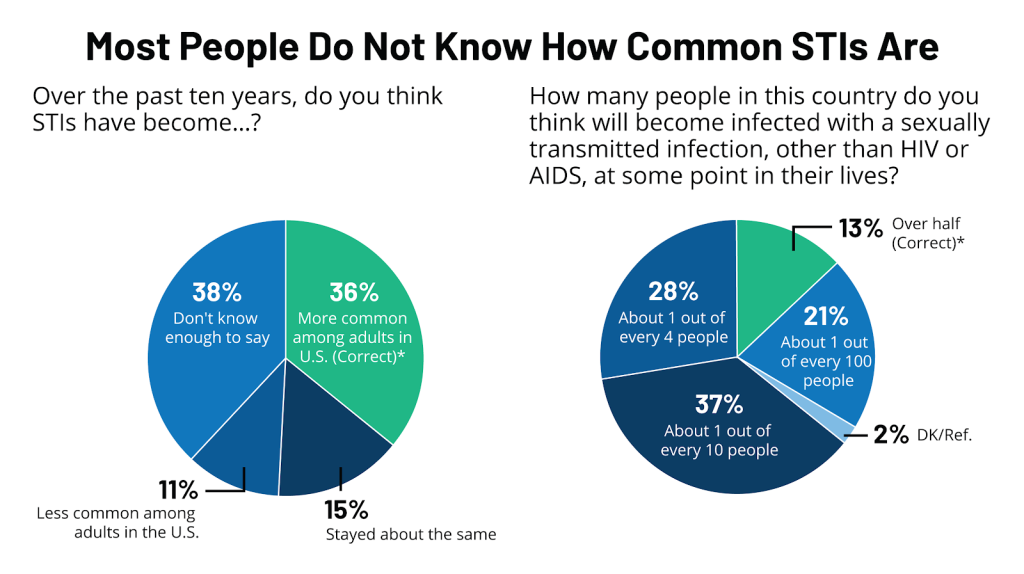
Many sexually transmitted infections are contracted before a relationship begins. These infections can remain asymptomatic for months or even years. Some show vague symptoms that are easy to dismiss or misattribute, especially in settings where people often self-diagnose common illnesses like malaria.
“A lack of symptoms doesn’t mean you don’t have an infection,” she notes. “And finding out later doesn’t automatically mean someone was unfaithful.”
According to Dr Adesopo, the risk is about exposure, not character. Everyone who is sexually active carries some level of risk regardless of relationship status. All it takes is one untested partner.
Why Requesting STD Testing With Your Partner Feels Offensive Even Though It Shouldn’t
According to Dr Adesopo, cultural stigma plays a huge role. STD testing is often framed as something you do after a mistake, not as a routine part of adult health. That framing turns a preventive step into a perceived insult.
The doctor notes that many people hear, “Let’s get tested” as “You think I’m dirty” instead of “I care about us.” That stigma persists even though STDs can be transmitted through non-sexual routes like shared sharp objects, blood exposure, or even from mother to child.
“STD testing should be treated like any other medical check”, she says. “You don’t wait for high blood pressure to ask about your heart. You check early.”
Social media reflects this split vividly.
One viral tweet read, “If my date asked me to get tested before sex, I wouldn’t be offended. I’d be impressed.” The replies, however, ranged from “Just use a condom” to “Let’s be honest, most women would be offended.”
According to the doctor, medically, that logic doesn’t hold up.
“Condoms significantly reduce risk, but they don’t eliminate it,” Dr Adesopo explains. “Testing is still the only way to know your status.”
When and How to Ask Your Partner for an STD Test

From a health perspective, the ideal time to discuss testing is before sex. Particularly, ask when that relationship is moving toward exclusivity. Waiting until after intimacy increases risk and makes the conversation heavier with fear and suspicion.
The framing matters even more. Dr Adesopo advises framing the discussion as mutual and routine, not reactive. Making it a shared decision, where you test together, share results, and plan next steps, removes blame and centres care.
“Approach it as ‘us versus the problem,’ not ‘me versus you,’” she says. “That tone changes everything.” One recommended approach is: “I care about us and our health. I like to make routine checkups part of starting something new.”
Getting tested together helps too. It turns an uncomfortable moment into teamwork and normalises testing as part of intimacy, not a reaction to suspicion. As one X post puts it, “I’d rather have an awkward conversation now than a permanent souvenir later.”
If a partner refuses to get tested or becomes aggressively defensive, that is a red flag. Poor health communication and disregard for shared safety are cues to proceed with caution early.
ALSO READ: ‘I Smoked for 27 Years’ – All the Highlights from Tonto Dikeh’s Testimony at Streams of Joy Church
What to Do When Results Complicate Things
A positive test result doesn’t automatically mean cheating. Some infections take years to surface, while others come from non-sexual exposure. This reality explains why doctors focus on treatment, prevention, and support, rather than blame.

“Blame doesn’t cure infections,” Dr Adesopo says. “Information and treatment do.”
Couples who navigate this well do so because they prioritise facts over assumptions and actions over arguments. So, instead, they focus on completing treatment, practising safer sex, attending follow-up tests, and maintaining open communication.
STD testing with your partner isn’t a mood killer. Untreated infections, secrecy, and avoidable health complications are. For such an avoidable event, we should frown at any person or societal norm that asks you to stay silent. As another X user frames it, “Health comes first. Ego comes second.”
About The Author