




Oxford University Press has officially crowned “rage bait” as its 2025 Word of the Year. This decision comes after more than 30,000 public votes, months of data analysis, and, let’s be honest, the internet’s collective tendency to argue about everything as we see every day.
According to Oxford’s language researchers, usage of rage bait has tripled in the past year, fuelled by a news cycle overflowing with outrage, digital fatigue, and debates about regulating online content.

What is Rage Bait?
If you’ve ever clicked a post that made you angry for no reason and then scrolled straight to the comments like a detective with a personal vendetta, congratulations, you’ve encountered rage bait. 
Oxford defines the term as “online content deliberately designed to provoke anger or outrage to drive traffic or engagement.” Think of it as clickbait’s more expressive and messy cousin who always starts fights at the family function.
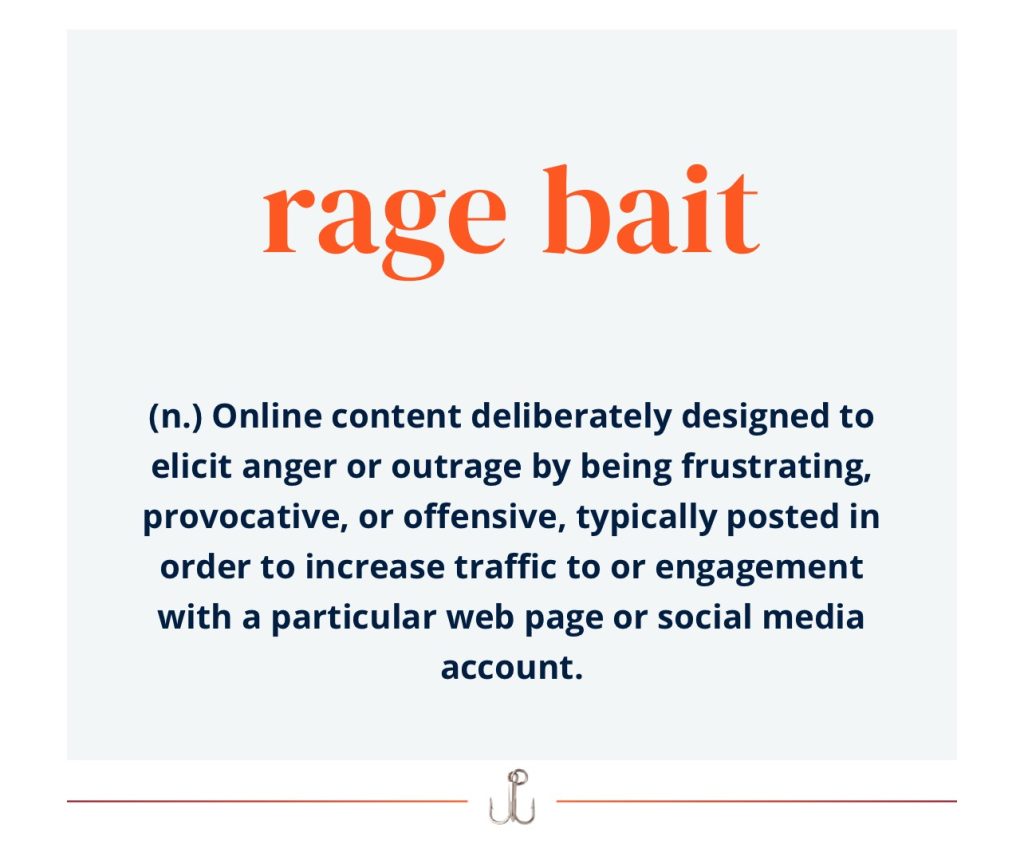
But rage bait isn’t new. Its earliest recorded use dates back to 2002 on Usenet, where it described drivers intentionally provoking each other on the road. Over time, it turned into internet slang, especially on X (formerly Twitter), before evolving into a catch-all phrase used in newsrooms, creator circles and, of course, your favourite gossip blogs.

Casper Grathwohl, President of Oxford Languages, says the term reflects a major shift in digital culture: “We’ve moved from attention-grabbing curiosity to content that hijacks our emotions. Rage bait exposes the manipulation tactics shaping how we react online.”
Word of the Year Finalists
This year’s other finalists were “aura farming” (a personal favourite) and “biohack.” The former is the art of manufacturing a magnetic vibe, and the latter refers to the now-mainstream pursuit of body optimisation through supplements, routines or tech. Both words trended thanks to TikTok charisma tutorials and the ongoing obsession with longevity culture. Still, neither beat rage bait’s grip on our daily conversations globally.
Have You Fallen For Rage Bait Before?
The win extends a trend Oxford spotted last year when “brain rot” took the 2024 crown.
Together, both terms highlight a vicious cycle young people like myself know too well. You scroll, you get mad, the algorithm notices, and it feeds you more chaos. Suddenly it’s 3 a.m., and you’re arguing with strangers about something that won’t matter by morning.
For Oxford, this year’s Word of the Year is simply a mirror. And honestly? It’s a reflection most of us recognise immediately, even if we wish we didn’t.
About The Author