



Nigeria marks another year of independence, beyond the speeches, parades, and reflections, many of Nigerians turn to the screen.
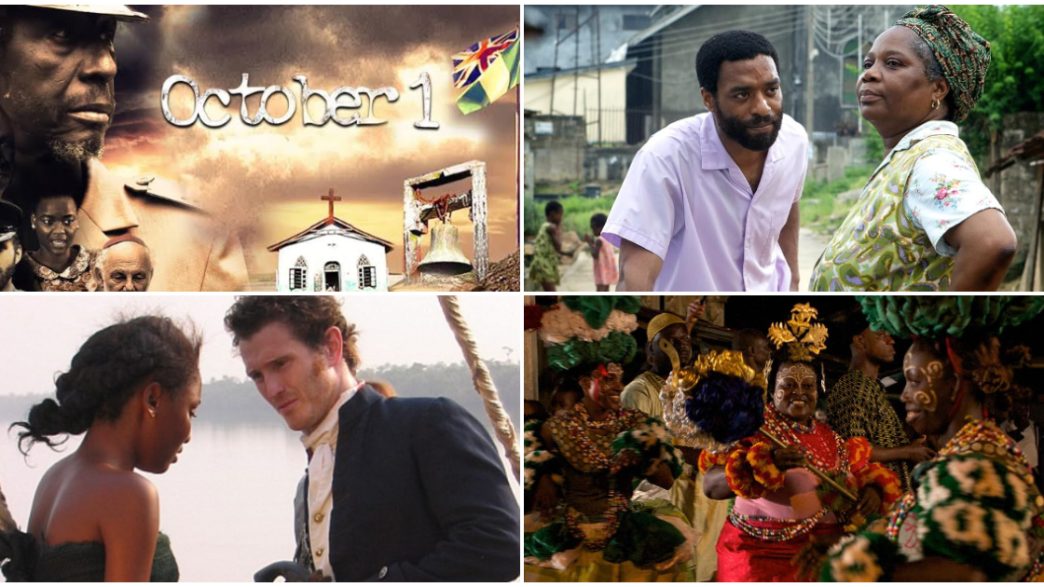
Nollywood and Nigerian cinema have given us powerful films that dig into the country’s journey. Some of its movies show the country’s struggle for freedom, the scars of conflict, the dreams of unity, and the complicated birth of a nation.
On this 66th Independence anniversary, these movies remain essential viewing. Here are some of the most compelling films that capture the spirit of Nigeria’s independence story. 
1. October 1 (2014) – Kunle Afolayan
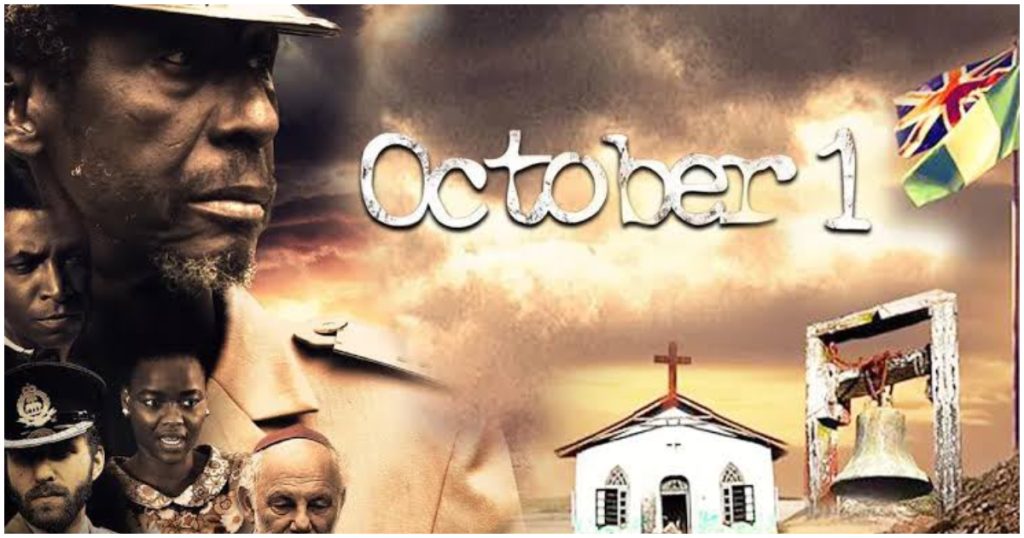
October 1 remains the film most directly tied to the birth of the nation. The 2-hour 38-minute movie was set in the final days of British rule leading up to independence in 1960.
It is a gripping period thriller that follows Inspector Danladi Waziri, a northern police officer sent to a quiet Western town. He aims to solve a series of brutal murders before the Union Jack is lowered.
The murder mystery becomes a vehicle for exploring identity, culture, colonial influence, and the country’s complicated transition to independence. The film is rich in character and detail, with seemingly insignificant moments gradually building towards a powerful conclusion.
Its greatest strength of October 1 is its cultural texture. The clothing, languages, food, palm wine, and British influence creates a vivid picture of Nigeria in transition.
SEE ALSO: RMD Urges Nigerians to Stop Criticising the Country Without Offering Solutions
2. Half of a Yellow Sun (2013) – Biyi Bandele
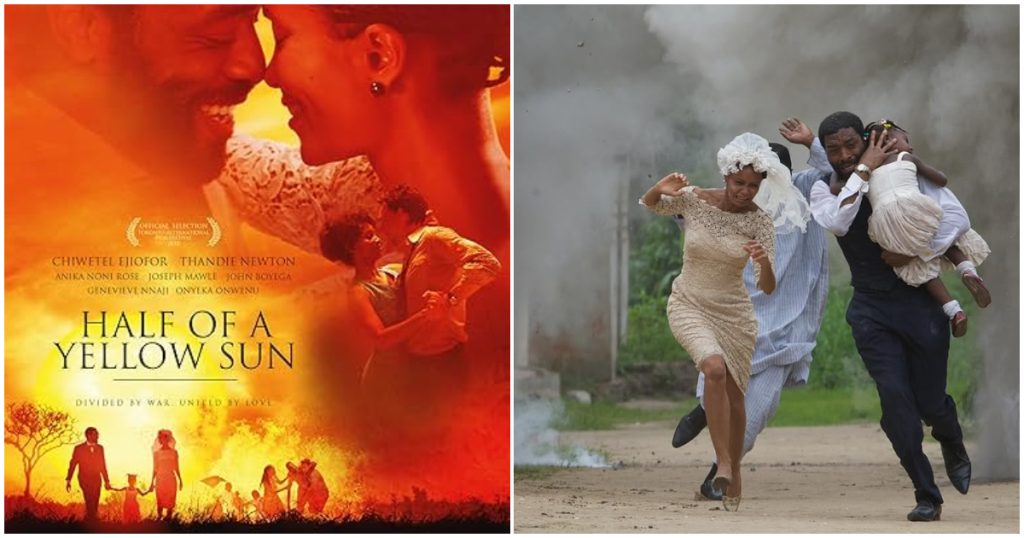
Half of a Yellow Sun follows two sisters whose lives are upended by the Nigerian Civil War.
The almost two-hour film was set in the decade after independence and explores love, loss, survival and the fragility of national unity through the experiences of Biafran characters. Its title references the flag of Biafra, the breakaway Igbo-dominated state at the centre of the 1967-1970 conflict.
Directed by Nigerian-born Biyi Bandele, the film brings a rarely discussed but defining period of Nigerian history to the screen. The film does not attempt to tell the entire story of the war. Instead, it offers one deeply human perspective on a conflict whose consequences continue to shape Nigeria.
The emotional intensity, strong performances, and historical grounding make Half of a Yellow Sun a compelling film for anyone interested in Nigerian history, heritage, and the human cost of war.
3. ’76 (2016) – Izu Ojukwu
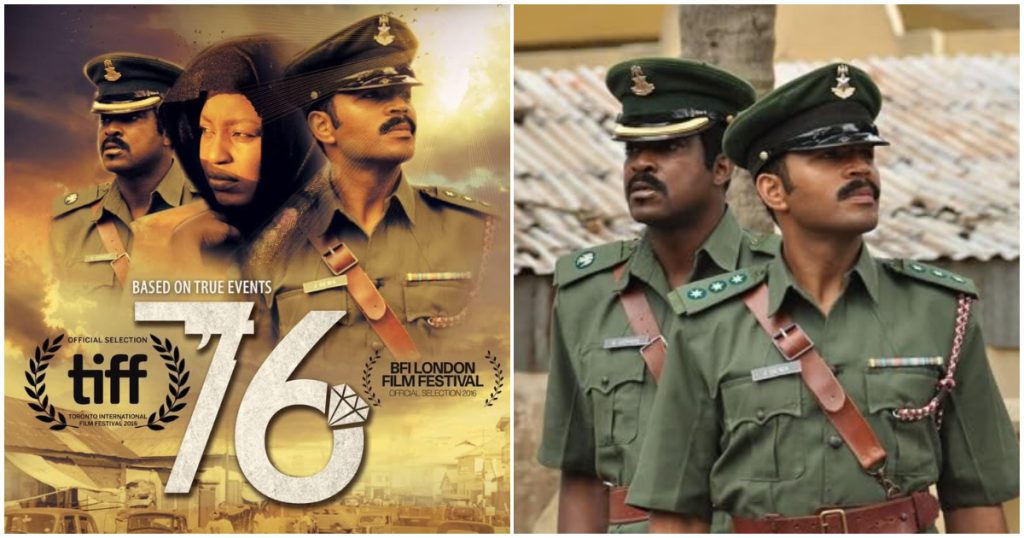
Izu Ojukwu’s ’76 revisits the aftermath of the failed 1976 military coup and the assassination of General Murtala Muhammed. It is portrayed through the story of a young soldier accused of involvement in the coup, and his pregnant wife fighting to prove his innocence.
‘76 blends romance, political paranoia and military intrigue to capture the personal cost of a turbulent period in Nigeria’s history.
One of its strongest features is its attention to period detail. The lighting, cinematography, costumes and props create a convincing retro atmosphere, with little feeling out of place across its two-hour runtime. The casting is equally impressive, particularly Adonijah Owiriwa as Captain V.M. Jaiye.
Ultimately, ’76 demonstrates how historical events can be explored through personal stories, offering a compelling reminder that national upheaval is often experienced most deeply through individual lives.
4. The Herbert Macaulay Affair (2019) – Imoh Umoren

The Herbert Macaulay Affair traces the life of Herbert Macaulay, who is widely regarded as the father of Nigerian nationalism. It also treats his early resistance to British colonial rule.
The film begins with Macaulay’s return to Lagos in 1893 after studying in Plymouth. He takes a surveying position within the colonial administration, but his growing frustration with the system eventually pushes him towards activism.
Through protests, anti-colonial newspaper articles, and campaigns for land rights and justice, the film captures Macaulay’s efforts to mobilise Nigerians against colonial oppression and demand self-determination.
It offers a rare portrait of one of the figures who helped lay the foundation for Nigeria’s independence, while also featuring his grandson, Wale Macaulay.
SEE ALSO: Tayo Faniran Speaks on Industry’s Reality: “Nollywood Is Worse Than Politics”
5. Amazing Grace (2006) – Jeta Amata

Jeta Amata’s The Amazing Grace looks further back into Nigeria’s history, exploring the transatlantic slave trade through the story of a British slave trader, John Newton.
Set in Old Calabar, the film follows Newton as he arrives to participate in the slave trade but gradually becomes disturbed by its brutality. His experiences lead him to confront the humanity of the people he once viewed as commodities. He eventually abandons the trade and becomes an Anglican priest and abolitionist.
Occasionally narrated by Joke Silva, the film connects Nigeria’s history of slavery with the themes of faith, redemption, and human dignity. It also explores the story behind the famous hymn Amazing Grace, which Newton later wrote in tune with the rhythms of a Calabar song.
With its historical setting and strong performances, The Amazing Grace offers a compelling look at a dark chapter in Nigeria’s past.

About The Author