
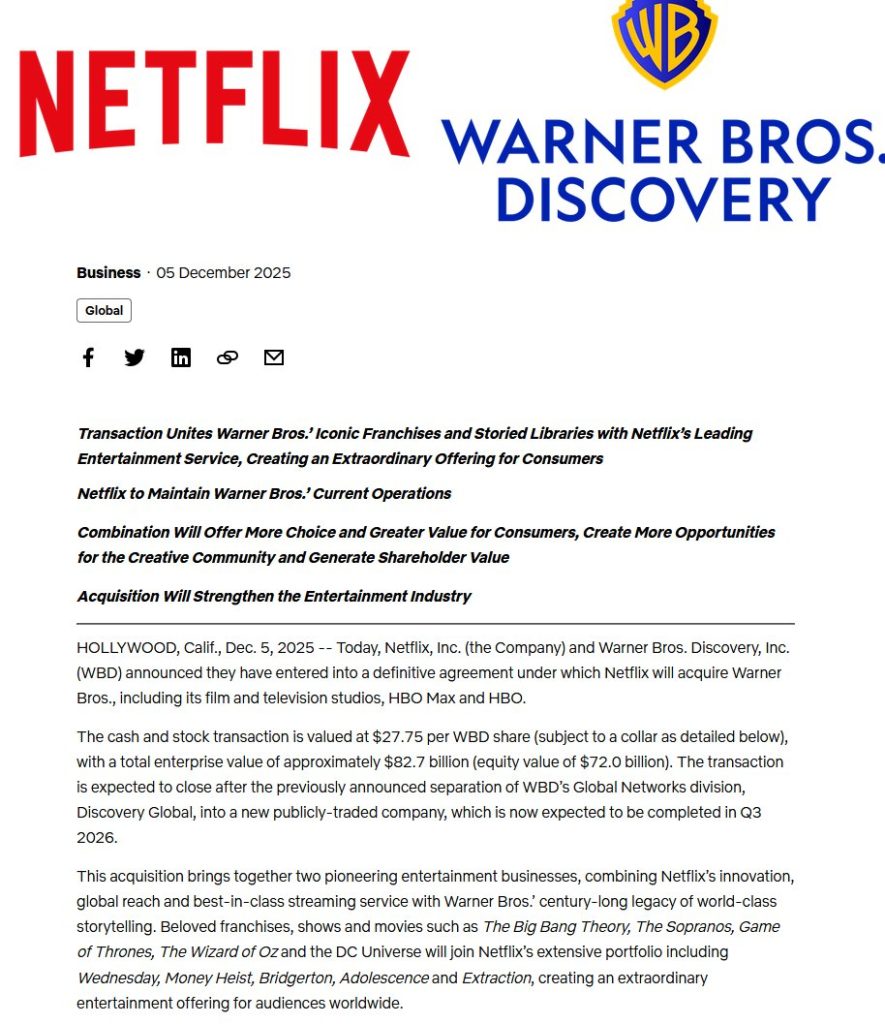
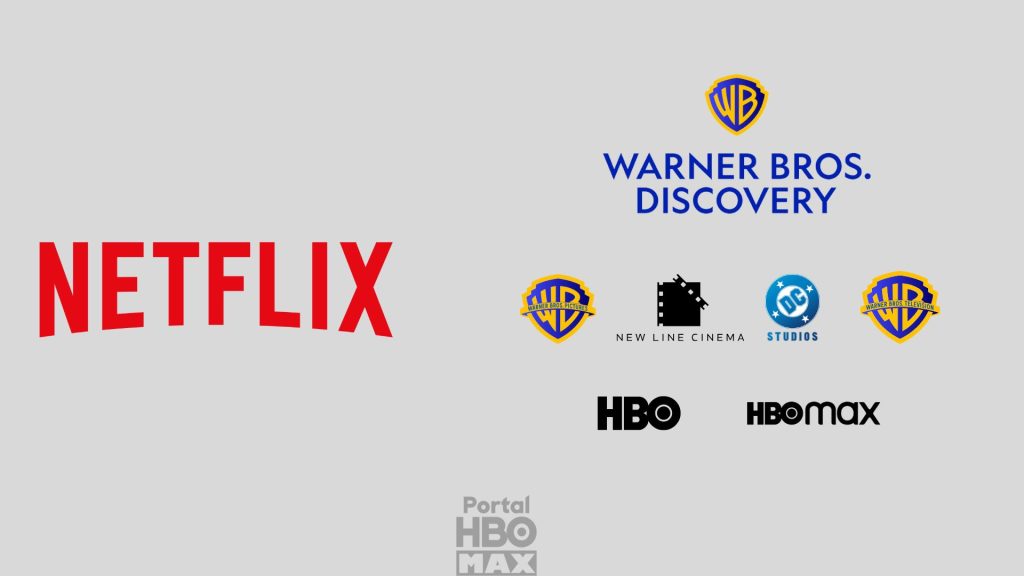
Netflix has just shaken the global entertainment table, again, with its massive $82.7 billion acquisition of Warner Bros., HBO, and their entire film/TV empire. Hollywood is calling it historic. But for those of us in Nigeria and across Africa, the real question is simple: “How will this change what we watch, how fast we get it, and where we get it from?”
Here’s a breakdown without the corporate grammar.
What Netflix Warner Bros Deal Means for Movie Lovers in Africa
1. A New Mega-Library And What Africans Get
Warner Bros. controls some of the most beloved film and TV universes ever made: 
- Harry Potter
- Lord of the Rings
- The Batman
- The Dark Knight
- Friends
- Game of Thrones / House of the Dragon
- Succession
- The Last of Us
- Plus hundreds of animations, classics, and HBO originals.
Now imagine these titles potentially living under the same roof as Bridgerton, Blood & Water, Aníkúlápó, and Far From Home.
For African viewers, it means Netflix could soon become the closest thing to a one-stop shop for premium entertainment. That is something we’ve never had. But not overnight.
Licensing contracts already in place with DStv, Prime Video, Showmax, and regional broadcasters may delay how fast the new titles show up on African Netflix. But once the deal closes in 2026, that difficulty gets much easier to resolve.
2. Fewer Delays, Fewer Blackouts, More Access
Ask any Nigerian movie lover, and you’ll hear the same complaints:
- “Why is this show trending online but not available here?”
- “Why is HBO content always scattered?”
- “Why is this movie on one platform in the US but nowhere in Africa?”
Netflix + Warner Bros. changes this dynamic.
With Netflix’s already-strong African presence (mobile plans, localized payments, strong servers, and original African titles), access to Warner and HBO content could become faster, clearer, and more consistent than ever.
No more hunting across five platforms with multiple subscriptions just to watch one show.
3. The DStv Shockwave and Why 12 Channels Are Going Dark
This is where things get very real for Nigerians.
Just days before the acquisition news, Multichoice announced that 12 DStv channels (many owned by Warner Bros. Discovery) will go off-air on January 1, 2026.
These include channels that African households rely on for:
- Blockbuster movies
- Kids’ entertainment
- Lifestyle content
- International series
Negotiations likely collapsed because Warner is restructuring everything ahead of the Netflix takeover. It’s hard to commit to long-term cable deals when your new home is a streaming giant.
READ ALSO: 12 DStv Channels Going Off-Air on January 1, 2026 — See Full List
For DStv users, this means:
- Fewer blockbuster channels
- More pressure to switch to streaming
- A widening gap between satellite TV and global platforms
Streaming isn’t “the future” anymore. It’s the present, and Africa is being pushed into it faster.
4. Cinema Lovers, Don’t Panic, But Expect Changes
Netflix says Warner Bros. films will still have cinema releases. But with “more consumer-friendly windows,” movies may leave African cinemas faster and land on Netflix sooner.
Good for viewers. Tough for cinemas already battling high ticket prices.
Bottom Line
This deal remains pending on federal regulators’ approval. If regulators approve the deal in 2026, African movie lovers are entering a new era of convenience, bigger libraries, faster releases, and fewer content gaps.
DStv may be losing ground, but for Netflix users in Nigeria and across Africa?
Hopefully, a richer, more complete entertainment universe is on the way. And for once, Africa won’t be getting the leftovers.
About The Author