




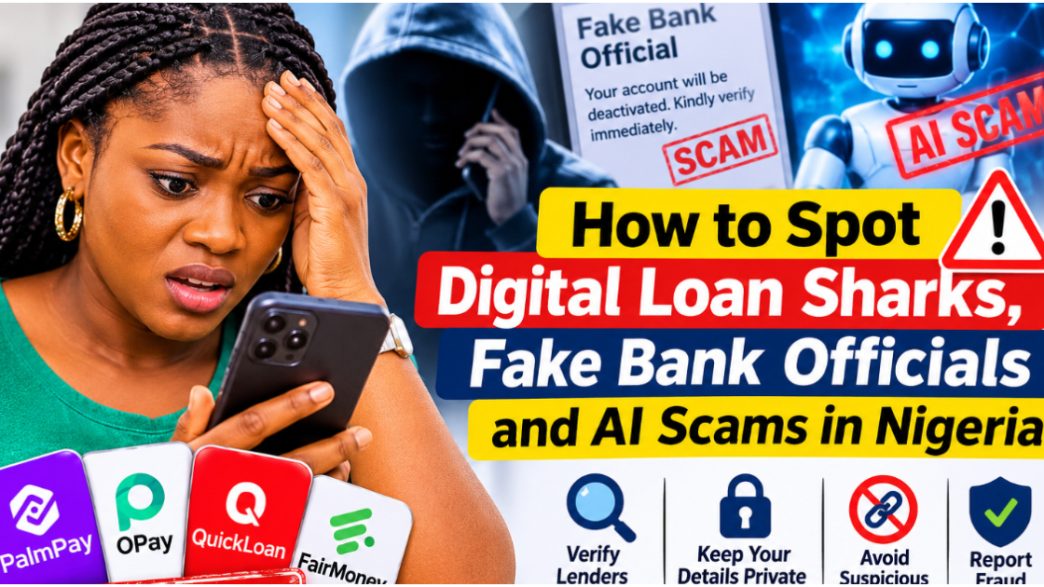
As more Nigerians embrace mobile banking, digital loans and online transactions, financial scams are becoming harder to detect. Fraudsters now use fake loan applications, impersonated bank officials and artificial intelligence to target unsuspecting victims.
Some steal banking details, while others exploit borrowers’ personal information or use cloned voices to deceive families. Knowing how these scams work can help you protect your money and personal data.
1. Watch Out for Predatory Loan Apps
Digital loan apps offer quick access to credit, but some expose borrowers to hidden charges, excessive interest and abusive debt recovery practices. 
Certain platforms also request unnecessary access to contacts, photographs and other private information. They may later use these details to threaten or embarrass borrowers who default.
Before taking a loan, verify the lender’s registration and read the agreement carefully. Understand the interest rate, repayment deadline and additional charges. Download apps only from trusted sources.
Remember, owing money does not give lenders the right to harass or publicly shame you.
2. Keep Your Banking Details Private
Scammers often pose as bank officials through calls, text messages and emails. They may claim your account is at risk and demand urgent verification.
Their aim is to steal your PIN, password or One-Time Password (OTP).
Never share these details with anyone, regardless of their claimed position. Download banking apps from official app stores and avoid unfamiliar links.
If someone contacts you about a suspicious transaction, end the conversation. Call your bank using its verified customer service number.
READ ALSO: Loan Agreement: Five Red Flags You Must Check Before You Sign
3. Be Alert to AI-Powered Scams
Artificial intelligence allows criminals to imitate familiar voices, faces and identities. Through voice cloning and deepfake videos, they can make fake emergency requests or fabricate celebrity endorsements.
Before sending money, contact the person through another trusted channel. Do not invest based on a familiar face or voice alone. Verify investment providers independently and avoid offers promising guaranteed returns.
Be especially cautious when someone pressures you to transfer money immediately.
4. Act Quickly If You Are Scammed
Contact your bank immediately if you suspect fraud. Ask it to secure affected accounts, cards or digital banking access. Change compromised passwords and contact your telecommunications provider if you suspect SIM-swap fraud.
Keep evidence, including transaction receipts, phone numbers, messages and screenshots. Report the incident to the appropriate authorities. Avoid deleting information that could support an investigation.
Stay One Step Ahead
Online financial services offer convenience, but they also demand caution. Scammers exploit fear, urgency and misplaced trust.
Pause before clicking links, verify requests before transferring money and protect your personal information. A few careful checks could save you from serious financial loss.
SEE ALSO: How Nigerians Can Apply for Tinubu’s ₦100m Mortgage Loan

About The Author