



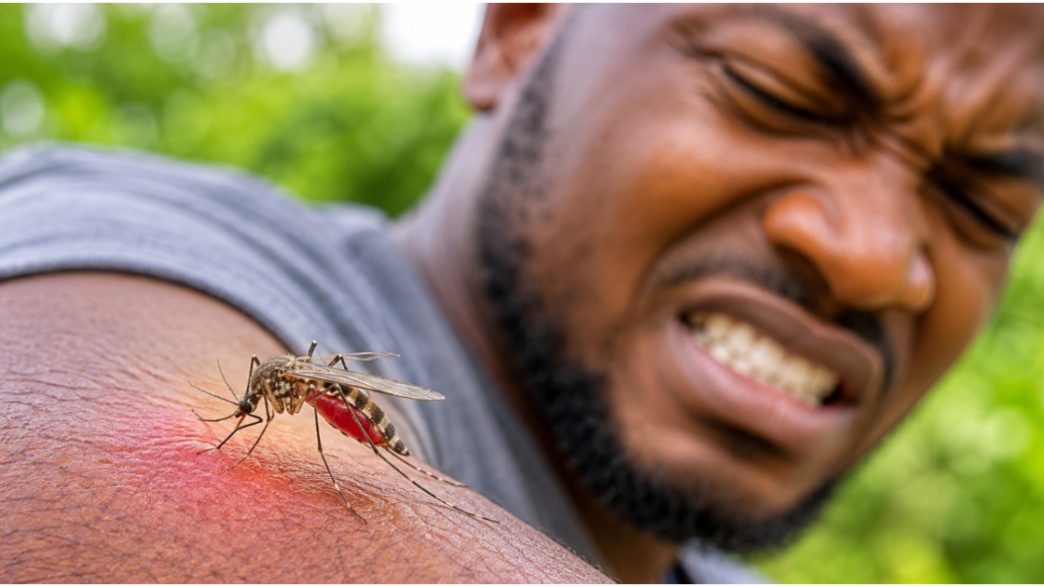
Have you ever wondered why mosquitoes seem to have a personal interest in you and bite you? You could be sitting in a room with several people, yet you are the only one constantly swatting the air and scratching your skin.
Meanwhile, everyone else appears comfortable. You may even begin to wonder whether mosquitoes find your blood sweeter or dislike your perfume. Some people might blame poor hygiene or assume that certain individuals simply have more attractive blood. However, science tells a different story.
Mosquitoes do not choose their targets randomly. They rely on a combination of body odour, carbon dioxide, heat and visual signals to locate humans. Some people naturally produce more of the chemical cues that attract them. 
So, why do mosquitoes appear to favour certain people? And what makes one person more attractive to these persistent insects?
How Many Mosquito Species Exist?
Mosquitoes are among the most familiar insects in the world. Yet, there is much more to them than their irritating bites.
According to the United States Centres for Disease Control and Prevention (CDC), more than 3,700 mosquito species exist worldwide. However, not all of them spread diseases.
Some species transmit dangerous infections, including malaria, dengue, yellow fever and Zika. Others bite humans and animals without spreading disease. Three major mosquito groups are particularly important to public health.
Anopheles mosquitoes transmit malaria. They are especially important in Nigeria and other malaria-endemic countries. However, only certain species within this group can transmit the malaria parasite.
Aedes mosquitoes can spread diseases such as dengue, yellow fever, chikungunya and Zika. Some species are active during the day, particularly around dawn and dusk.
Culex mosquitoes are associated with diseases such as West Nile fever and Japanese encephalitis in some parts of the world.
Mosquitoes also have fascinating life cycles. They begin as eggs, develop into larvae and pupae in water, and eventually emerge as adults.
Interestingly, only female mosquitoes bite humans and animals for blood.
READ MORE: VeryDarkMan Hospitalised in China For Severe Malaria, Claims He Nearly Died
Why Female Mosquitoes Need Your Blood
Contrary to popular belief, mosquitoes do not bite simply because they are hungry for human blood.
Both male and female mosquitoes feed on sugary substances, including flower nectar and plant juices. However, females need an additional source of nutrition to produce eggs. A blood meal provides proteins and other nutrients that support egg development. Male mosquitoes do not take blood meals. Their mouthparts are not adapted to pierce human skin.
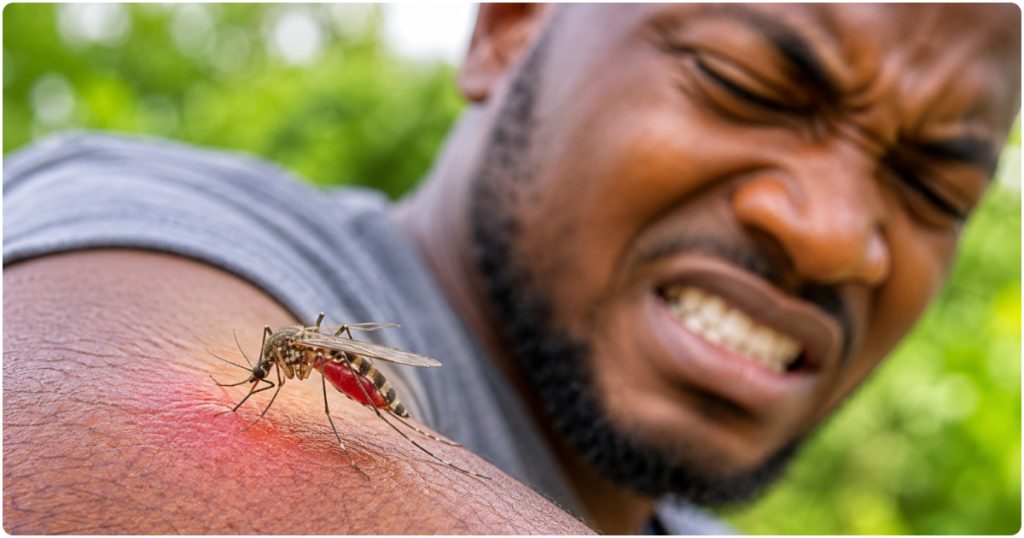
According to the CDC, most female mosquitoes cannot produce eggs without a blood meal. This explains why female mosquitoes seek out humans and other animals. They need the nutrients to reproduce. When a female mosquito bites, it uses a specialised mouthpart called a proboscis to pierce the skin and draw blood. It also releases saliva into the wound. That saliva triggers the body’s immune response, causing the familiar bump, redness and itching. Therefore, the swelling is not poisonous mucus, as some people believe. It is largely the body’s reaction to mosquito saliva.
Four Ways Mosquitoes Track You Down
Mosquitoes have sensory organs that help them locate potential hosts. They combine several signals rather than relying on just one. Here are four important ways they find humans.
1. Carbon Dioxide From Your Breath
Every time you breathe out, you release carbon dioxide (CO₂). Mosquitoes can detect this gas and use it to locate potential hosts. The insects pick up the scent from a distance and follow its concentration towards its source.
However, carbon dioxide alone does not tell them exactly where to land. They combine it with other signals, including body odour and visual cues.
2. Your Body Odour
Body odour is one of the most important factors influencing mosquito attraction. Human skin releases different chemical compounds into the air. Mosquitoes detect these substances through their sensory organs.
According to research published in the journal Cell in 2022, people who attract more mosquitoes tend to produce higher levels of certain skin-derived carboxylic acids. The researchers found that these chemical differences could help explain why some people consistently attract more mosquitoes than others.
As Professor Leslie Vosshall and her colleagues demonstrated, mosquito attraction can remain relatively stable in certain individuals over several years.
This means that taking a bath or changing perfume may not completely eliminate the natural chemical signals that make someone attractive to mosquitoes.
READ ALSO: Bed Bugs vs Mosquitoes: Internet Erupts Over Which Pest Is Worse After Trump’s Order
3. The Colour of Your Clothes
Your outfit may also influence how easily mosquitoes locate you.
A 2022 study published in Nature Communications found that female Aedes aegypti mosquitoes responded to certain colours after detecting carbon dioxide. These included red, orange and cyan. The researchers also found attraction to visual signals resembling the colour spectrum of human skin.
However, this does not mean that wearing these colours automatically attracts mosquitoes. The insects combine visual information with other signals before choosing a target.
4. Your Body Heat
Mosquitoes can also use heat to locate humans, particularly when they get closer.
A 2024 study published in Nature found that female Aedes aegypti mosquitoes detect infrared radiation from warm objects. The researchers discovered that the insects combine this thermal information with carbon dioxide, human odour and visual cues. This helps them locate potential hosts more effectively.
In other words, your body does not need to be visible for its heat and other signals to help a mosquito find you.
Who Attracts More Mosquitoes?
Although mosquitoes can bite almost anyone, research suggests that some people are more attractive to them. Here are some factors that may explain the difference.
1. People With Certain Skin Chemicals
Some people naturally produce higher levels of carboxylic acids in their skin odour.
A 2022 study published in Cell identified a strong association between these compounds and mosquito attraction. Unlike sweat or perfume, these natural chemical differences are not easily removed by bathing.
2. People With Certain Genetic Traits
Genetics may also influence how attractive someone is to mosquitoes.
A 2015 study published in PLOS ONE examined identical and non-identical twins. Researchers compared how mosquitoes responded to the odours from their hands. They found that identical twins had more similar levels of mosquito attraction than non-identical twins. The findings suggested that genetic factors influence body odour and, consequently, mosquito attraction.
However, genes are not the only factor involved.
3. Pregnant Women
Pregnancy may increase a woman’s attractiveness to mosquitoes.
Changes in metabolism, breathing and body temperature can affect the signals mosquitoes use to locate humans. However, the extent of this effect can vary.
Pregnancy does not guarantee that mosquitoes will bite one person more than another.
4. People After Exercise
Have you noticed mosquitoes hovering around you after a workout?
Physical activity increases breathing, body temperature and sweating. These changes can make it easier for mosquitoes to detect someone. The effect may be temporary, but it can increase the number of signals the insects use to locate a potential host.
5. People With Larger Body Sizes
Body size may also influence mosquito attraction.
Larger people generally produce more carbon dioxide because their bodies require more energy. This may make them easier for mosquitoes to detect. However, body size alone does not determine whether someone will attract more bites. Skin chemicals, heat and other factors also matter.
Why Mosquitoes Seem to Prefer You
The next time mosquitoes appear to target only you, do not immediately blame your hygiene or perfume. Your body may simply be producing a combination of chemical and physical signals that makes you easier to locate.
Researchers have identified several factors, including carbon dioxide, skin odour, body heat, clothing colour and genetics. The important thing is that no single factor explains every mosquito bite. Different species also respond to different signals.
So, while you may not be able to change your natural body chemistry, you can reduce your exposure. Use recommended mosquito repellents, wear clothing that covers exposed skin and remove stagnant water around your home.
After all, mosquitoes may have their favourite targets, but you do not have to make yourself an easy meal.
ALSO SEE: Redeemer’s Health Village: Why Robotic Surgery Could Be Better Than Conventional Procedure

About The Author