


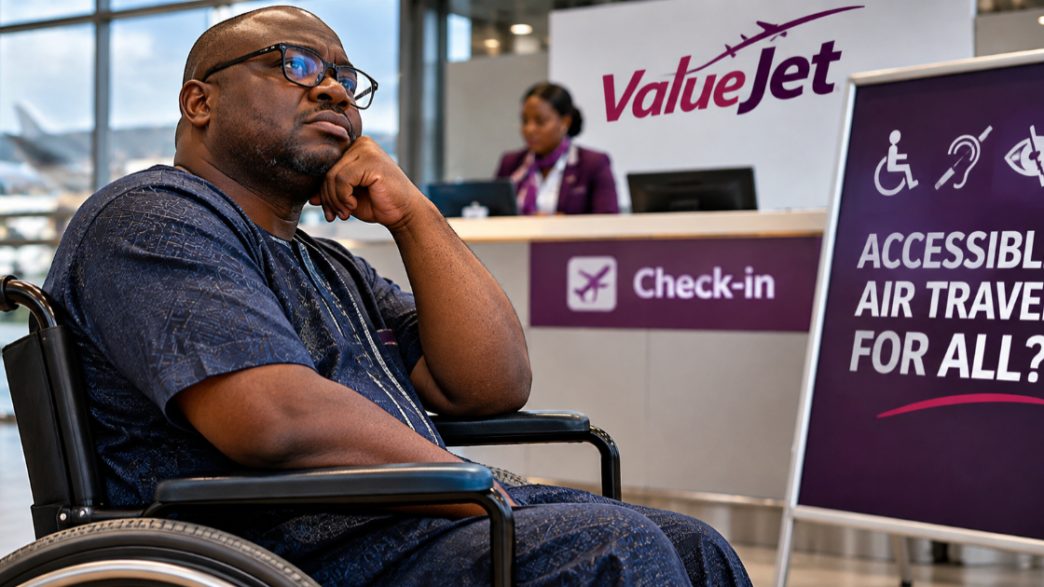
For many Nigerians, booking a flight is a straightforward exercise: check the fare, choose a date, pay and prepare to travel. But for disabled passengers in air travel, even getting to the point of buying a ticket can become an exhausting struggle.
Ayodele Awobona knows this too well.
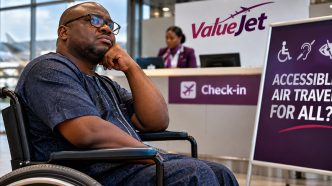
Awobona is not just any traveler. He is the Chairman of the Joint National Association of Persons with Disabilities (JONAPWD), Ogun State Chapter. One would think that should grant him special consideration, like some celebrity status or something. Instead, he recently shared an account of how his attempt to book a flight with ValueJet at Gateway International Airport, Iperu, Ogun State, turned into an uncomfortable confrontation over his use of a wheelchair. 
He wanted to fly to Abuja for an upcoming JONAPWD event. Instead of simply booking his ticket, he said airline representatives told him that because ValueJet operated a small aircraft, he might not be allowed to travel unless someone accompanied him.
For Awobona, the suggestion was particularly frustrating. That response left him asking a question that should embarrass the aviation industry: “How can a person’s disability become a barrier to buying an airline ticket in 2026?”
Awobona & his ValueJet experience: Why it matters
Awobona deliberately chose Gateway International Airport in Iperu because it was closer to him and would reduce the physical stress of travelling to Lagos before catching a flight.
Instead, he encountered another hurdle simply because he uses a wheelchair.
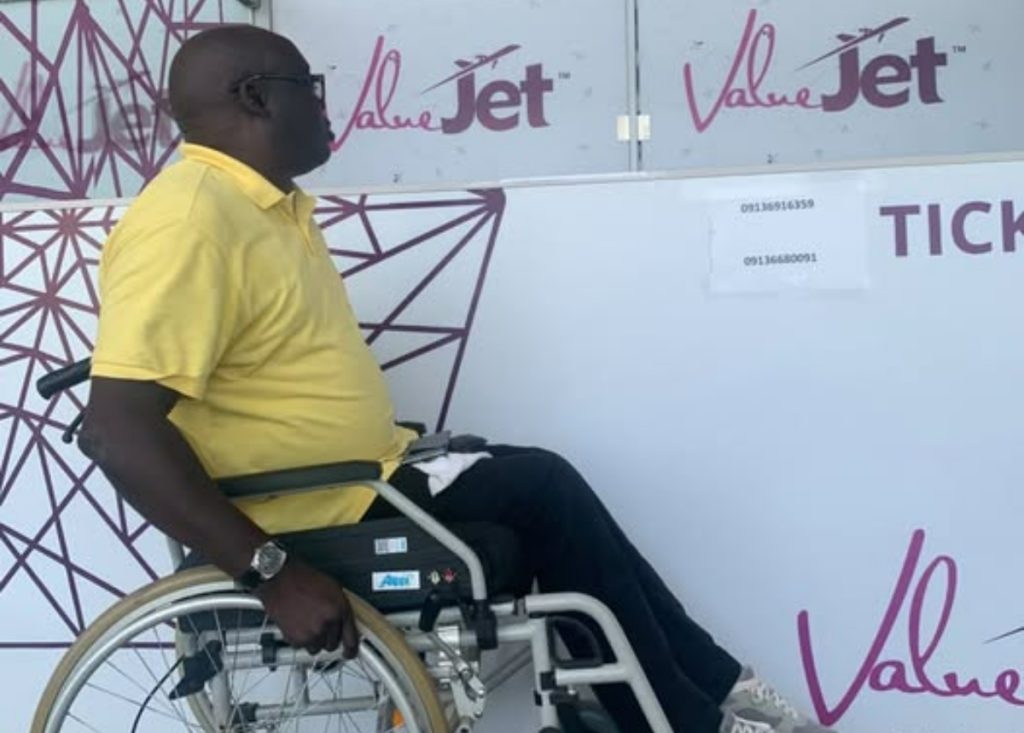
The issue was not that he refused assistance. His account suggests that airport personnel were prepared to provide support. Rather, he objected to the assumption that he needed another person to accompany him before the airline could allow him to travel.
He explained that he travels independently and has flown internationally alone, as well as taken several trips to Abuja with other airlines without an attendant.
“I am an independent traveller,” he wrote, adding that he had already explained his experience to the airline’s representatives.
He also appealed to them not to turn his disability into an obstacle to his journey. According to his account, the SAHCO duty manager at the airport was prepared to mobilise staff to assist him whenever he travelled. Yet, he said, ValueJet’s position remained unchanged: “it was company policy.”
SEE ALSO: Toluwanisings Buried in Ibadan After Weeks of Family Dispute Over Burial
Awobona’s experience raises questions about how airlines assess passengers with disabilities. If an aircraft has genuine limitations, the airline should explain them and consider the passenger’s individual needs instead of relying on a blanket policy.
He ended his account with a message that captures the frustration of many people living with disabilities: “We are not asking for favors. We are demanding equal access, dignity and respect.”
What Nigerian law says about disabled passengers in air travel
Awobona’s complaint comes against the backdrop of existing protections for persons with disabilities in Nigeria.
Section 14(1) of the Discrimination Against Persons with Disabilities (Prohibition) Act 2018 requires airlines operating in Nigeria to ensure aircraft accessibility, provide functional wheelchairs and assist passengers with disabilities during boarding and disembarkation.
The Nigeria Civil Aviation Regulations 2023 also address the issue under Part 19. Section 19.12.4.1 states that airlines must not refuse to accept a reservation or allow a passenger to board on the grounds of disability or reduced mobility, provided the passenger has a valid ticket and reservation.
However, the regulations recognise limited exceptions. Under section 19.12.5.1, an airline may refuse carriage where necessary to meet applicable safety requirements or where the aircraft’s size or doors make boarding or carriage physically impossible.
Even then, the airline must make reasonable efforts to offer an acceptable alternative. It must also explain the reason for refusal immediately and provide it in writing within five working days if the passenger requests it.
The distinction is important: aircraft limitations and legitimate safety concerns matter, but they do not give airlines unlimited freedom to exclude passengers because they use wheelchairs.
ALSO READ: Free Heart Surgeries: Ex-German Footballer Gerald Asamoah Flies 55 Doctors to Ghana
Disabled passengers in air travel: Awobona’s ordeal is not an isolated accessibility problem
Unfortunately, the difficulties disabled passengers face in air travel extend well beyond one booking desk.
In January 2026, the National Commission for Persons with Disabilities (NCPWD) raised concerns about reports that some Nigerian airlines were turning away passengers with disabilities because they operated small aircraft.
The commission warned that such practices could violate the Disability Act and called on airlines to comply with accessibility requirements.
The concern is not new. In May 2024, NCPWD Executive Secretary James Lalu told the NCAA that some airlines had engaged in discriminatory practices. He cited a previous complaint involving Rano Air, where staff allegedly said the airline’s policy did not support passengers with reduced mobility travelling without assistance.
And the problems do not end when passengers manage to secure a ticket.
A 2023 investigation by TheCable documented the difficulties faced by travellers with hearing and visual impairments, including inadequate assistance, inaccessible routes, broken elevators and a lack of proper navigation facilities.
More recently, Voice of Nigeria reported concerns raised by disability advocates about non-functional lifts, steep ramps, poor staff attitudes and inadequate communication facilities for Deaf passengers.
These examples show that accessibility is not simply about providing a wheelchair. It involves making every stage of the journey—from the booking process to boarding and disembarkation—accessible to people with different needs.
NCAA must ensure airlines respect passengers’ rights
The NCAA has taken steps to improve the situation. In January 2026, it directed domestic airlines to integrate a mandatory special-needs assistance option into their ticket reservation systems, allowing passengers to request help when booking.
But a booking option alone will not solve the problem if passengers still encounter restrictive policies or poorly trained staff when they arrive at the airport.
The regulator must ensure that airlines follow the rules, explain genuine safety restrictions and treat passengers with disabilities according to their individual needs.
ValueJet also deserves an opportunity to clarify the specific aircraft limitations or safety requirements behind the position Awobona described. His account raises serious questions, but the airline’s explanation is necessary to establish precisely what happened.
For Awobona, the experience was about more than a flight to Abuja. It was about being made to question whether his independence and right to travel counted for anything at the booking desk.
As he put it: “Disability is not a crime. A wheelchair is not a disqualification from air travel.”
That should not be a controversial statement. It should be a basic principle guiding every airline operating in Nigeria.
READ ALSO: Ann Lawani: Nigerian Professor Held by ICE For 2 Months Despite Protection From Deportation

About The Author