


Thirteen years abroad. She missed funerals. She missed her mother growing old. Seven months after her parents finally visited, her mother was gone.
The TikTok video wasn’t dramatic. No music. No dance. Just a woman, sitting in her kitchen, turning 40 in a few months, telling the truth.
Uloma Nwogu moved to the United Kingdom in 2013. For thirteen years, she built a life there. Work. Routine. Survival. But there was one thing she didn’t do enough. 
Go home.
“After I moved to the UK in 2013, the next time I saw my parents was in 2023,” she said on TikTok .
A ten-year gap. An entire decade.
Her parents finally came to visit her in the UK. They stayed for six months. She cooked for them. Showed them around. Watched them meet her friends. It felt like catching up on lost time.
Then they returned to Nigeria. Seven months later, her mother died .
“My biggest regret: I’d have gone home more. If I had gone home more, I’d have seen her more. Because when she came to the UK—that gap—she had gone old. The eyes that I used to see them was different,” she said .
The Numbers Nobody Posts
The TikTok videos make it look easy. Snow. Fresh air. A currency that doesn’t crash. But the people actually living it are telling a different story .
A Nigerian banker paid N10.2 million for return tickets to Canada for his family of six. Today, he works as an attendant in a grocery store, despite holding a first and master’s degree .
“My brother, there is peace here, but the struggle continues,” he confessed to a former colleague .
In the UK, a Nigerian woman paid someone £12,500, over N23 million, to get a company to sponsor her visa. Nothing came through . She applied for a visa extension twice. Both applications were rejected within two weeks .
“I didn’t just decide to leave the UK. Life kind of happened,” she said .
The Wasted Years Feeling
That feeling of time slipping away while you chase a dream, is the one nobody prepares you for.
A Nigerian woman in Canada for 12 years recently told Zikoko she is still there only because she is waiting for her citizenship. She is tired of the cold, the boredom, and the racism that is “subtle” but constant.
“The only reason I’m still in Canada is to get my citizenship,” she said. “I always want to be back in Nigeria.”
Another Nigerian, Daniel, returned to Nigeria after 12 years in London. He didn’t come back with heavy boxes or an “abroad” accent. He came back with a small nylon bag and the same shoes he wore 12 years ago .
When his brother asked what happened, he said: “When I see money, a strange bill or a police case will swallow it.”
The Lonely Death Nobody Talks About
Then there is the story that haunts.
A Nigerian woman in the UK, a successful banker who had “everything”, lived in complete isolation. After a bad breakup years ago, she withdrew from society. Cut off connections with her family. Refused to mingle .
She died alone in her apartment. Nobody knew for four days.
“Her body don rot. Worms don dey come out from her body. Nobody knew for four days,” a friend recounted on TikTok .
The friend warned against extreme independence: “Even if you’re not going to marry or you don’t want to give birth, adopt. My social life saved me when I got diagnosed with cancer. People turned up for me” .
The Black Tax That Never Ends
Beyond loneliness, there is the money.
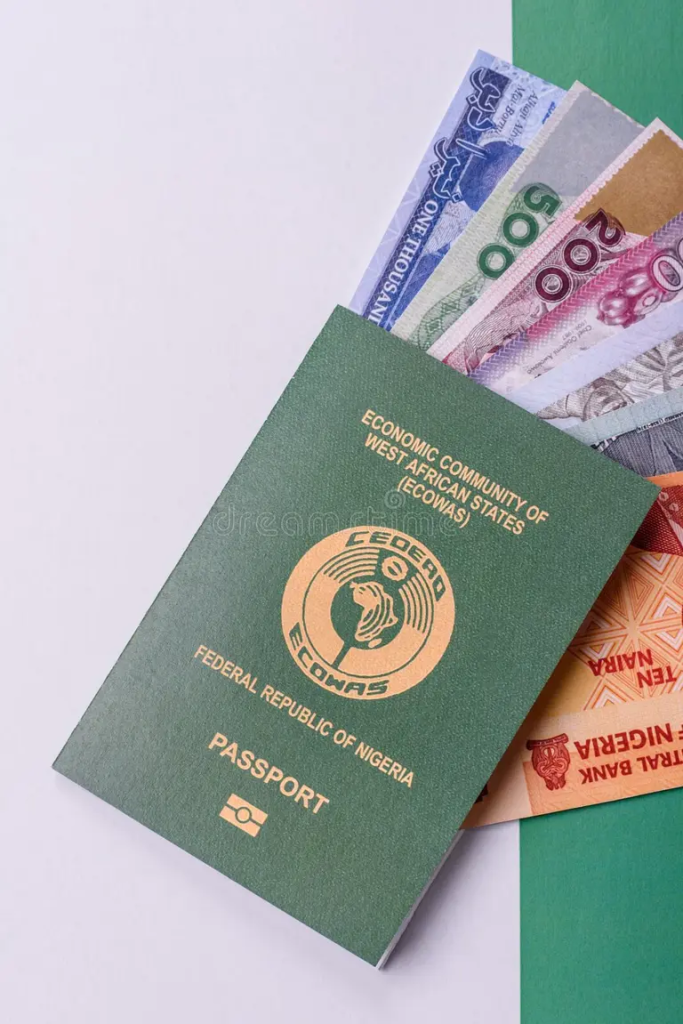
Nigerians abroad send home more than $20 billion annually, more than the country receives in foreign direct investment . But behind those figures are personal sacrifices.
A nurse in Houston works 12-hour shifts at two hospitals . A software engineer in Toronto joked: “If my salary doubled, it would still vanish before I get to spend it” . A UK-based student said: “Every time I get paid, it feels like the money has wings. My phone lights up: ‘Uncle, my rent is due'” .
The guilt is inescapable. If I don’t send, who suffers? If I do send, who am I really helping?
The Cost Nobody Calculated
You leave Nigeria thinking you will spend five years abroad, save, and return a success.
Five becomes ten. Ten becomes fifteen.
You miss funerals. Weddings. Your niece growing up. Your parents aging without you.
And for what? A job that barely covers rent. A visa that depends on your employer’s mood. A loneliness that hits hardest on Christmas morning.
The Other Side
Not everyone regrets it. Some prefer the struggle abroad to the chaos at home.
A former head of department who relocated to the UK said he would rather leave for work at 4am in the UK than return to Nigeria. “I rather cry in an environment where there is security and stable power supply,” he said .
A Nigerian software engineer who lost a $260,000 job offer because of his nationality now wonders whether relocating is “the only viable path forward” .
For some, the math still makes sense. For others, the cost was always more than money.
What the Commenters Said
After Uloma shared her story, the comments poured in.
“Same with me, she came visiting not knowing she had cancer. Four months after she went back to Nigeria, I lost her” .
“The older you get, the more you understand that many things we strive for are not that important. Family, love, good health, that’s all that matters” .
Others are making different choices.
“Last month, I decided to go back home. When I told people I was around, they kept asking, ‘Ah, you came back, hope everything is okay?’ But the truth is, something doesn’t always have to go wrong before you visit home” .
SEE ALSO: See 50 Most-Loved and Used Brands in Africa
The Real Question
Is life easier abroad?
For a software developer earning six figures? Yes. For a nurse with a job offer and sponsorship? Sometimes.
But for Uloma Nwogu, who spent 13 years in the UK and missed her mother’s final years? The answer is more complicated.
Her mother is gone. And she cannot get those years back.
The TikTok videos will keep showing you the highlights. The flights. The snow. The foreign currency.
What they won’t show you is what Uloma learned the hard way: The grass is greener where you water it. But abroad, the water bill is three times higher. And sometimes, you only realize what you lost when it’s too late to get it back.

About The Author