


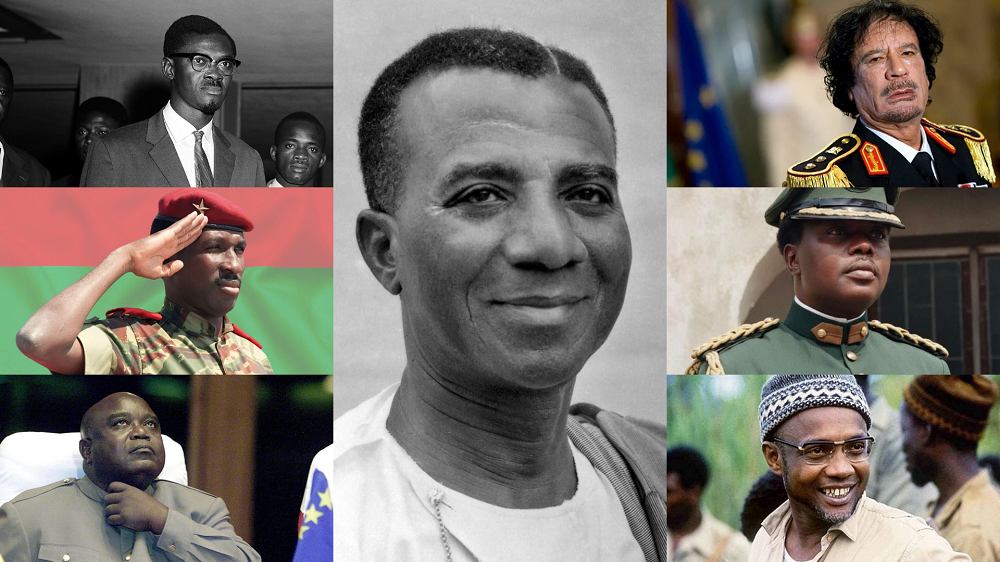
Africa’s post-independence history is marked by bold leaders who challenged colonial systems, corruption, and foreign control.
Many of them are revered today because they paid the ultimate price for freedom from oppression and independence.
Their assassinations were not isolated events, as their deaths happened during periods of political tension, military unrest, and external interference. 
Below are some of the most notable African leaders whose deaths changed the course of their nations forever.
ALSO READ: The 10 Most Powerful Kings in Ancient Africa
8 African Leaders Who Were Assassinated
1. Patrice Lumumba – Democratic Republic of Congo (1925 – 1961)
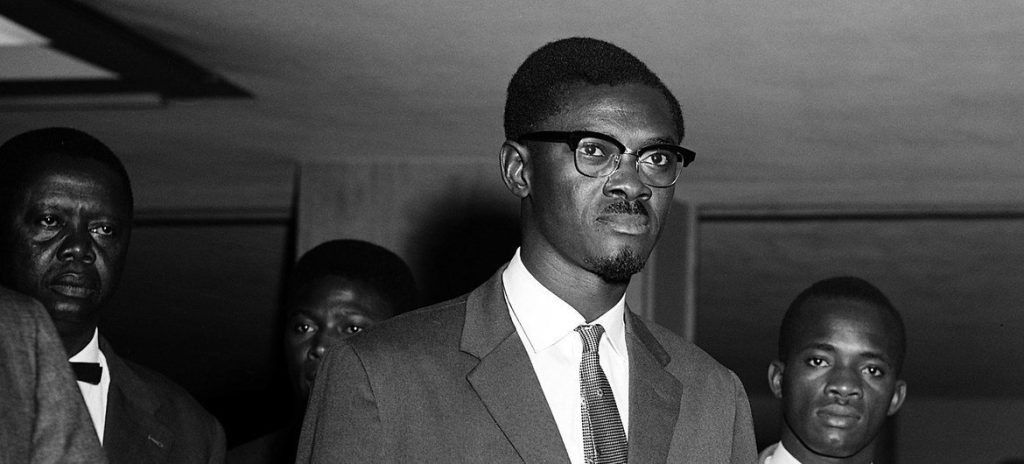
Patrice Lumumba became the first Prime Minister of the Congo after independence from Belgium in 1960. He believed strongly in African unity and wanted Congo’s vast mineral wealth to benefit its people, not foreign powers.
But at the time, Congo was unstable. Provinces attempted to secede, and foreign governments feared Lumumba’s anti-imperialist stance.
On the night of 17 January 1961, Patrice Lumumba was killed by Congolese soldiers, with the involvement of Belgian mercenaries.
His killing was kept secret for several weeks, and during that time, his body was dissolved in acid, and all that remained of Lumumba’s body was a gold-crowned tooth.
A Belgian police officer, Gérard Soete, who was involved in disposing of the body, took the tooth back to Brussels and kept it for decades.
More than 60 years later, on 20 June 2022, Belgium returned Lumumba’s tooth to his family during a formal ceremony in Brussels. Ten days later, on 30 June 2022, the Democratic Republic of Congo held a state funeral for him in Kinshasa.
Although he spent only a short time in power, Lumumba remains one of Africa’s strongest anti-colonial voices and is remembered as a powerful Pan-Africanist leader who stood for freedom, dignity, and true independence.
His legacy resurfaced during the Africa Cup of Nations (AFCON), when a Congolese supporter stood motionless as a living statue in the stadium, holding Lumumba’s image.
2. Thomas Sankara – Burkina Faso (1949 – 1987)
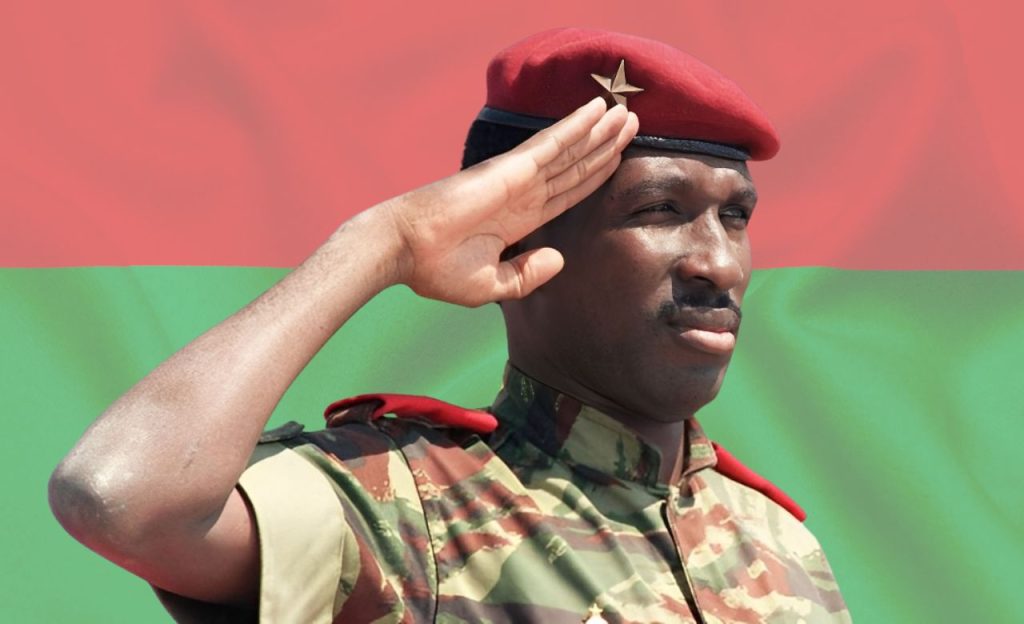
Thomas Sankara ruled Burkina Faso from 1983 to 1987 and was popularly known as “Africa’s Che Guevara”.
He promoted self-reliance, women’s rights, anti-corruption policies, and rejected foreign debt. However, his radical reforms angered elites, neighbouring countries, and foreign interests.
On October 15, 1987, his former ally, Blaise Compaoré led a coup against Sankara.
A variety of factors like infighting among the various political factions within the National Council of the Revolution, alarm that Sankara’s anticorruption measures might expose or hinder those engaged in illegal dealings, and pressures from abroad, including France and Côte d’Ivoire, to tone down the country’s anti-Western stance played into the coup.
Soldiers shot him during a meeting in Ouagadougou. His death ended one of Africa’s most visionary leadership experiments.
3. Muammar Gaddafi – Libya (1942 – 2011)
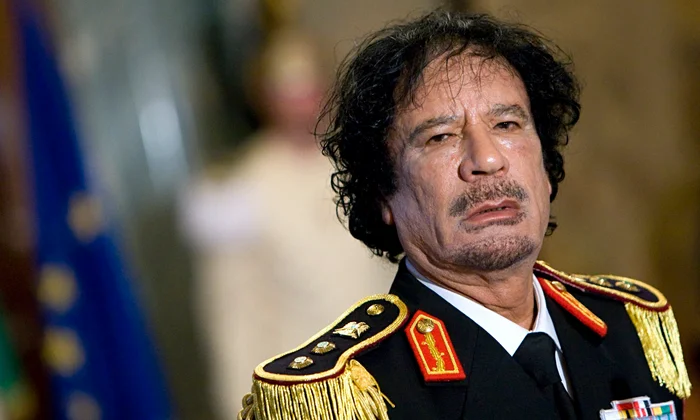
Gaddafi ruled Libya for over four decades after overthrowing the monarchy in 1969. He used oil wealth to improve education, housing, and healthcare, but ruled with an iron fist and crushed opposition.
His leadership was described as a military dictatorship, accusing him of repressing civil society.
According to Human Rights Watch, his regime imprisoned hundreds of people for violating the law and sentenced some to death.
Inspired by revolutions in Tunisia and Egypt, Libyans began to hold peaceful protests against his regime in February, 2011. Demonstrations were met with military force, and the uprising escalated into a civil war.
The war raged on for months, and eventually, the rebels entered Tripoli on August 21. They captured Gaddafi while he was fleeing his hometown, and he was killed shortly after capture. His death plunged Libya into prolonged instability and civil conflict.
4. Sylvanus Olympio – Togo (1902 – 1963)
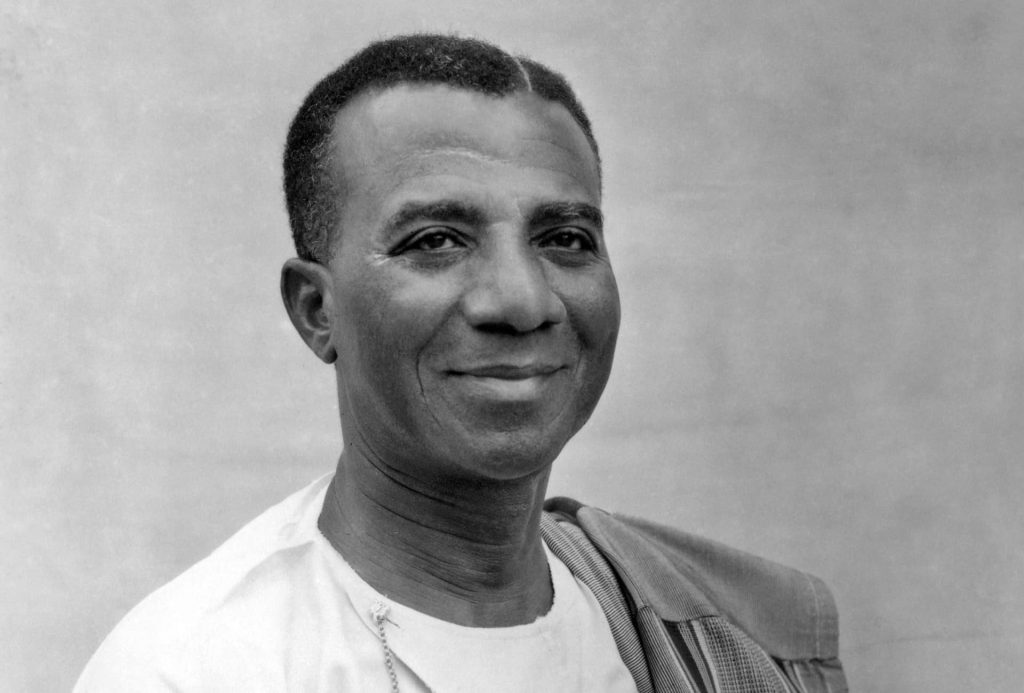
Sylvanus Olympio became Togo’s first President after independence from France. He aimed to reduce military spending by restricting the number of veterans who had fought under French command from being integrated into the regular Togolese army.
He felt that this would incur an unnecessary expenditure by his cash-strapped government, however, disgruntled soldiers opposed him and political tension grew rapidly.
On the night of June 12, 1963, soldiers assassinated Olympio outside the US embassy in Lomé. He became the first head of state to be assassinated during a military coup in post-colonial Africa.
5. Laurent-Désiré Kabila – Democratic Republic of Congo (1939 – 2001)
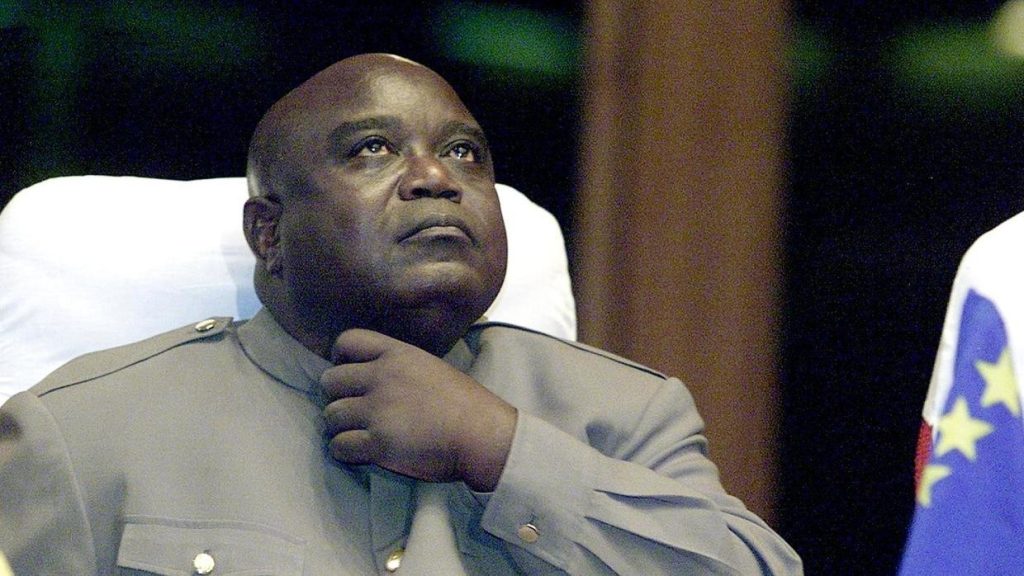
Laurent Kabila came to power in 1997 after overthrowing Mobutu Sese Seko. He promised reform but soon faced rebellion, corruption accusations, and war.
A year down the line Kabila ordered the foreign troops to leave the country fearing they may be involved in a potential coup against him. This action led to the Second Congo War from August 1998 to July 2003.
Kabila found himself in a difficult position as his Rwandan and Ugandan foreign backers were supporting several rebel groups to overthrow him.
It was betrayal within Kabila own personal security team that eventually cost Kabila his life. During the war on 1st January 2001 he was assassinated by one of his bodyguards.
6. Major General Johnson Aguiyi-Ironsi – Nigeria (1924 – 1966)
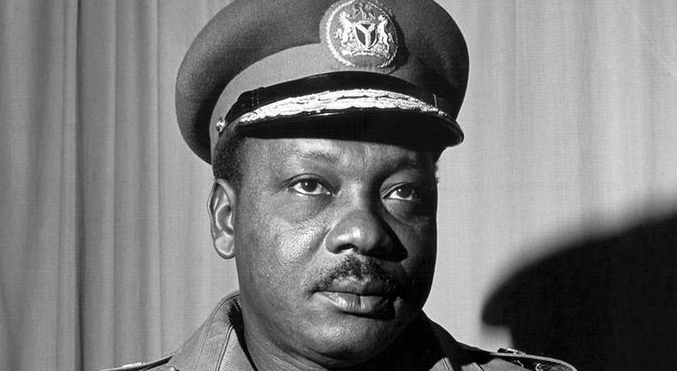
Aguiyi-Ironsi became Nigeria’s Head of State on January 16, 1966, following Nigeria’s first military coup, which saw the assassination of Prime Minister Abubakar Tafawa Balewa and other key northern and western political leaders.
Although the coup was carried out by junior Igbo officers, Aguiyi-Ironsi, was not directly involved. Nevertheless, he stepped in to restore order and was invited by political leaders to lead the country and prevent a descent into chaos.
However, ethnic tensions worsened, especially in Northern Nigeria. They viewed his policies as favouring one region.
On July 29, 1966, he was captured in Ibadan, along with his host, Lt. Col. Adekunle Fajuyi (the military governor of the Western Region). Both men were brutally murdered.
The coup was led by officers including Lt. Col. Murtala Muhammed, Theophilus Danjuma, and Major Ibrahim Babangida.
His death pushed Nigeria closer to civil war.
7. Amílcar Cabral – Guinea-Bissau (1924 – 1973)
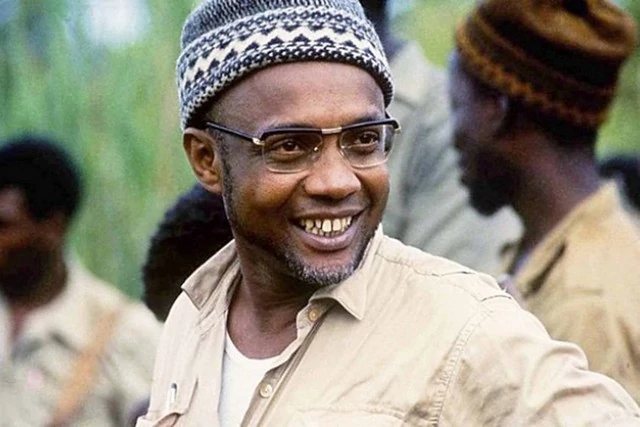
Amílcar Cabral led the independence struggle against Portuguese rule in Guinea-Bissau and Cape Verde. He believed in unity, education, and disciplined resistance.
As the liberation movement gained success, internal divisions and external pressure increased.
Cabral was killed on January 20, 1973, aged 48, in Conakry, the capital of the Republic of Guinea. His assassin was someone he knew, a fellow militant.
He did not live to see independence, which came a year later.
8. General Murtala Muhammed – Nigeria (1938 – 1976)
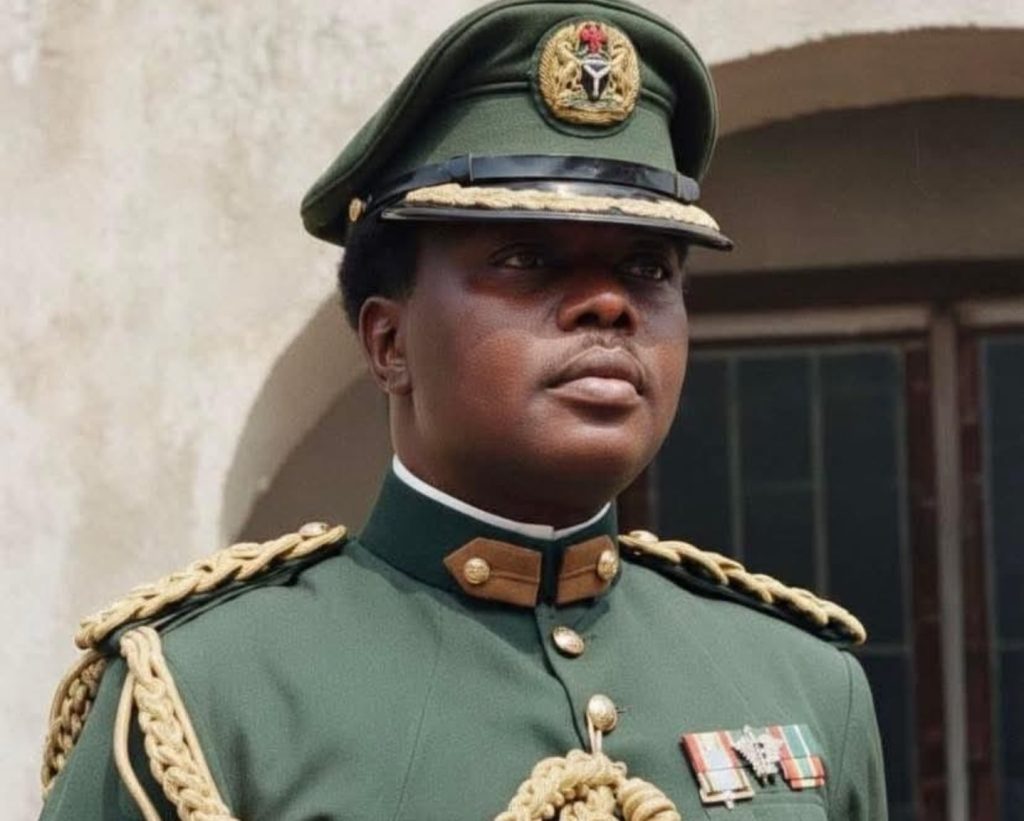
Murtala Muhammed ruled Nigeria briefly but left a lasting impact. He fought corruption, reformed public service, and pushed for a return to civilian rule.
On July 29, 1975, Murtala Muhammed seized power in a bloodless coup that ousted General Yakubu Gowon. The coup was motivated by frustration over Gowon’s failure to transition to civilian rule and general dissatisfaction within the military.
However, on February 13, 1976, General Muhammed was assassinated in Lagos during an attempted coup led by Lt. Col. Buka Suka Dimka, a disgruntled officer.
As he was being driven to work, Dimka’s team ambushed his convoy near Ikoyi. Murtala and several of his aides were killed on the spot. The motive remains a mix of personal grievance, political dissent, and power struggle.
Nigerians widely mourned him, and he remains one of the country’s most respected leaders.
About The Author