



Food adulteration in Nigeria has always been a prevalent problem, which is very alarming because there are few things Nigerians take more seriously than food. We will argue over whose jollof rice deserves international recognition. We don’t mind traveling ridiculous distances for good amala, and we will defend our favourite buka as though our lives depend on it.
So what happens when the food we buy to satisfy hunger becomes something we must investigate before eating?
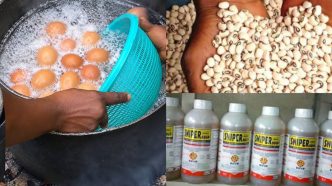
A viral warning from Nigerian food creator Kilani Latifat Omowunmi, popularly known as Potofflavours, has raised that uncomfortable question once again. The creator warned people about roadside boiled eggs after claiming she found detergent sachets, foamy water and a strong smell around a spot where vendors prepared eggs for sale. 
The allegation is disturbing. Imagine buying an egg to accompany your noodles, only to wonder whether your breakfast has secretly enrolled in a laundry programme.
However, there is an important distinction: Potofflavours did not witness anyone adding detergent to the cooking pot. Her observations raised suspicions, but they did not independently establish that vendors were using detergent to boil eggs. The allegation remains unverified.
Still, the controversy has revived a wider concern about food adulteration in Nigeria. It has reignited previous warnings about dangerous chemicals, pesticides and inappropriate drug use in food production.
From Sniper beans to detergent eggs: We have been here before
The detergent allegation might sound like an outrageous new development, but concerns about the misuse of chemicals in Nigerian food are not new. Anyone living in Nigeria knows this.
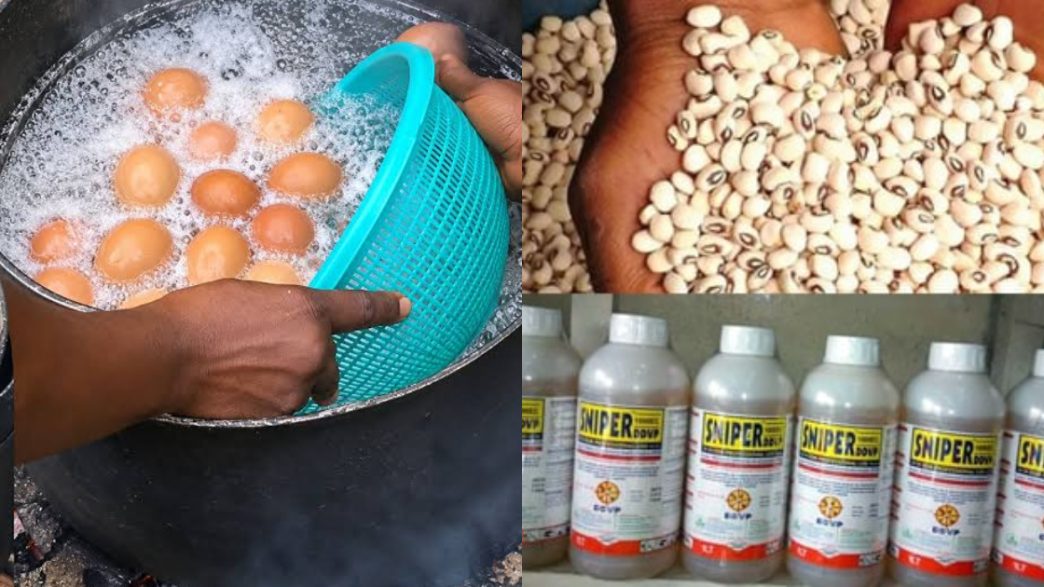
In November 2018, the National Agency for Food and Drug Administration and Control (NAFDAC) issued a public alert about traders directly spraying, mixing or sprinkling agrochemicals such as dichlorvos, commonly associated with the Sniper brand, onto beans and other grains to prevent insect infestation.
The problem was not simply that traders wanted to preserve their stock. It was that pesticides intended for controlled use were coming into direct contact with food.
NAFDAC warned that consuming contaminated grains could cause serious health problems, including vomiting, diarrhoea, seizures and, in severe cases, death. The agency urged consumers to avoid grains showing signs of chemical contamination and encouraged the public to report suspicious practices.
The incident illustrated an uncomfortable reality: a product can look perfectly ordinary on a market stall while its handling raises serious safety questions.
Beans are supposed to provide protein, not an unexpected appointment with a toxicologist.
READ ALSO: The Nigerian Emergency Folder Every Household Should Have
Garri, fufu and the temptation to make food processing faster
Another recurring controversy concerns claims that some processors use non-food chemicals to speed up fermentation or improve the appearance of staple foods such as garri, fufu and pap.
In September 2026, the Lagos State chapter of the Environmental Health Officers Association of Nigeria issued a circular directing environmental health officers to intensify enforcement against suspected chemical adulteration involving these foods. The circular cited public complaints and media reports about alleged use of bleach, detergent, soda and potash during processing.
The directive demonstrates that the concerns have attracted regulatory attention. However, it is important to understand what it does – and does not – prove. An enforcement circular issued in response to reports is not the same as a laboratory investigation establishing that a particular producer adulterated food.
The distinction matters because millions of Nigerians depend on small-scale food processors and vendors for their livelihoods. An allegation against some operators should not become a verdict against everyone selling garri or preparing fufu.
At the same time, traditional food processing should not become an excuse for using substances that are unsuitable for human consumption.
There is nothing wrong with looking for faster, cheaper ways to produce food. The trouble begins when the shortcut introduces a new risk that consumers cannot see or reasonably detect.
Chicken, antibiotics and the race to grow bigger birds
Food safety concerns do not end at the market or roadside cooking pot. They can begin on the farm.
A nationwide study published in the Nigerian Journal of Animal Production examined antibiotic use among 2,402 poultry farmers across 12 Nigerian states. Researchers found that some farmers used important antibiotics for disease prevention and growth enhancement, including practices that did not follow recommended veterinary guidance.
The study also found that 62.3% of the surveyed farmers did not observe recommended withdrawal periods after administering antibiotics. That period matters because it allows time for drug residues to fall to acceptable levels before animals or their products enter the food supply.
The findings do not mean every Nigerian chicken contains dangerous drug residues, nor do they prove that farmers routinely inject birds with mysterious growth drugs. Antibiotics have legitimate veterinary uses, and the study specifically examined how farmers administered them.
Nevertheless, inappropriate antibiotic use can contribute to antimicrobial resistance, making infections harder to treat in animals and humans.
The lesson is not that Nigerians should stop eating chicken. It is that poultry production requires responsible veterinary care, proper drug administration and compliance with withdrawal periods.
A chicken growing quickly is not, by itself, evidence of wrongdoing. The question is what went into raising it, whether the treatment was appropriate, and whether the farmer followed the rules.
SEE ALSO: From ₦20 to ₦1,400: History of Petrol Price Hikes in Nigeria Since 1999
Food adulteration in Nigeria is not limited to roadside vendors
It is tempting to imagine food adulteration as something that happens only in open markets or at roadside stalls. But unsafe and falsified food products can also enter formal supply chains.
In March 2026, NAFDAC issued an alert about suspected counterfeit and unregistered Cerelac Mixed Fruits and Wheat products reportedly found for sale in Lagos. The complaint raised concerns about a product that appeared to have an altered expiry date and an odour suggesting possible contact with fuel.
The agency’s notice described the product as suspected counterfeit, based on information from the genuine manufacturer and preliminary review. It did not establish that every product of that brand was affected.
The case nevertheless demonstrates why packaging and brand recognition alone cannot guarantee authenticity.
Consumers should check product labels, batch details, expiry dates and seals, and buy regulated products from reputable suppliers. Suspected counterfeit products should be reported rather than treated as harmless bargains.
Why would anyone tamper with food in the first place?
There is no single explanation for food adulteration in Nigeria. Different cases involve different motives, and the evidence does not support assuming that every questionable practice is driven by greed alone.
Some traders may seek to prevent insects from destroying stored grains. Processors may want to shorten production time or achieve a particular texture or appearance. Farmers may misuse antibiotics because they believe the drugs will prevent disease or improve productivity.
These motives help explain how unsafe practices can emerge; they do not excuse them.
Food businesses operate under real pressures. Rising input costs, unreliable electricity, storage problems, spoilage and tight profit margins can make safe production more expensive. Small operators may also lack adequate training or access to proper equipment.
But consumers face pressures of their own. Many households already struggle to afford nutritious meals, and they should not have to wonder whether the food they can afford is safe to eat.
The answer is not to demonise every vendor or assume that every viral warning is true. It is to enforce standards consistently, provide practical food-safety education, investigate credible complaints and hold proven offenders accountable.
SEE ALSO: What to Do During Heat Waves: Practical Tips to Stay Safe
Can consumers tell when food has been adulterated?
Unfortunately, not always. An unusual smell, strange colour or suspicious preparation area may justify caution, but appearance alone cannot reliably establish whether food contains a harmful chemical.
Likewise, a normal-looking egg is not proof that it was prepared safely. Nor does foam around a cooking pot, on its own, prove that detergent was added to the food.
Consumers can take sensible precautions: buy from vendors who maintain clean preparation areas, pay attention to food handling, avoid products with suspicious packaging or obvious contamination, and report credible concerns to the relevant authorities.
NAFDAC provides guidance on submitting complaints about suspected substandard or unsafe products through its consumer complaint service. Where contamination is suspected, proper sampling and laboratory analysis can help establish what happened.
That is especially important in viral cases. Social media can alert the public to a potential problem, but a video is not a substitute for a verified investigation.
The real issue is trust in the food we eat
The controversy surrounding boiled eggs is about more than one creator’s warning. It touches on a basic expectation: when people pay for food, they should be able to trust that it was produced, handled and prepared safely.
Food adulteration in Nigeria is not a reason to conclude that every market seller is dishonest or that every local meal is dangerous. The documented warnings and research point to specific practices that require attention, not a blanket indictment of the country’s food industry.
But neither should repeated concerns be dismissed as social-media exaggeration. The Sniper warning, research into inappropriate antibiotic use in poultry and recent enforcement concerns over staple-food processing show why regulators must investigate credible reports and communicate their findings clearly.
As for the boiled eggs, the allegation deserves proper verification before anyone declares roadside egg sellers guilty. If evidence confirms that a vendor deliberately uses laundry detergent in food preparation, authorities should act accordingly.
Until then, Nigerians should remain alert without surrendering to panic. We should be able to buy an egg, a plate of beans or a wrap of fufu without needing a chemistry degree to enjoy lunch.

About The Author