


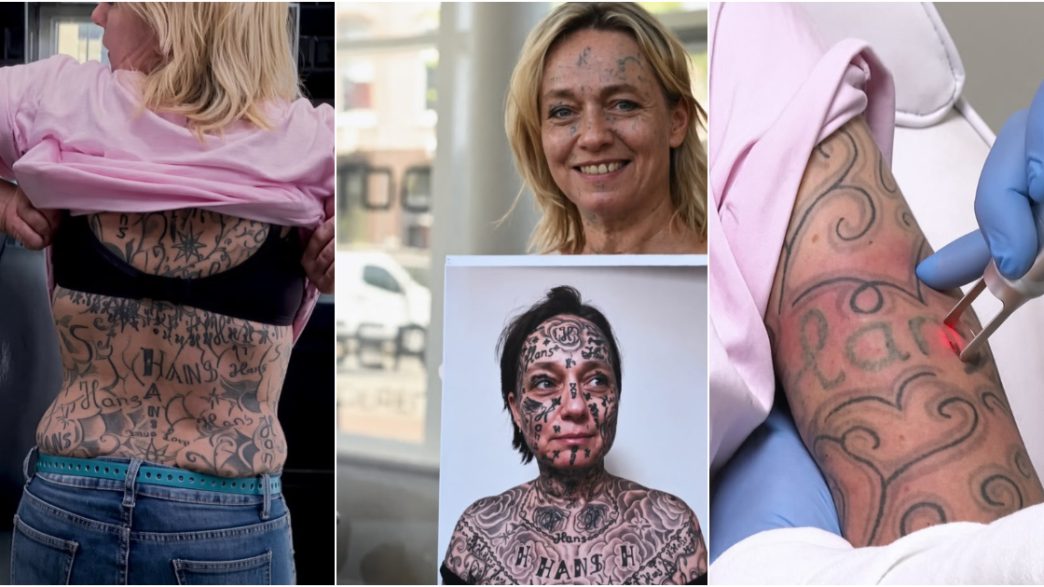
Joke, a Dutch woman in her early 50s, is on a journey to remove approximately 250 tattoos forced on her by her ex-partner, Hans.
She had endured years of severe domestic abuse, including being isolated from her children and family. Hans exploited her financially and locked her in caravans and a shed. However, something else left a more permanent and visible mark on her; her abuser forced tattoos on her using a cheap machine bought online until virtually no part of her body remained ink-free.
Joke’s ex-partner covered roughly 90% of her skin with his name, initials, and possessive phrases such as “property of.” 
The tattoos appeared on her face more than a dozen times. Her forehead, nose, cheeks, chin, and even eyelids were inked. Hans tattooed her neck, chest, and other areas he believed had been touched by other men. What began as escalating coercive control turned into a form of branding designed to assert ownership and leave her marked long after the relationship ended.
In a BBC report, Joke described it as falling into the hands of “a psychopathic narcissist.” The marks made her feel ashamed and stigmatized. She was afraid to go outside and was constantly confronted by the past every time she looked in a mirror.
SEE ALSO: Body Enhancement: When Looking ‘Good Enough’ Becomes Dangerous
The Removal Process of the Tattoos
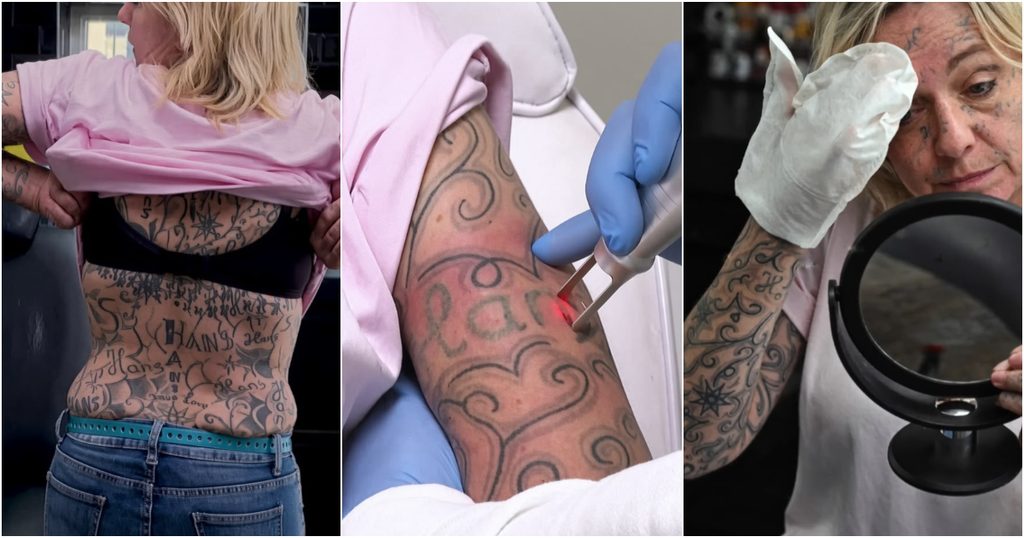
Joke is now reclaiming her body and identity with support from a Rotterdam-based foundation Spijt van Tattoo (“Tattoo Regret”).
The organization provides free laser tattoo removal to survivors of abuse who were forced or coerced into unwanted ink. For more than two and a half years, Joke has undergone multiple painful laser sessions. She has had about a dozen laser sessions focused on her face alone, with the use of anesthesia in some cases because of the intensity of pain that comes with the treatment.
Andy Han, associated with the foundation, has spoken about the scale of the work: her body was so thoroughly covered that it was difficult to know where to begin. The foundation views these forced tattoos as a deliberate method of possession and control, which is often framed by abusers as “proof of love.”
The process is slow, expensive, and physically demanding, but it is already transforming her appearance and sense of self. The progress made on her face is particularly significant and has reduced the constant public visibility of the abuse.
Forced or coerced tattoos are an under-discussed but documented tactic in some abusive relationships. They serve as lasting symbols of ownership, humiliation, and control that outlast the relationship itself.
Joke says that clearing the forced tattoos is more about erasing a daily visual reminder of the control she endured and reclaiming ownership of her own body. However, her journey is far from over.

About The Author