





Patrick Ta is one of the biggest names in celebrity makeup. He has recently worked with Adriana Lima, Ciara Miller, and Jacqueline Fernandez. His brand sits on Sephora shelves worldwide. He has built an empire on the promise of glow, shine, and red-carpet glamour.
But his latest release has sparked something different. Not celebration. Controversy.
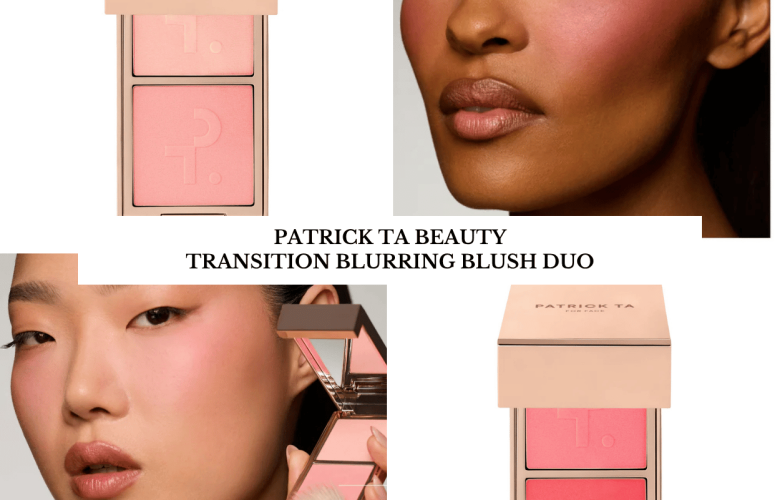
The “Transition Blurring Blush” dropped with a price tag of $140, more than triple the cost of his previous products. Fans called it a cash grab almost immediately. Then came the more serious accusation: that the technique behind the product was not his at all. 
Enter Painted by Esther.
The Technique Everyone Is Talking About
Painted by Esther is the professional name of Ngozi Esther Edeme, a Nigerian-British makeup artist based in the UK. Her signature is heavy, doll-like blush application. Think Barbie blush. Think button noses and luminous finishes. Think of the kind of look that makes Black women feel seen in an industry that told them to wear purples or reds instead of pinks.
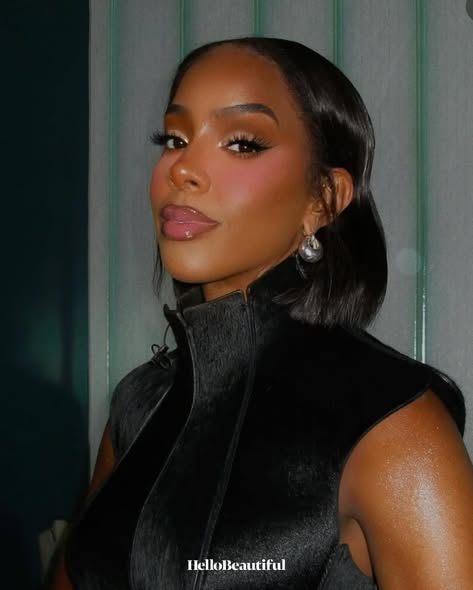
“‘Clean girl’ makeup neglects a section of people, particularly Black girls,” she told AOL in December 2025. “I wanted to challenge that by using this style of glam on Black women, who have always been told to wear purples or reds.”
Her work has appeared on Naomi Campbell, Olandria, SZA, and Kelly Rowland. Her technique went viral after she posted tutorials showing exactly how to achieve the look. She became known for using a powder puff as the secret ingredient.
Then Patrick Ta released his blush. And the technique looked very familiar.
The Conversation Esther Wanted to Have
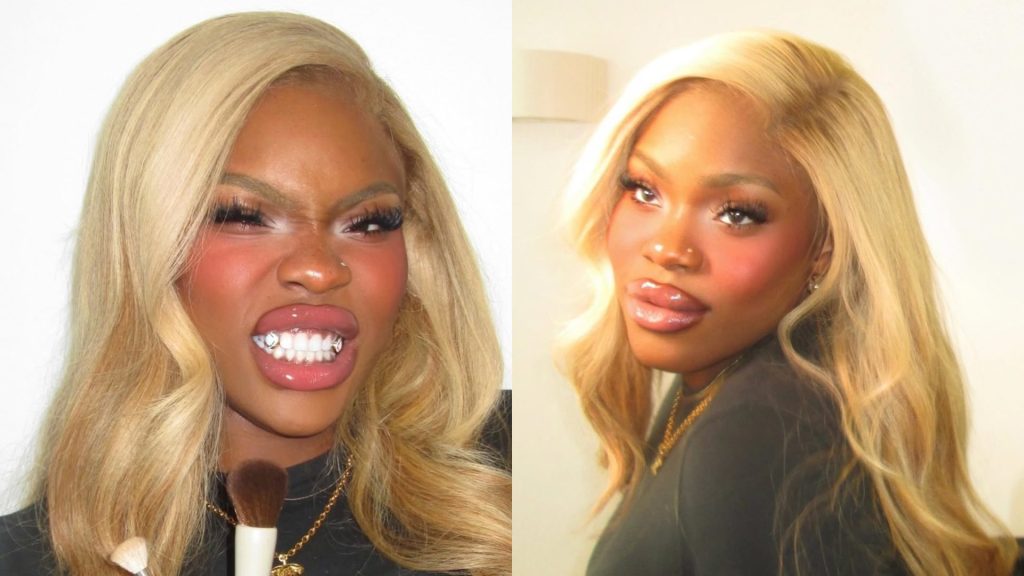
In a recent TikTok video, Esther addressed the copying claims, but she was also careful. Measured. The words of someone who has been in this industry long enough to know how these things go. She said she never claimed to have started anything, as she stands on the shoulders of those who have gone before her.
She spoke about “weird experiences” with Patrick Ta. According to Esther, the other side of Patrick Ta’s team booked her for what was described as a “do and go”—a simple appointment to do someone’s makeup.
But on the day of the booking, the instructions changed. The client asked if she could record Esther as she worked. Not just take photos. Record a video of her technique.
Esther found this strange. It felt conniving, she said. She declined and cancelled the booking.
Then came the timing.
“I posted a tutorial, and I said the secret ingredient is using a powder puff, and he has also done the same thing. Conveniently after.”
She pointed out something obvious: Patrick Ta makes blushes. He sells them for a living. If the powder puff technique was truly his original method, why has he not released his own puff?
“My thing is, if that was really your technique, you would have made a powder puff. You make blushes.”
The Weight of Being Black and a Woman
Esther did not make this about race and gender lightly. She stated it plainly.
Being Black and a woman makes things generally harder for her in the beauty industry. She said she has to do twice as much as others to receive the same recognition.
According to a 2023 report on diversity in the beauty sector, minority-owned brands and creators receive less than 5% of venture capital funding in the beauty market, while Black consumers account for 11.1% of total beauty spending.
The clean girl aesthetic dominated beauty conversations for years. It favoured minimal makeup, slicked-back hair, and a certain kind of skin that did not always look like hers. Esther built something different. She built something that worked for deeper skin tones, for women who wanted to be seen, for a demographic the industry often treats as an afterthought.
So when a famous male makeup artist with a global brand appears to adopt her technique without credit, it lands differently. It lands like erasure.
“God bless everyone that sees it for what it is, and sees me for what I am, and sees my work for what it is,” she said.
She clarified that she is not claiming ownership of blush. That would be ludicrous, she said. She is 29 years old. She knows the history of makeup did not begin with her.
But she also knows her influence. And she will not be belittled for it.
“Again, I did not start anything. I am 29 years old. That would be ludicrous of me to claim ownership for anything. But what I did do is that you would not belittle me of my influence.”
Patrick Ta’s Response
Patrick Ta finally addressed the controversy in a recent TikTok video.
”I started working on transition blush 1 and a half years ago,” he wrote. “I wanted to create a product that was specifically made for this blush look.”
”I do not own this look @Paintedbyesther. She is amazing and so talented. She popularized this look through her work and through Olandria.”
Ta also claimed he has been doing his own version of the blush look since 2021, before Esther’s rise to prominence. “I am a makeup artist. For context I filmed this video on March 5th. I have nothing but love and respect for Esther.”
To many people, the response felt like a backhanded credit. He admitted he does not own the look and praised Esther’s talent. However, he also asserted his own timeline, suggesting independent creation. The phrase “I do not own this look” is not the same as “I learned this from you.” It is a careful legal distinction, not necessarily a genuine acknowledgment of influence.
Whether this qualifies as a proper credit depends on who you ask. Esther has not publicly responded to his statement as of this publication.
The $140 Question
Patrick Ta previous products typically retail around $30. The Major Glow collection launched years ago at accessible price points for a celebrity brand. The Transition Blurring Blush represents a significant jump.
Fans on social media have been calling it a cash grab. Influencers who have been done up by Patrick Ta using the new product are now facing questions about whether they knew where the technique originated.
Esther did not accuse anyone of stealing. She did not name names with aggression. She simply told her story. The weird booking. The convenient timing. The powder puff. The feeling of being a Black woman watching her influence get repackaged.
Whether that constitutes copying is for the court of public opinion to decide. But the court is already deliberating. And the verdict so far does not look good for Patrick Ta.
SEE ALSO: Did Priscy Give Her Unused Baby Items to New Mothers?
The Bottom Line
Patrick Ta faces backlash on two fronts: the price of his new blush and the source of his technique.
Esther is not asking for a lawsuit. She is not demanding money. She is asking for something harder to quantify: recognition. She wants people to see her work for what it is. She wants her influence acknowledged, not absorbed.
“I did not start anything,” she said. “But you would not belittle me of my influence.”
The beauty industry has a long history of taking from Black women and giving credit elsewhere. This story feels familiar because it is familiar. The question is whether this time will be different.

About The Author