


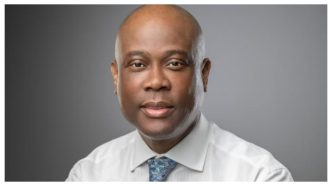
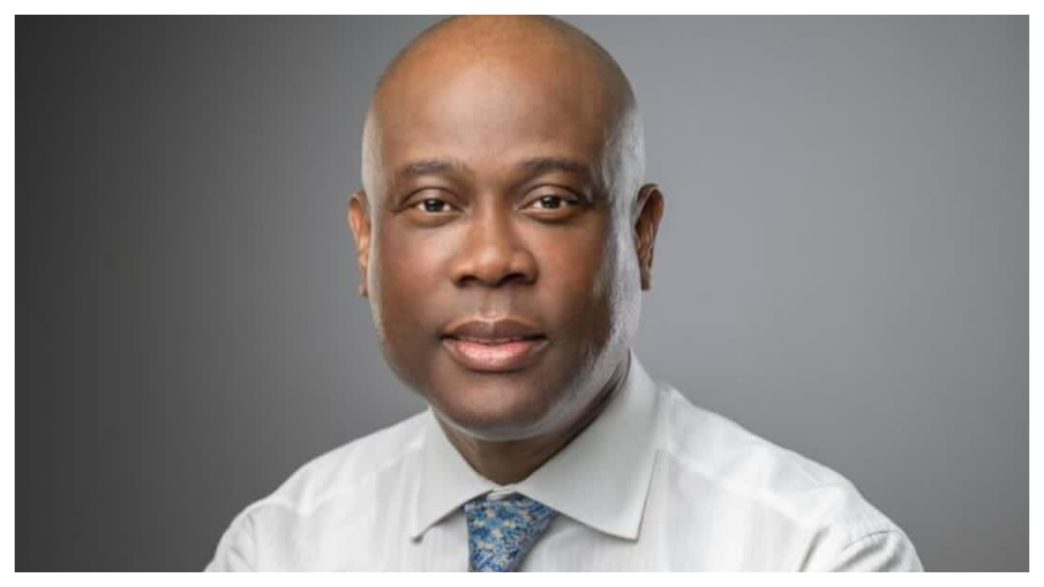
When the helicopter went down in the California desert on February 9, 2024, Nigeria lost more than a banker. Herbert Onyekachi Wigwe, the man who took a struggling, almost irrelevant lender and rebuilt it into the largest bank in West Africa by customer base, was gone. His wife Doris. His son Chizi. All of them, in a single morning.
The tributes came from everywhere. Presidents. Billionaires. Former colleagues who spoke about his vision, his discipline, his ambition. Nigeria buried him as it buries its best: loudly, reverently, with the grief of a country that felt it had lost someone it could not replace.
What Nigeria did not know, at least not fully, was the scale of what he had actually built. Not the bank. The other thing. The quiet thing. The thing was assembled across two decades, in boardrooms and offshore registries from Lagos to the Isle of Man, from Miami to Mauritius, and from London to Cyprus, almost entirely out of public view. 
Now, more than a year after his death, the investigations are catching up.
106 Properties in London. Ranked Seventh in the World.
It started in March 2026, when The Londoner published findings from a sweeping review of foreign-owned property across the British capital. The review was made possible by the UK’s Economic Crime Act of 2022, a law that for the first time forced overseas companies to declare their beneficial owners when buying, selling, or holding UK property. Before that law, the structures that held these properties were effectively invisible to public record.
Herbert Wigwe appeared in that data 106 times.
One hundred and six properties in London, held through shell companies registered in offshore jurisdictions, placing him seventh on the entire list of billionaires with the most London property. Not seventh among Nigerians. Seventh globally. Above Qatar’s sovereign wealth fund. Above Saudi billionaire, Prince Turki bin Salman and Blackstone CEO Stephen Schwarzman.
Most of those properties were registered through entities based in Jersey, a jurisdiction that does not require companies to publicly declare their ownership. Until the UK law changed, the trail stopped at a company name. Now it leads somewhere.
The Investigation That Mapped Everything
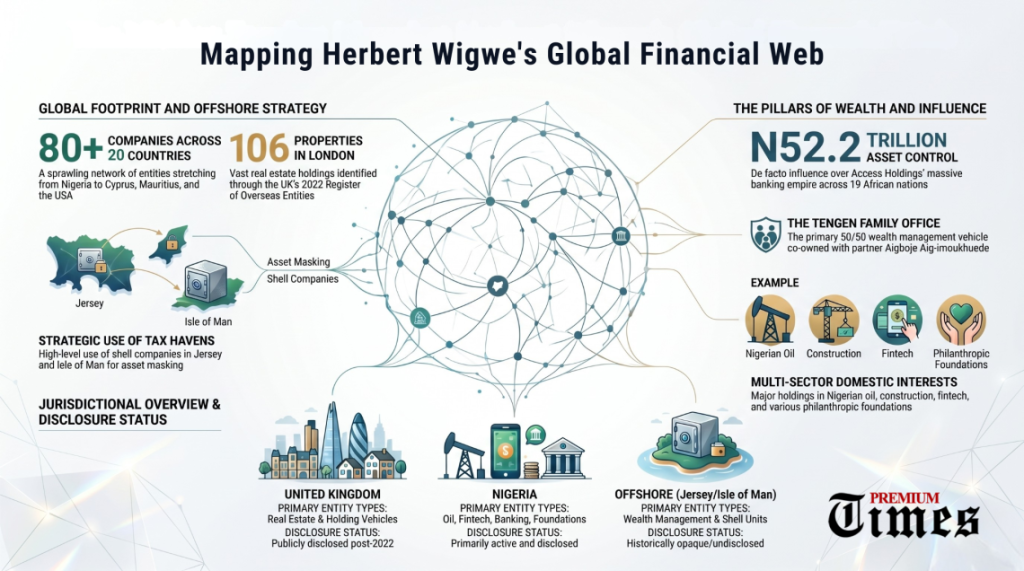
Then came the deeper work. A joint investigation by Premium Times and The Capital NG, drawing on corporate filings across Nigeria, Cyprus, the United States, Mauritius, the Isle of Man, and Jersey, found that Wigwe held stakes in at least 80 companies spread across 20 countries. Most were never publicly disclosed during his lifetime.
What they found was not a simple portfolio. It was architecture.
At the centre sat Tengen Family Office, a wealth management firm incorporated in Ikoyi, Lagos, in 2017, owned equally by Wigwe and his lifelong business partner Aigboje Aig-Imoukhuede. The two men had been inseparable since 2002, when they pooled their ambitions and acquired Access Bank together when it was barely afloat. What the public saw was the bank growing, expanding, swallowing Diamond Bank, crossing into 19 African countries. What the documents show is the parallel structure they were quietly building alongside all of it.
A Nigerian entity mirroring Tengen’s structure. A Mauritius holding company under the Coronation Capital umbrella. United Alliance Company of Nigeria and Trust and Capital Limited, both structured as 50/50 ventures between the two men. Fusion Construction Limited, incorporated in 2003, has both names on the director list. Energy assets through Petralon 10 and Petralon 30. Fintech investments. Real estate vehicles. Charitable foundations. Infrastructure board seats.
The companies bear the names of people Wigwe loved alongside his own, his wife Doris, his late son Chizi, his daughters, his father Shyngle, and his partner Aig-Imoukhuede. They stretch from Nicosia to Miami, from Douglas on the Isle of Man to Lagos, from Port Louis in Mauritius to London. A lifetime of building, conducted in the margins of a very public career.
From the Isle of Man to Florida
Some of the earliest offshore activity traces back to 2006, almost two decades before his death. Warne Limited, registered on the Isle of Man by Wigwe and Zedra Trust Company Limited. DHT Limited, two years later. Balladoyne Limited was registered in 2010, and then, in December 2023, just weeks before the helicopter crash, his shares in Balladoyne were quietly transferred to unidentified legal entities.
In the United States, his corporate presence spanned Florida and Washington, DC. Beraug Investments LLC was incorporated in Boca Raton in 2007 alongside his wife and children. Grosvenor Marine LLC, incorporated in Coral Gables in 2017. Obele Incorporated in Washington DC, where he served as director from 2011 to 2018.
In Cyprus, four active entities carried his name. In Jersey, he held interests in One Southbank Properties Limited and Glenq Private Wealth Limited. In Mauritius, his shareholding in Access Holdings itself was partly held through Coronation Trustees Tengen Mauritius, 1.26 billion of his 2.59 billion shares in the bank, held not directly but through an offshore entity in one of Africa’s most prominent tax havens.
What the Numbers Actually Say
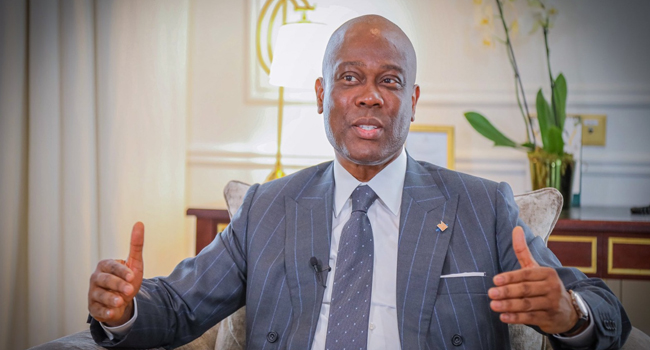
According to Access Holdings’ 2023 audited financial report, Wigwe’s 2.59 billion shares in the bank were worth ₦65.3 billion, 7.3 per cent of the entire issued shares at the time. His total shareholding in Access Corporation stood at 35 billion units as of December 31, 2023.
Those were the numbers in the public record. The investigation found the numbers around them, the structures through which those shares were held, the entities layered between the man and the asset, and the jurisdictions chosen specifically because they offered privacy.
None of this, the investigations are careful to note, is evidence of wrongdoing. Offshore structures, shell companies, and tax haven registrations are tools used routinely by wealthy individuals and their advisers for estate planning, currency management, liability limitation, and cross-border investment. The structures Wigwe used were the same structures used by some of the most powerful institutions in the world.
What they were not until now was visible.
The Family Left Behind
Since his death, the estate has become a battlefield. Wigwe’s father Shyngle, who appeared alongside his son in some of the earliest company registrations going back to the 1990s, reportedly filed a caveat at the Lagos State probate registry, challenging the proposed distribution of the estate.
A cousin, Christian Wigwe, submitted an affidavit accusing Aig-Imoukhuede of assuming an informal guardianship over Wigwe’s children and assets, a role the affidavit argued belonged to the family. Aig-Imoukhuede has not publicly responded to those characterisations.
What is clear from the investigation is that the estate being disputed is far larger and far more complex than most people understood when Wigwe was alive. Eighty companies across twenty countries. Over a hundred London properties. Decades of offshore structuring. An empire assembled so quietly that even the people closest to him may not have known its full extent.
SEE ALSO: Herbert Wigwe’s Legacy: How Many Wives, Children Did He Have? Who Inherits His Estate?
The Man Behind It All
Herbert Wigwe was 57 years old when he died. He had been building the bank, the companies, the foundations, and the properties since the early 1990s. He grew up in Rivers State, trained at the London School of Economics and Harvard Business School, and spent his entire adult life in rooms where money was the language and ambition was the currency.
The public version of that story ends with the bank. The biggest in West Africa. The ninth largest on the continent. Total assets of ₦52.2 trillion as of September 2025.
The fuller version is still being assembled, document by document, jurisdiction by jurisdiction, in the months and years after his death.
He built more than Nigeria knew about. He kept more than Nigeria saw. And the law, specifically a piece of UK legislation passed two years before he died, is what made it possible to finally start counting.

About The Author