


In Nigeria’s political history, few things capture public attention like a high-profile corruption investigation.
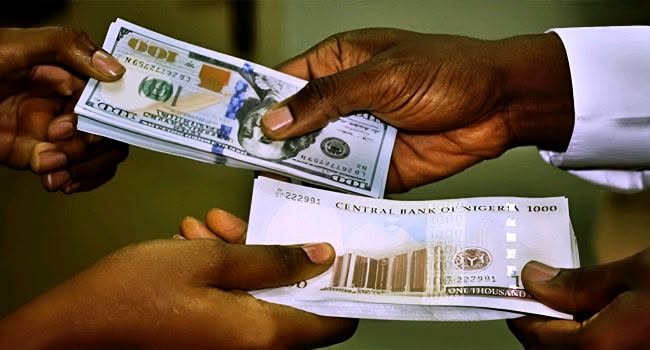
Over the years, the Economic and Financial Crimes Commission has arrested, investigated, and prosecuted several politicians over allegations involving billions of naira, public contracts, and missing government funds. While some cases ended in convictions, others remain tied up in lengthy court battles, appeals, or unresolved legal disputes. 
Here are some of the most talked-about political corruption cases linked to the EFCC over the years.
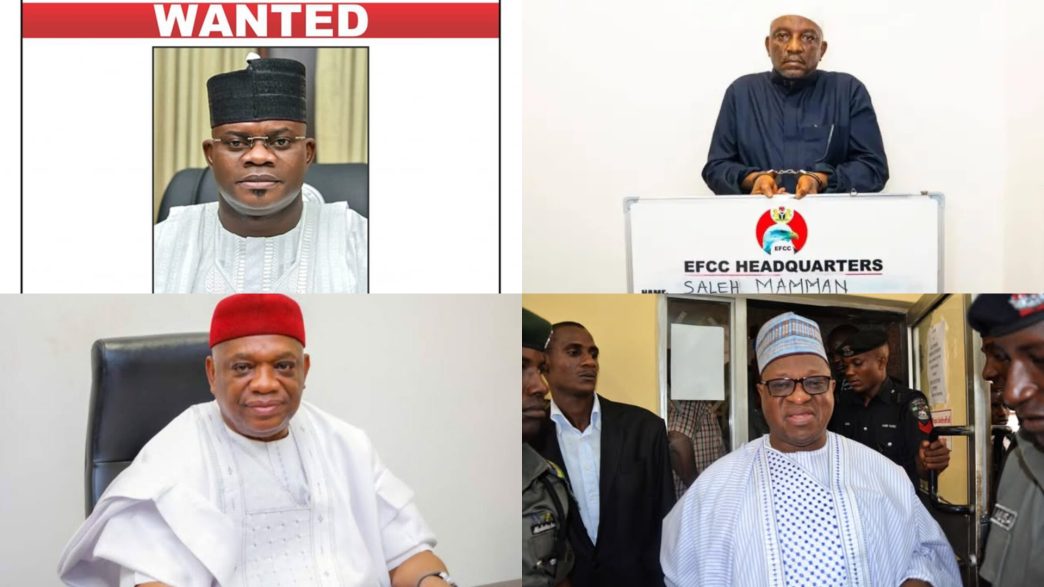
1. Saleh Mamman

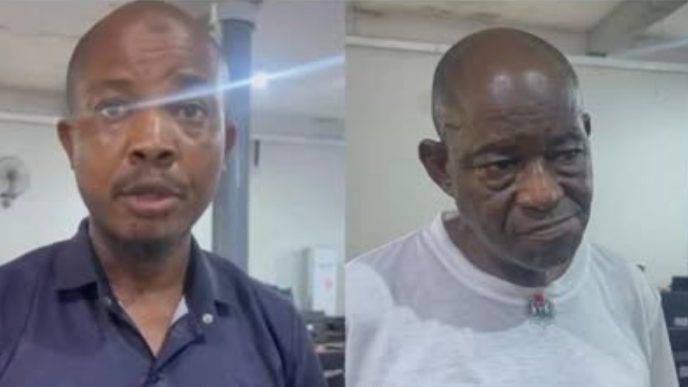
Former Minister of Power Saleh Mamman has been sentenced to 75 years in prison after being found guilty of corruption and money laundering linked to the alleged diversion of ₦33.8 billion connected to major national power projects, including the Mambilla and Zungeru hydropower schemes.
He was prosecuted by the Economic and Financial Crimes Commission (EFCC) on a 12-count charge bordering on conspiracy, criminal breach of trust, and misappropriation of public funds. The prosecution alleged that he worked with ministry officials and Bureau de Change operators to channel funds meant for critical power infrastructure into private accounts and companies.
Following trial proceedings at the Federal High Court in Abuja, the court found him guilty on all counts. The judgment reportedly applied consecutive sentencing across the charges, resulting in a cumulative 75-year prison term, alongside orders for the forfeiture of assets traced to the proceeds of the crime and the recovery of diverted public funds.
Reports also indicate that Mamman was not present at the time of sentencing after previously seeking leave on medical grounds and failing to consistently appear in court. This led to enforcement actions tied to his arrest and custody by anti-corruption operatives.
He was later arrested yesterday, May 19th, after he was found in hiding.
2. Yahaya Bello

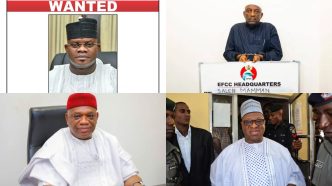
Former Kogi State governor Yahaya Bello is currently facing two major corruption and money laundering trials filed by the Economic and Financial Crimes Commission (EFCC), both on allegations of large-scale diversion of public funds during his time in office.
In one case, Bello is being prosecuted on a 19-count charge before the Federal High Court in Abuja, involving the alleged diversion of about ₦80.2 billion from the Kogi State treasury. The EFCC alleges that the funds were used to acquire luxury properties in Nigeria and Dubai through a network of companies and bureau de change operators.
In another case, he is facing a 16-count charge at the FCT High Court bordering on criminal breach of trust and property-related fraud, with prosecutors claiming additional instances of financial misconduct involving state resources.
The EFCC further alleges that funds were moved through intermediaries and cash-based channels, with some withdrawals reportedly linked to personal expenses, including advance payments for educational costs.
Bello has consistently denied all allegations, insisting that the charges are politically motivated. The case has also been marked by publicised tensions between him and EFCC operatives during attempts to effect his arrest and arraignment, including standoffs reported at locations linked to him in Abuja.
Despite the ongoing trials, he has remained politically active.
3. Diezani Alison-Madueke
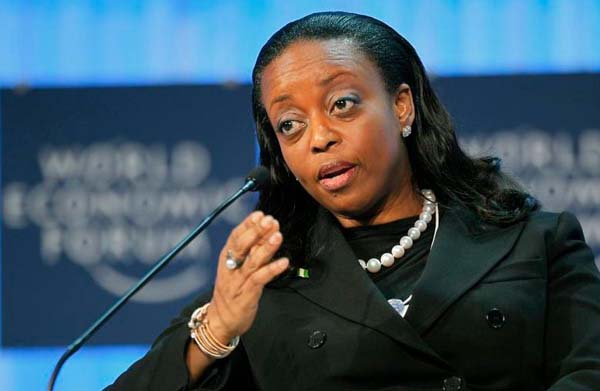
The former Petroleum Minister Diezani Alison-Madueke’s case has gained attention over the years. She was a prominent figure under President Goodluck Jonathan, also serving as the first female president of OPEC. She has been tied to multiple allegations involving billions of naira, luxury properties, and large-scale money laundering linked to her administration of the petroleum sector.
According to UK authorities, assets worth millions of pounds linked to alleged corruption were frozen during investigations by the National Crime Agency. The agency also alleged that she benefited from at least £100,000 in cash, luxury properties in London, private jet flights, expensive holidays, designer gifts, and other high-value benefits while serving in office. In the United States, the Department of Justice reportedly recovered about $53.1 million in assets linked to the case, while Nigeria’s EFCC said it recovered around $153 million and more than 80 properties allegedly connected to the former minister.
The case became one of the biggest anti-corruption stories in Nigeria, especially because of the scale of assets reportedly recovered by authorities.
5. James Ibori
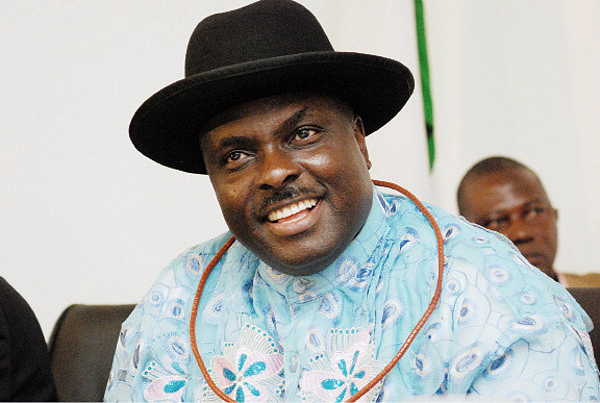
Former Delta State governor James Ibori became one of the most internationally recognised Nigerian corruption cases after pleading guilty to fraud and money laundering charges in the United Kingdom.
Investigators said Ibori owned multiple properties in London, as well as assets in Washington, Houston, and Johannesburg. He also reportedly owned luxury vehicles including a Jaguar and Bentley, and was allegedly attempting to purchase a £20 million private jet before his arrest and extradition to the United Kingdom in 2011. UK courts first froze about $35 million in assets tied to the case in 2007. Although Ibori pleaded guilty to stealing around £50 million, UK prosecutors later moved to confiscate up to £117 million they alleged was connected to the corruption scheme.
Several associates linked to the case were also convicted, with confiscation orders and prison sentences involving millions of pounds in recovered assets and money laundering proceedings.
6. Joshua Dariye

Joshua Dariye’s case remained in Nigerian courts for years before his eventual conviction over corruption-related charges tied to the diversification of Plateau State funds.
The defendant was convicted on 15 out of 23 counts involving criminal breach of trust and misappropriation of public funds. The trial court sentenced him to 14 years for breach of trust and 2 years for misappropriation, to run concurrently. On appeal, the Court of Appeal upheld the conviction but reduced the sentence to 10 years, and the Supreme Court later affirmed the Court of Appeal’s decision.
7. Jolly Nyame
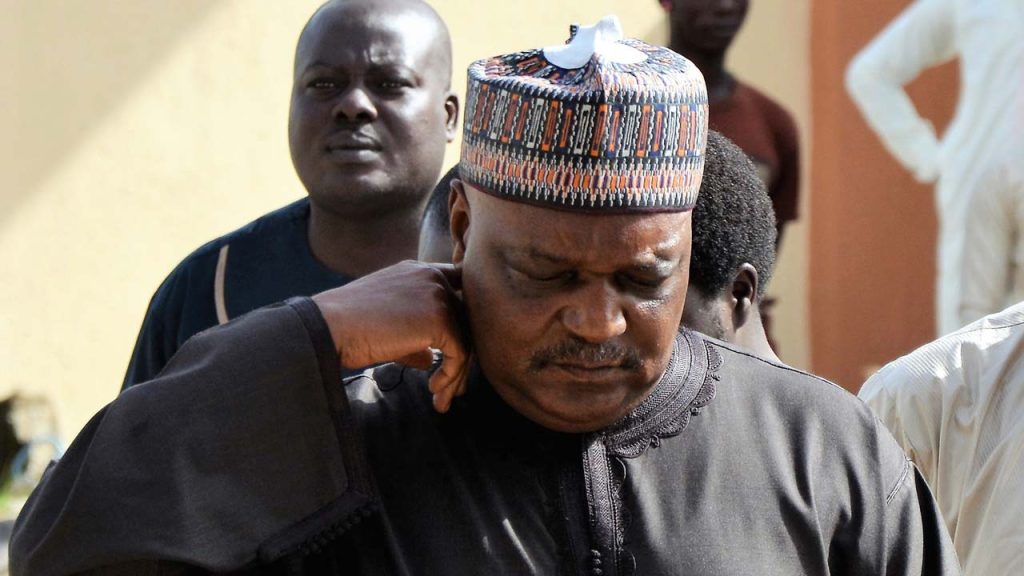
Former Taraba State governor Jolly Nyame was convicted over charges involving the diversion of public funds of about 250 million naira. According to the EFCC report, he syphoned another 165 million naira. He was found guilty and sentenced to 29 years’ imprisonment for criminal breach of trust, criminal misappropriation, gratification, and theft.
8. Orji Uzor Kalu

Former Abia State governor Orji Uzor Kalu was convicted in 2019 over allegations involving the diversion of about ₦7.56 billion after a trial that lasted more than 12 years. He was sentenced to 12 years’ imprisonment, while his former Director of Finance, Ude Udeogu, received a 10-year sentence.
However, in May 2020, the Supreme Court overturned the conviction, ruling that the Federal High Court judge who delivered the judgment had already been elevated to the Court of Appeal and therefore lacked the legal authority to continue acting as a High Court judge in the case.
The Supreme Court declared the judgment a nullity and ordered that the case be reassigned for a fresh trial, a decision that sparked debate over whether legal technicalities were weakening Nigeria’s anti-corruption efforts.
One thing many of these cases have in common is how long they often take to conclude. Some lasted for over a decade, while others moved through appeals, retrials, or political controversies before any final judgment was reached.
ALSO READ: 7 Prominent Nigerians Who Have Been Jailed in Foreign Prisons

About The Author