



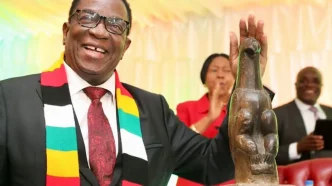
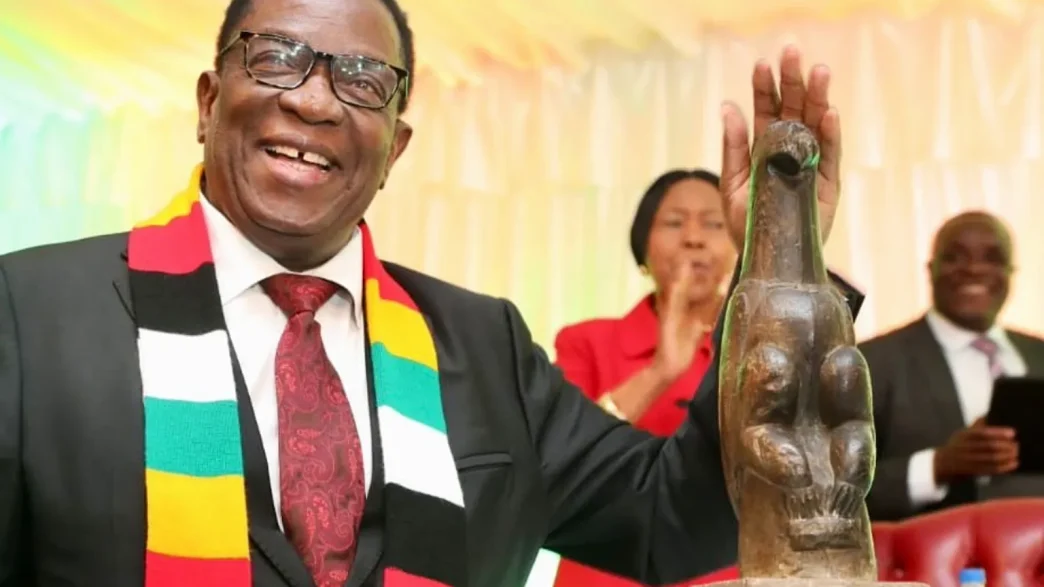
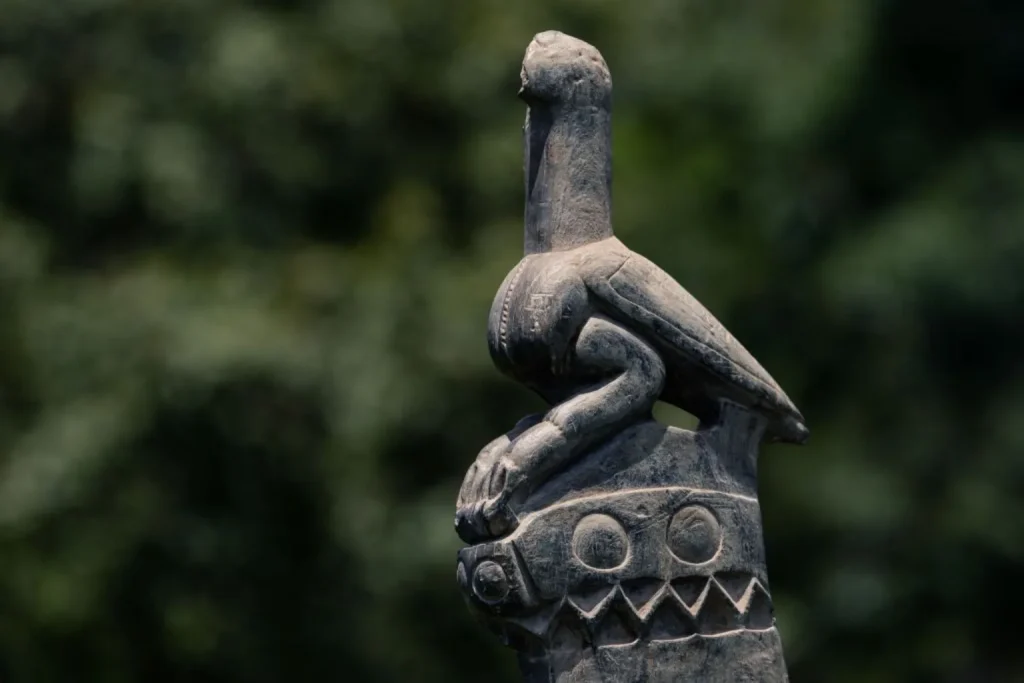
The final displaced bird returned home after 137 years away, in what Zimbabwean President Emmerson Mnangagwa described as “the return of a national icon.” People know it as the Zimbabwe Bird, a long-standing symbol of national identity; however, its history remains complex, shaped by displacement, colonial plunder, and restitution.
Colonialists stole the bird along with several other ancient, treasured sculptures from Zimbabwe and kept them outside the country for decades. South Africa returned the bird and eight sets of human remains that colonial researchers had exhumed in Zimbabwe and handed over to a South African museum. Colonial forces had ripped the grey soapstone carving from its column and sold it to British imperialist Cecil Rhodes.
According to South African Minister of Culture, Gayton McKenzie, colonial agents took the human remains in the late nineteenth and early twentieth centuries for “misguided colonial pseudoscience.” He made this statement during the ceremony to hand over the remains and the bird. Most repatriations have come from European countries such as France, the Netherlands, Germany, and the United Kingdom. 
READ ALSO: The Ghost Children: Kenya Search for the British Father Who Left
This repatriation stands out because an African country carried it out. McKenzie described the birds as “unique” and “revered,” adding that nothing like them exists anywhere else in the world.
Archaeologists excavated the sculptures from the ruins of Great Zimbabwe, a medieval stone city that gave the country its name. Zimbabwe means “house of stone,” and today, the country enjoys global recognition for its contemporary stone carvings. Plan Shenjere-Nyabezi, an archaeology professor at the University of Zimbabwe, described them as the most significant archaeological treasures ever discovered in the country. He added that the Zimbabwe birds remain powerful and cherished symbols of national heritage.
The sculptures vary in shape and size, ranging from 25 cm to 50 cm in height and rising above one metre when mounted on their columns.
The Rhodes Will Act of 1910 prohibited the sale, lease, or transfer of these artefacts. McKenzie explained that authorities cited this law every time Zimbabwe requested their return. South Africa resolved the legal challenge by agreeing to loan the bird to Zimbabwe for two years. However, McKenzie insisted that the bird would not return to South Africa.
After years of negotiations, Zimbabwean leaders now trust South Africa’s commitment; they believe their missing bird has finally returned home for good. Prof. Shenjere-Nyabezi echoed this optimism, stating, “I believe the arrival of this final piece represents a spiritual homecoming.”

About The Author