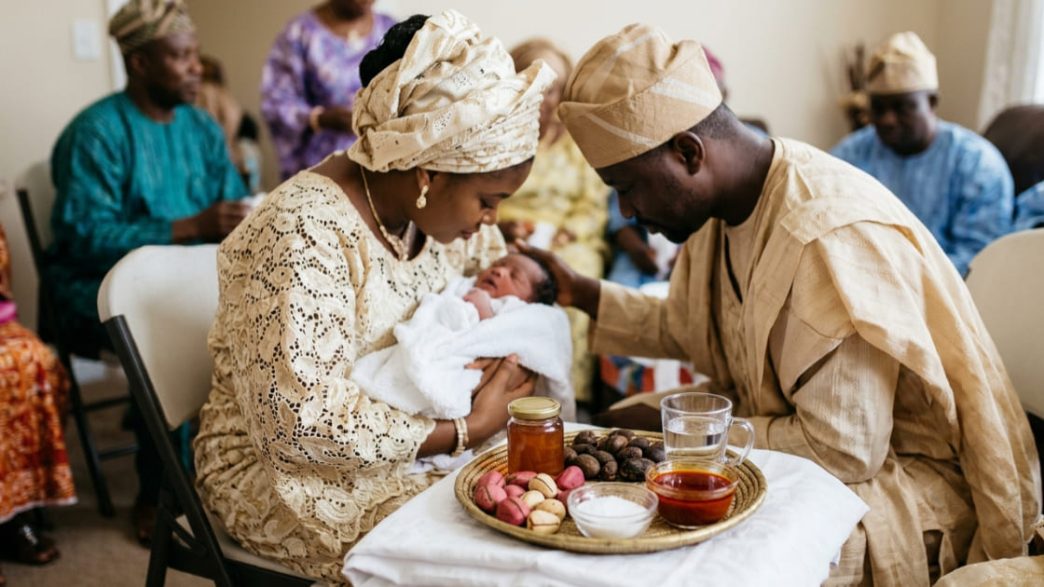
In Yorubaland, families don’t simply name a baby. Instead, the family gathers, prays and announces it, often with music, food and plenty of aso-ebi. Yoruba people call this gathering “isomoloruko”, the Yoruba naming ceremony, and its small rituals carry big meanings.
When the Yoruba Naming Ceremony Holds
In practice, most families today hold the ceremony on the eighth day after birth, usually in the morning. Traditionally, though, the day depended on the child.
Accounts commonly give the seventh day for a girl and the ninth for a boy, with twins often named on the eighth day. Still, sources differ on some details, especially for twins, so practice varies from family to family. 
Part of the reason, in fact, is how families count the days. For example, many Yoruba families count the day of birth as day one, so the “eighth day” falls a week after the birth.
Who Leads It
Usually, the eldest member of the family or a religious leader leads the prayers. Meanwhile, the parents choose the names, often with input from the extended family. At the high point, the family announces the names to everyone present. From that moment, the child formally takes their place in the family.
The Items and What They Mean
Above all, the heart of the Yoruba naming ceremony is a tray of items. With a prayer for each, the officiant touches it to the baby’s lips, or the mother tastes it on the baby’s behalf.
- Honey (oyin): a sweet, happy life.
- Kola nut (obi): protection from death, evil and sickness.
- Bitter kola (orogbo): a long life, because bitter kola keeps for a very long time.
- Alligator pepper (atare): a fruitful life, since the pod is full of seeds.
- Salt (iyo): a life full of flavour, never dull.
- Palm oil (epo pupa): a smooth journey through life.
- Water (omi): a life without enemies, because water has none.
Some families also add dried fish, sugar cane or local gin. However, the items above and their meanings are the ones most families share.
YOU MIGHT ALSO LIKE: From Kola Nuts to Bride Price: The Beautiful Traditions of Igbo Marriage
The Names a Yoruba Child Receives
In addition, a Yoruba child often gets more than one name, and each type does a different job.
- Oruko amutorunwa (names “brought from heaven”): these reflect the circumstances of the birth. For example, twins are Taiwo and Kehinde, and the child after twins is Idowu.
- Oruko abiso (names “given on earth”): these reflect the family’s situation, history or hopes for the child.
- Oriki (praise names): these connect the child to the family’s character and aim to inspire them.
Because many Yoruba believe a person grows into the meaning of their name, families take the choice seriously.
How Families Do It Today
Nowadays, many families combine the traditional rituals with a church service or with Quranic prayers led by an alfa. Either way, the day usually ends the same way: a feast, music and family photos in matching aso-ebi.
ALSO READ: Omugwo Explained: What Nigerian Mothers Actually Do After a Baby Is Born

About The Author