


If I had a car with a very powerful engine but bad tyres, weak brakes and steering that stiffens intermittently, I would likely end up in a ditch. If I did not, I would run pedestrians over, crash into a building or speed under a petrol tanker. Any which way, as we like to say, it would be carnage. Duly. We see Nigerians driving vehicles, big or small, in precisely that condition. We remember one or two tragic outcomes of such neglect. But in politics, we behave like drivers of catastrophically defective vehicles. We approach politics with the optimism of a man who believes replacing the driver alone will somehow compensate for the fact that the car itself is frighteningly bad.
As a people, we have elevated the presidency into something between a Roman throne and a Pentecostal deliverance ministry. One would think the president personally drafts every law, signs every contract, supervises all 36 governors with a whistle and flashlight and still somehow finds time to inspect potholes. Every election season becomes a national psychodrama centred on one office, while the rest are treated as raffle draws.
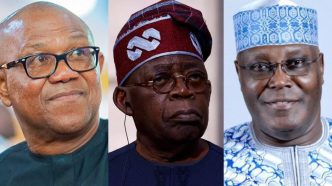
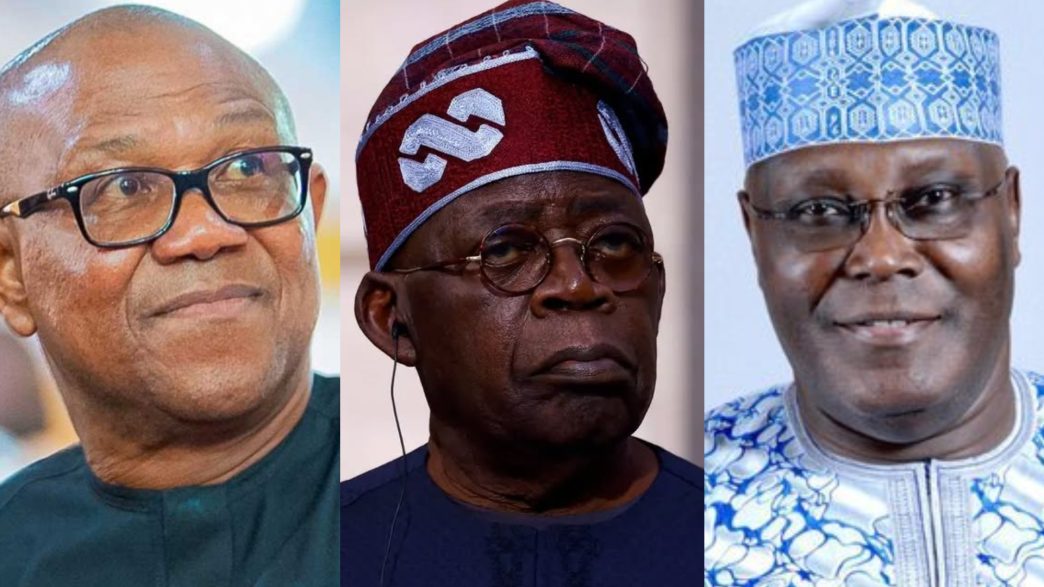
Presidential candidates are scrutinised with almost erotic intensity. Nigerians investigate their school records, old speeches, medical history, pronunciation patterns, body language, blood group, sexual virility and ancestry with the zeal of medieval inquisitors examining a suspected heretic. Entire friendships collapse over them. Families split into hostile camps over them. Social media users who cannot identify their ward councillor will produce 14-part threads analysing the gait of a presidential aspirant as though national prosperity hangs upon the angle at which the fellow swings his left arm.
Move one inch beyond the presidency and the vigilance evaporates like spilled Moko methylated spirit. Vast numbers of voters who can deliver hour-long lectures on presidential politics cannot name their senators, House of Representatives members or state assembly representatives. Governorship races receive slightly more attention because governors command frightening quantities of money and influence, but even there, public engagement often descends into ethnic arithmetic and sentimental tribal pageantry rather than competence or administrative ability. 
As for local government elections, Nigerians generally treat them with the enthusiasm normally reserved for public warnings against dumping refuse in canals. The obsession with the presidency has produced one of the most destructive delusions in our political culture. It is the belief that Nigeria is perpetually one “Mr Right” away from salvation. Every four years, the country searches for a political messiah who will rescue 230 million people from the consequences of decades of institutional decay. Governance is reduced to the search for one heroic individual, as though modern states were village folklore in which one brave hunter defeats the entire forest.
States are ecosystems. No president, however competent or disciplined, can function effectively in a political environment populated by intellectual featherweights, career opportunists and men whose understanding of governance begins and ends with proximity to public money. Nigeria sometimes behaves as though a brilliant conductor alone can produce a symphony from an orchestra composed largely of drunk trombone players and quarrelsome drummers on either loud or colos.
I do not think we understand that a president does not govern alone. Not very well, at least. Legislators make laws, scrutinise budgets and conduct oversight. Governors largely determine the quality of healthcare, education, infrastructure and local security coordination. Local governments influence the most immediate aspects of daily life when they are permitted to exist as something meaningful. But these offices are routinely approached by voters with astonishing unseriousness.
The results are visible everywhere. We elect lawmakers incapable of defending the bills they sponsor without sounding as though they encountered the legislation for the first time that morning. National and state legislatures often resemble decorative accessories to the president or governors rather than independent institutions of oversight. Local governments have become administrative graveyards. After constructing this magnificent architecture of mediocrity brick by brick, Nigerians expect one president to overpower all of it through sheer force of personality.
It does not and cannot work. Even the best president imaginable would eventually find himself trapped inside the same swamp of compromised institutions and low-grade political actors. Reforms can be stalled by legislators who regard serious policy discussions as interruptions to more important matters involving contracts and allowances. Governors dilute initiatives in the interest of political survival. Local officials sabotage programmes through incompetence, patronage or outright theft. The machinery itself resists movement.
Governance is a chain. If too many links are weak, the entire structure collapses. Nigeria, unfortunately, pays obsessive attention to the chandelier while ignoring the termites in the foundation. The glamour of presidential politics distracts from the quieter contests that determine whether institutions function at all.
The irony is that many of the problems angrily blamed on presidents are heavily shaped elsewhere. Public schools collapse because state governments neglect them. Roads disintegrate under local and state authorities. Primary healthcare centres decay under local administrations. Security failures are worsened by weak state coordination and legislative indifference. Yet public anger flows almost entirely upward toward one office, as though Nigeria were governed by an emperor issuing decrees from a heavily air-conditioned palace.
Meanwhile, dangerous mediocrities slip quietly into office through the side entrance while the nation is busy screaming at the front gate. Men with alarming records, primitive instincts and the intellectual depth of a teaspoon secure legislative seats with barely any scrutiny. Some go on to shape laws, budgets and national priorities despite possessing neither the temperament nor the capacity for serious governance.
This is how mediocrity reproduces itself. Endlessly. We keep searching for a miraculous driver while ignoring the fact that the tyres are bald, the brakes defective and the steering held together with hopeful prayers and expired masking tape. No president can succeed in this condition.
ALSO READ: Blessing CEO Apologises Without Being Sorry

About The Author