



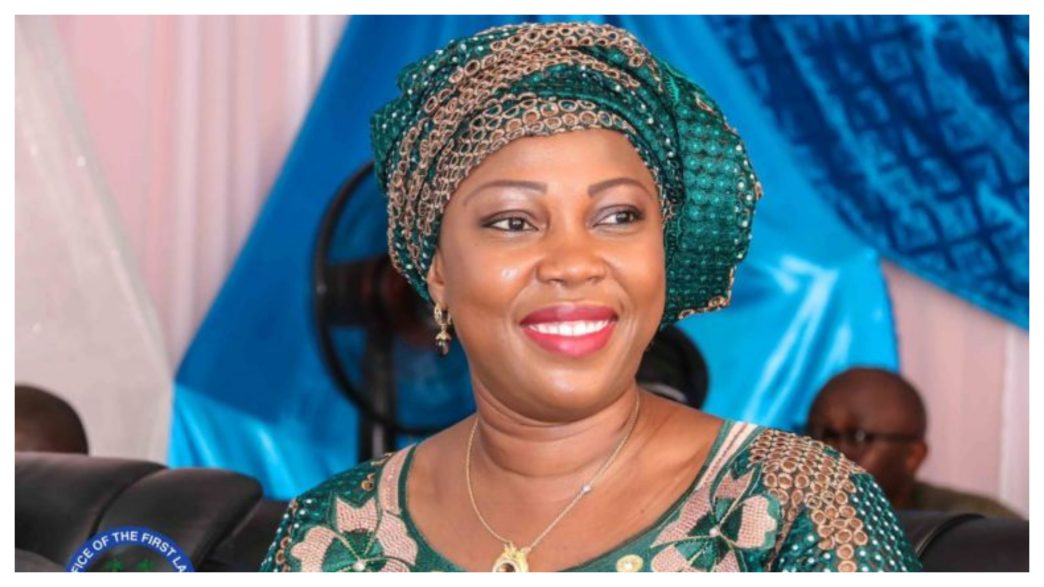
She resides in a presidential lodge equipped with a swimming pool, a tennis court, and a helipad. Yet, Sierra Leone’s First Lady, Fatima Bio, defended her decision this week to retain a taxpayer-subsidized council flat in South London. Her explanation was simple: “My children are all British citizens. I’m paying for my council house myself. I have not committed any crime.”
Legally, she may be correct. But morally? The residents of Southwark are far from convinced.
The Flat Nobody Lives In
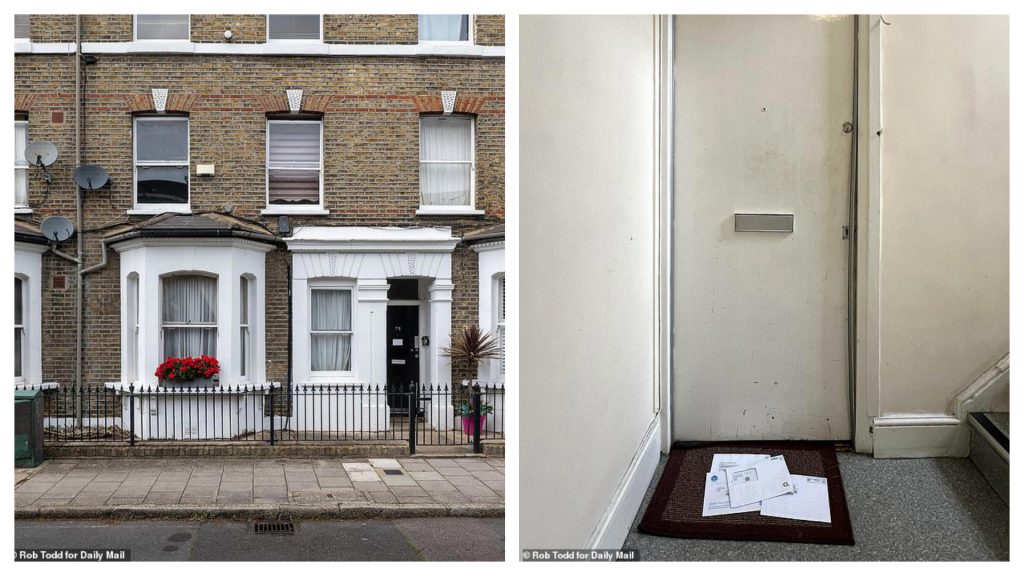
The property in question is a modest two-bedroom council flat in Southwark, South London. Bio moved into the residence in 2007, long before her husband achieved higher office. She remained there until 2018, when Julius Maada Bio won Sierra Leone’s presidential election and the family relocated to the sprawling presidential lodge in the hills above Freetown. 
Records show that Bio has remained the registered tenant of the Southwark flat since her initial move-in date. However, neighbors who spoke with the Daily Mail report that the property has sat empty for approximately three years, with mail routinely piling up outside the entrance.
“After she left, there were some of her family members living there, but there’s been nobody there for around three years,” one neighbor noted. “It’s a terrible waste because somebody who really needs a place to live should be given it.”
Another resident added: “I’ve known Fatima for a long time, and everybody in this block knows that she’s the First Lady of Sierra Leone and is living a good life. I don’t know why she’s held onto this flat and why the council haven’t done anything about it.”
The Rules She May Have Broken
Council housing in the United Kingdom serves a specific purpose: providing below-market rents for individuals with low incomes and genuine housing needs.
To maintain these properties for those who truly need them, Southwark Council’s tenancy rules dictate that a property must serve as the tenant’s “only or principal home.” Furthermore, tenants are required to notify the council if they will be absent for more than 42 continuous days. Bio left the UK roughly eight years ago.
Neil Coyle, the Member of Parliament for Bermondsey and Old Southwark, has formally requested an investigation. “There are rules about residency which appear to have been broken,” he told the OCCRP. “If she is not living in the UK, the property should be available for people living in Southwark.”
He did not mince words regarding the broader systemic injustice. “The waiting list for a home here is very high and no abuse should be tolerated. To know someone is living in opulence elsewhere whilst families wait for homes in London is a travesty and must be tackled.”
The Numbers Behind the Crisis
Behind this legal debate lies a severe human crisis. Southwark Council currently has over 22,000 households on its social housing waiting list. At the local borough’s current rate of construction, clearing this queue entirely would take centuries.
Thousands of these applicants currently live in unsuitable, temporary accommodations. In human terms, this translates to a mother and her two children sharing a single room in a hostel, or families living in damp, inadequate flats while waiting years for relief. These are the people competing for the same council home that Bio keeps vacant from across the ocean.
Meanwhile, Bio’s asset portfolio has drawn broader scrutiny. When the BBC confronted her regarding an OCCRP investigation alleging that she, her mother, and two half-brothers spent over $2.1 million on at least 10 real estate purchases in Gambia, including luxury villas and a four-story apartment building, she refused to directly confirm or deny the claims.
“I don’t have to deny it. I don’t have to acknowledge it,” she stated.
Her Defense

In her interview with the BBC, Bio stood her ground. “My children are all British citizens,” she reiterated. “I’m paying for my council house myself. I have not committed any crime.”
On the surface, her argument follows a certain logic: she pays the rent, her children hold British passports, and she has broken no criminal statutes. However, council tenancies are not criminal matters; they are social contracts built on the assumption that the property functions as a primary residence.
Bio’s journey from an asylum seeker to First Lady adds complexity to the narrative. She arrived in the UK as a 16-year-old in 1996, fleeing an arranged marriage, and subsequently built a life in London working as a model and actress. She later met her husband, then a presidential candidate, in London in 2012. For her supporters, her trajectory is a story of resilience; for her critics, it represents someone who has forgotten her roots.
Two Different Worlds
The contrast between her two realities is stark. In Freetown, she occupies a premier state residence. Her husband is reportedly the highest-paid president in Sierra Leone’s history, with an estimated net worth of approximately £10 million.
In London, she retains a £150-per-week flat that neighbors describe as “not very nice.” One neighbor remarked, “Once they left, they never came back to live in the flat, but you can’t blame them because it’s not very nice.”
The paradox remains that while she has no apparent desire to live there, she maintains the tenancy while local families face multi-year waitlists for local housing.
What Happens Next
Southwark Council has declined to comment directly on Bio’s case but indicated that it routinely investigates concerns regarding whether a tenant is meeting their principal residency obligations.
For now, the political leadership in Freetown remains unchanged, the flat sits empty, the mail continues to accumulate, and thousands of families in Southwark continue to wait.
SEE ALSO: 10 Highest Earning CEOs in Nigeria
The Bottom Line
Legally, Bio may face no immediate charges; she pays her rent and maintains that her British-citizen children utilize the property.
But from a public policy and moral perspective, the situation looks entirely different. Council housing is designed as a lifeline for those with nowhere else to go, not a storage unit for individuals who have transitioned to presidential palaces. Every empty unit represents a family denied a home.
Doing nothing illegal is not always the same as doing what is right. The families on that waitlist are not demanding a criminal prosecution, they are simply asking for a home to be freed.

About The Author