



Once upon a time, it would have been inconceivable to hear that international students are avoiding US universities. Why? Because getting admission into a university in the United States used to feel like winning a golden ticket. For millions of young people around the world, studying in America promised a world-class education, international exposure and perhaps a lucrative career that would make relatives back home suddenly remember their phone numbers.
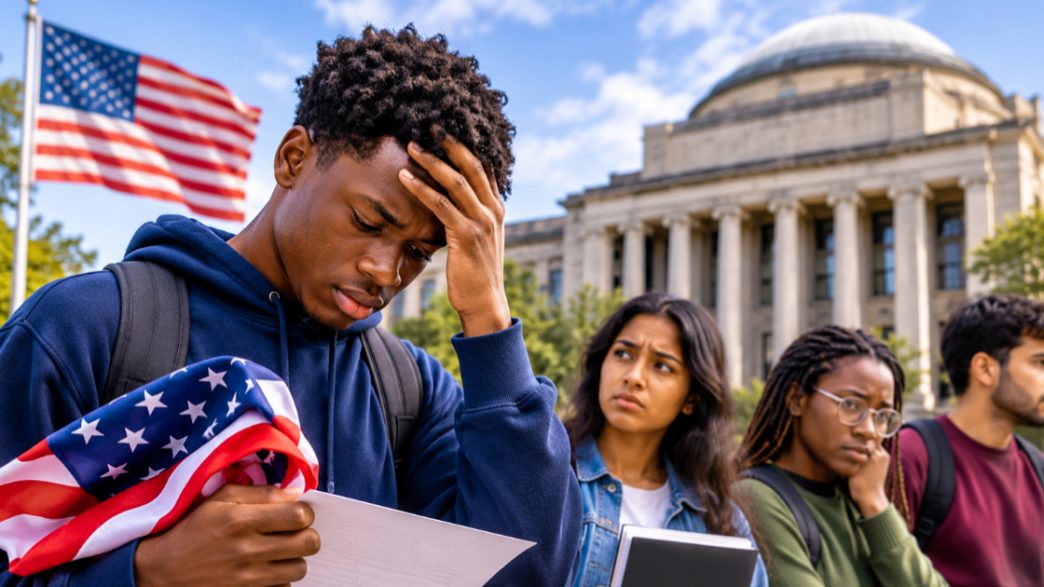
But that dream is losing some of its shine. New figures reveal international students are now avoiding US universities, with Donald Trump’s immigration crackdown, visa restrictions and uncertainty over post-graduation employment making America a less attractive destination.
According to the Institute of International Education (IIE), international enrollment at US universities fell by 9% this autumn compared with last year. More worryingly, the number of new international students dropped by 15%. 
So, what exactly is driving students away from the country that has spent decades selling itself as the land of opportunity? Let’s break it down.
Why international students are avoiding US universities
Trump’s immigration crackdown
One of the biggest reasons is the Trump administration’s increasingly aggressive approach to immigration.
Since returning to the White House, Donald Trump has intensified immigration enforcement, with international students caught in the middle. The administration has revoked thousands of student immigration records, while some foreign students have faced detention and deportation.
The uncertainty has created anxiety among prospective students and their families. Imagine spending thousands of dollars on applications, securing admission and arranging accommodation, only to worry that your legal status could suddenly become a problem.
Even a prestigious university might struggle to sell that experience.
The administration argues that its policies protect the integrity of America’s immigration system. However, the consequences extend beyond students accused of breaking immigration rules. Families considering sending their children to the US must also weigh the possibility of an unpredictable immigration experience.
ALSO SEE: From Burning Rubbish to Keeping Livestock: Things Nigerians Can’t Do in America
Visa restrictions are turning admission into an obstacle course
Getting accepted into an American university is one thing. Actually getting permission to enter the country is another.
The IIE survey found that 88% of institutions reporting declining international enrollment identified the visa application process as a contributing factor. Another 70% pointed to travel restrictions.
Visa appointment delays, increased scrutiny and uncertainty surrounding applications can disrupt students’ academic plans. Some may miss the beginning of their programmes or postpone admission altogether. The administration’s travel restrictions have added another complication, particularly for applicants from affected countries.
For students who have other destinations to consider, the prospect of navigating an increasingly complicated visa process can make America less appealing.
The American dream is becoming less attractive without OPT
For many international students, the attraction of studying in America extends beyond obtaining a degree. They also want the opportunity to gain professional experience after graduation.
This is where Optional Practical Training (OPT) comes in.
The programme allows eligible international students on F-1 visas to work temporarily in jobs related to their fields of study. Graduates in eligible science, technology, engineering and mathematics (STEM) fields can qualify for an additional 24 months of employment.
However, the Trump administration has proposed requiring universities to pay a $70,000 fee for each student they recommend for OPT. Although the proposal has not become final law, it has already raised concerns about the future of the programme.
The IIE survey found that OPT participation fell by 6% this autumn. Furthermore, 95% of responding institutions believe international students would consider other countries if OPT opportunities became limited.
Why spend years and a small fortune earning an American degree if the opportunity to gain valuable work experience afterwards becomes increasingly uncertain?
Studying in America is not exactly cheap
Immigration concerns aside, the cost of studying in the United States is another significant deterrent. Tuition fees, accommodation, healthcare, transportation and everyday expenses can quickly turn an international student’s educational ambitions into a financial nightmare.
For families paying in currencies weaker than the dollar, the burden becomes even heavier. Securing admission is exciting until the actual bill arrives and everybody suddenly needs to sit down.
The IIE survey found that 45% of institutions experiencing declining international enrollment identified costs as a contributing factor.
With other countries offering competitive academic programmes and potentially more affordable living arrangements, prospective students have additional reasons to reconsider their American ambitions.
ALSO READ: Binance Hack: How $6.36 Billion Breach Exposes Crypto Custody Risks
Other countries are happily welcoming America’s prospects
Perhaps America’s biggest problem is that international students now have more options.
The United Kingdom, Canada, Australia, Germany and China are among the destinations competing for students seeking quality education and international career opportunities. According to the IIE survey, 60% of institutions experiencing declining enrollment identified competition from other countries as a contributing factor.
Research funding uncertainty has also become a concern, particularly for graduate students whose academic ambitions depend on well-funded research programmes. This could help explain why graduate enrollment recorded the sharpest decline, falling by 15% this autumn, compared with a 3% decrease among undergraduates.
For American universities, this is particularly concerning because international graduate students contribute significantly to research, teaching and innovation.
What does the decline mean for US universities?
The decline in international student enrollment is not just an education problem. It also carries considerable economic consequences.
International students contribute billions of dollars to the American economy through tuition payments, accommodation, transportation, food and other expenses. NAFSA, an association representing international educators, estimates that the latest enrollment decline has cost the US economy approximately $2.4 billion in economic contributions and more than 31,000 jobs.
Universities also face financial pressure because many depend on international tuition payments to support their operations and academic programmes.
Interestingly, 81% of institutions surveyed by IIE still consider international student recruitment a priority.
Clearly, American universities want these students. The problem is that the country’s increasingly complicated immigration environment is making it harder to convince them to come.
READ ALSO: Who Is Greene Da’monte Khiree, The US Basketball Player Arrested With Cannabis in Nigeria?

About The Author