



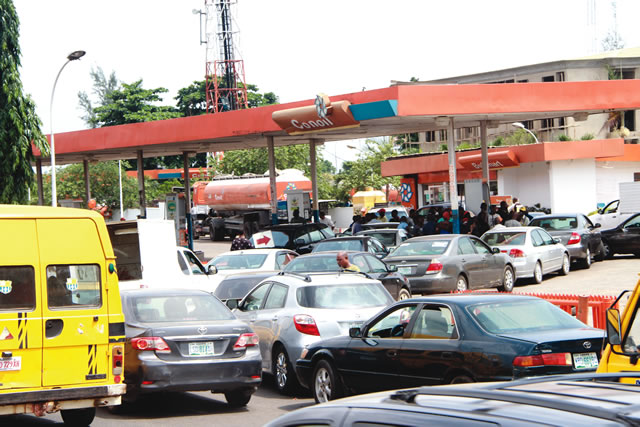
Marketers have released new fuel prices in Nigeria as depot rates slip below Dangote Refinery’s gantry price and import estimates, with weak demand, tight cash flow and fierce competition squeezing suppliers across the downstream sector.
The new fuel prices in Nigeria follow a week of rapid adjustments. Petrol depot prices fell by as much as N24 per litre as marketers competed with Dangote Refinery. The Major Energies Marketers Association of Nigeria (MEMAN) put the petrol landing cost at N1,278.37 on September 28, down from N1,384.82 on September 25.
Relief at the pump, however, remains modest. NNPC trimmed some Lagos prices from N1,385 to N1,370 per litre, and selected Abuja outlets from N1,430 to N1,405. 
Dangote’s pull reshapes the market
Dangote Refinery cut its petrol gantry price by N25 to N1,325 per litre and reduced diesel from N1,850 to N1,780 effective October 1. Before that cut, imported diesel landed at about N1,839 per litre, N11 below the refinery’s rate.
Market participants estimate the refinery draws 40%-50% of tanker traffic that would otherwise reach rival depots, though no independently verified loading data backs this. With fewer buyers, private depots are discounting harder.
Some marketers also postpone purchases in anticipation of further Dangote cuts, leaving depot owners to choose between thinner margins now or bigger losses later.
READ: Gbadebo Rhodes-Vivour Draws Backlash After Struggling With Yoruba Question at The Platform
Why fuel prices in Nigeria still feel high
Experts cite weak purchasing power.
A single tanker load demands heavy working capital before transport and financing costs, so many marketers buy less, or less often. Slower orders cut depot turnover and force sellers to raise cash, which fuels more discounting and drains funds for restocking.
Crude price swings add uncertainty: falling benchmarks tempt buyers to wait for cheaper supplies, yet stock bought earlier at higher cost limits how deep some depots can cut.
Analysts also caution that aggressive bargaining and below-benchmark sales do not, on their own, prove price manipulation.
Workers push back
The pressure is also political. Public servants began a three-day warning strike on October 2, demanding petrol at N500 per litre and calling current pump prices of N1,450 to N2,000 unacceptable. The Nigeria Labour Congress has endorsed the action and is pressing for fresh minimum wage talks.
Lower depot rates, however, do not automatically mean cheaper petrol at the pump. Transport expenses, existing inventories and marketers’ margins may delay consumer benefits. Whether the new fuel prices in Nigeria reach filling stations will depend on those costs, and with crude oil movements still shaping the next adjustment, motorists will be watching the pumps closely.

About The Author