


Once upon a time, a verdict in the Manchester City case was always “about a month away.” Pep Guardiola said as much in early 2025: “In one month, I think there will be a verdict and a sentence.” Matches have been won and lost since then, titles even changed hands.
It was a very long month.
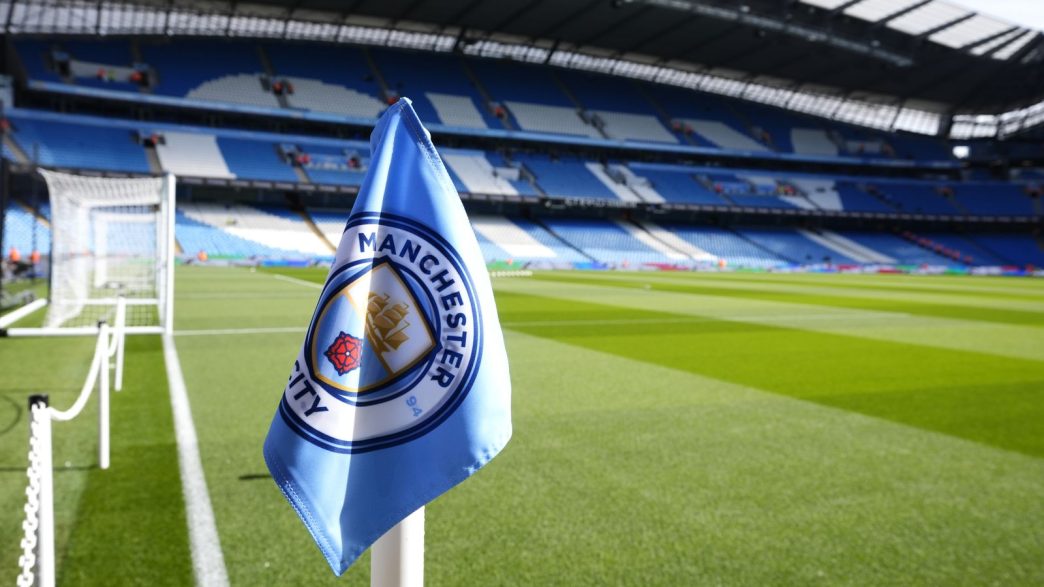
The wait ended on Tuesday September 29, 2026. The Premier League confirmed that an independent commission had found Manchester City guilty on 114 charges, including all the financial charges and all but one of the non-cooperation charges. City, meanwhile, insist they are innocent, and they have until Friday October 2, 2026 to appeal. 
So the verdict is in. The sentence is not.
That is the part worth your attention. Everton and Nottingham Forest lost points in 2023-24 for breaking the league’s financial rules. Juventus lost titles, and their top-flight place, in Italy in the 2000s.
So where does that leave City? Could this end in relegation? Here is what we know, what the precedents say, and where I think it lands.
What Manchester City were found guilty of
The charges cover the 2009-10 to 2017-18 seasons. The commission found that City breached spending limits, used sham contracts and misstated their accounts to make their finances look compliant.
According to Premier League chief executive Richard Masters, the club systematically broke the rules for nearly a decade.
Breakdown Of All 115 Charges
- 54 for failing to provide accurate financial information
- 14 for failing to disclose full details of manager pay, tied to Roberto Mancini’s contract
- 7 for breaching the league’s profit and sustainability rules (PSR)
- 5 for breaching UEFA’s Financial Fair Play rules
- 35 for failing to cooperate with the investigation
City were cleared of exactly one charge, and it came from that last group. The club says the ruling contains clear errors of law, principle and fact and has criticized the decision as unsafe while promising to be relentless.
That is a lot of paperwork for one football club, and you can be that somewhere, an accountant is going stir-crazy in a dark room.
READ: AI Not the End of Advertising: AAAN Challenges Agencies to Evolve and Lead the Next Era
How past culprits were punished
Luton Town were deducted 30 points in 2008/09 in the EFL: 10 for illegal payments to agents and 20 for exiting administration without the required insolvency procedure of a Company Voluntary Arrangement.
More recently in 2021/22, Derby County, also in the EFL, were deducted 21 points – 12 for administration and nine for financial irregularities.
However, while some might argue that those were in a lower league, the 2023-24 season gave the Premier League its template.
Everton went first. They were docked 10 points in November 2023 for a PSR breach of £19.5 million, which an appeal later cut down to six. A second case followed. Everton finally admitted a £16.6 million breach and lost two more points, dropping eight points in total.
Nottingham Forest came next. They admitted exceeding the £61 million loss limit by £34.5 million and lost four points.
Precedents, therefore, have been set, and the method is tidy once you see it. In Everton’s second case, the commission started at five points: three for a significant breach, plus two for the size of the excess. In Forest’s case, the league’s argument began at eight points and dropped by two. The discount rewarded Forest’s early admission and cooperation.
Two lessons stand out. Points rise with the size of the breach. And honesty comes with a discount rate.
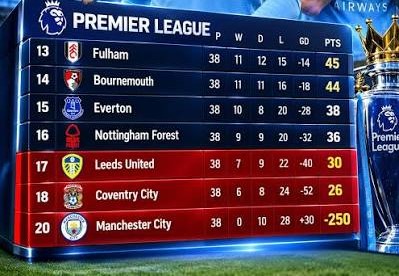
For a sense of scale, Everton’s original 10 points were then the biggest sporting sanction in 135 years of English top-flight football. That record may not survive the month.
READ: Why Tennessee Loves Dolly Parton: How She Gave Back to Her Roots
Why Manchester City is not Everton
Once more, we start with scale.
Everton and Forest overspent by tens of millions across a three-year window. Manchester City, meanwhile, were found to have broken the rules across NINE seasons. The findings also go beyond overspending to sham contracts and misstated accounts.
That is a different category of wrongdoing. It’s like comparing a burglary to a Fast & Furious heist.
Then there is cooperation. Forest earned a discount for helping the league. City were found guilty on 34 of 35 charges of failing to do so, having reportedly spent months twisting and turning to avoid culpability. If cooperation lowers a sentence, the reverse should raise one. That is my inference, not a ruling. But it is not a stretch.
The commission also has room to move. The available sanctions include fines, suspension, points deductions and expulsion, plus any other penalty the panel sees fit. That last clause is doing a lot of work.
Finally, consider the “swift action” argument. The league moved quickly on Everton and Forest, wrapping up their second cases in roughly three months. City’s case has taken more than three and a half years, from referral in February 2023 to a verdict this week. So “zero tolerance” has so far come with a generous waiting period.
Precedent is useful here, but it only goes so far. It tells us how the league prices a breach. It does not tell us how the league prices this one.
The case against relegation
In fairness to the other side, the case for severity is real. Rivals lost places, prize money and possibly trophies. One cannot help but look back at the Aguero-moment in 2012, where Manchester City won their first league title in 44 years by goal difference over Manchester United, and wonder if it would have happened naturally without City’s meddling.
The league calls this the most significant decision in its history. A slap on the wrist would be a hard sell.
Why relegation looks unlikely
Three reasons.
First, the Juventus lesson. Juventus were stripped of their 2005 and 2006 Serie A titles after the Calciopoli match-fixing scandal, and further relegated down to Serie B. The result? Catastrophic. Italian football lost its most-supported club for a season, and the league felt the absence; they are still feeling it till date, as that period marked the decline of Italy’s status as football’s most powerful league.
The Premier League sells star power to broadcasters around the world. A league built on that is unlikely to volunteer to lose one of its brightest names.
Second, the law. City have signaled they will fight on every front. Their statement promises to pursue “any and all appropriate regulatory and legal forums.” An internal appeal can run up to 12 weeks, after which City could then seek arbitration, although the bar for success there would be extremely high. A leaked 2018 email, which City dismiss as stolen material, also relayed the chairman’s reported view that he would rather fund lawyers for a decade than accept a fine. Relegation is the sanction most likely to be litigated for years.
Third, proportionality. Most of the breaches date from 2009 to 2018. A commission will think hard before ending a club’s top-flight status over conduct that old.
Relegation is not impossible. It is on the table but it sits at the far end of it.
What a realistic punishment looks like for Manchester City
Heavy points deduction, a large fine, and a real risk that some titles go.
Points first. Everton’s initial 10 came from a £19.5 million breach. City’s case is vastly bigger. A double-digit deduction would not surprise me. That is a guess, though, not a source.
Titles next. At least three Premier League titles were won in the period covered by the charges, along with several domestic cups. Juventus show that stripping titles is possible. But many will ask whether today’s players should pay for decisions made before they arrived.
Then money. Arsenal, Tottenham, Liverpool and Manchester United are understood to have lodged holding claims, reserving the right to seek compensation. Former Liverpool executive Christian Purslow warned that claims could multiply. Each rival could argue it lost income, and Purslow put the value of each league place at around £3 million. Nineteen rivals across nine seasons makes for a very long invoice.
Timing matters too. The league’s rules give an appeal up to 12 weeks after filing, and sanctions are decided separately. City may play much of this season under a cloud with no sentence in hand. They also spent over half a billion dollars on their squad this summer, and several players reportedly lack release clauses should City go down.
What to watch next
Friday October 2, 2026 is the first checkpoint. If City file their appeal, the clock starts. Then comes the sanctions hearing. Then, almost certainly, more lawyers.
The questions reach beyond one club. Can the league punish hard enough to satisfy its rivals, yet gently enough to protect itself? And if it cannot, who pays for the gap: the club, its fans, or the other 19?
Many bet a punishment that is heavy but survivable. But nobody should be too confident. The commission has shown it takes its time and owes nobody a neat answer.

About The Author