


Nigeria turns 66. There will be speeches. There will be parades. Somewhere, a generator will hum through the Independence Day national broadcast.
Birthdays invite flattery. Honest audits, however, are less popular. But a country is not a cake. It can survive a few questions alongside its candles.
So here is a simple one. Is Nigeria better off in 2026 than it was in 1960? The answer is mixed, and more uncomfortable than the official Independence Day speeches will admit. We will start with the good, because there is real good and it deserves its due. Then we will turn to the bad, which also deserves its due. 
Note, though, that the aim is not to bury Nigeria on its birthday. The aim is to measure it. A patient who avoids the thermometer rarely gets better.
The Starting Line: Independence Day 1960
On October 1, 1960, Nigeria became independent from Britain. The mood was electric. The country had about 45 million people and a farm economy built on cocoa, groundnuts and palm produce. Oil had been found at Oloibiri in 1956, but it was still a footnote.
Life was hard by modern standards. Life expectancy was roughly forty years. Yet the outlook was bright, and many observers expected Nigeria to lead Africa. Giant of Africa, remember?
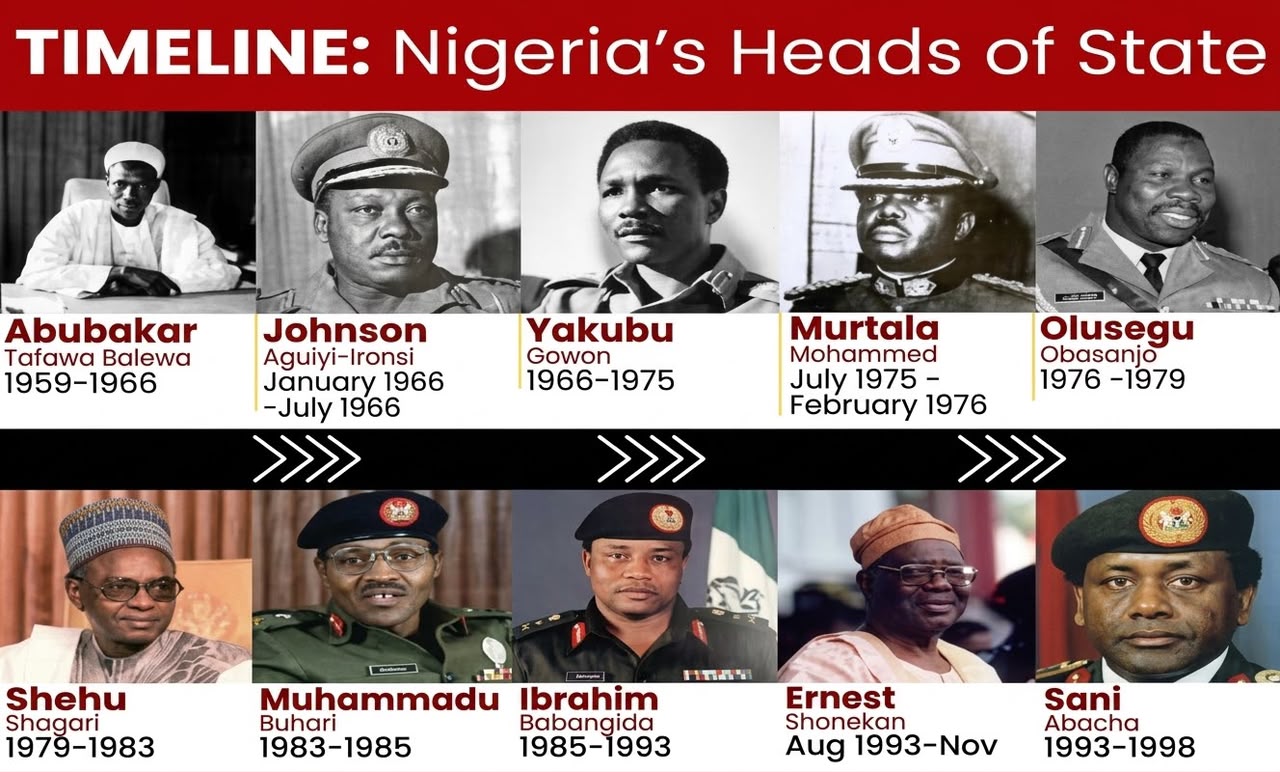
Then came the drama. Within seven years, the country was at war with itself. The civil war of 1967 to 1970 cost an enormous number of lives. Military rule followed, and it lasted nearly three decades of the first thirty-nine years.
Oil money flooded in during the 1970s. In 1973, Nigeria launched a new currency, the naira, worth more than a US dollar. No, you don’t need to reach for your glasses; you read that right. There was a time when the naira was worth more than the dollar. Then oil prices fell, and the dream of easy prosperity fell with them.
That is the baseline. Keep it in mind. It is what we are measuring against.
The Good: Democracy, Freedom & Economical Progress
A Democracy That Survived
Nigeria is a democracy, and it has been one without interruption since 1999. That is twenty-seven years of civilian rule. For a country that endured coups in 1966, 1975, 1983, 1985 and 1993, this is close to a miracle with paperwork.
In 2015, a sitting president lost an election and handed over power. That had never happened before. Certain previous heads of states would have rather burned the country down than step down. Elections remain messy, expensive and disputed, yes, but the ballot box now matters more than the barracks.
Freedom has widened in other ways. Nigerians speak openly, argue loudly and sustain one of Africa’s liveliest media scenes. The population has grown from about 45 million to well over 230 million. That is a lot more people to disagree with, and Nigerians have embraced the opportunity.
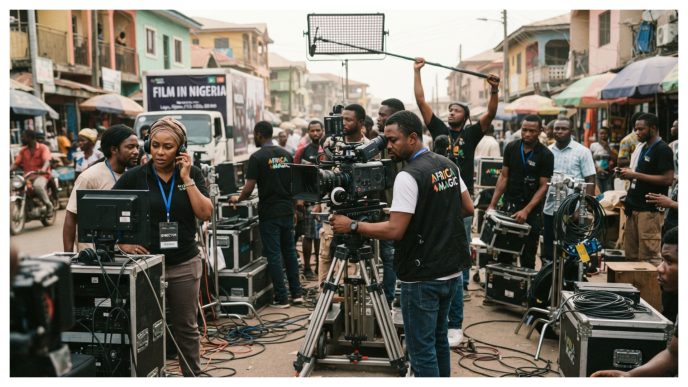
Then there is culture. Afrobeats fills stadiums abroad. Nollywood is among the world’s most prolific film industries. Nigerian developers build fintech firms that serve a continent. In 1960, Nigeria exported cocoa. Today it also exports music, films and software, which are far easier to ship than groundnuts.
READ: Burna Boy to Headline Halftime Show at 2026 NFL Paris Game
A Steadier Economy
Now the economy, where the news is better than it has been in years.
Growth reached 4.43% in the second quarter of 2026, up from 3.89% in the first. Non-oil sectors, led by telecoms and agriculture, drove much of it, Reuters reports.
Inflation has cooled. It stood at 34.8% in December 2024, but had eased to 15.39% by August 2026. However, one caution applies. The statistics office revised its calculation method along the way, so some of that drop is arithmetic rather than relief.
The currency has also stopped its freefall. External reserves stood near $54.9 billion in late September, and the naira closed around ₦1,331 to the dollar. It touched ₦1,315 on September 3, its strongest level in about two years.
Industry has a new landmark too. The Dangote refinery runs at about 700,000 barrels a day, and oil refining grew 43.94% year on year in the second quarter. A country that spent decades exporting crude and importing petrol is finally refining some of its own.
READ: Dangote Refinery IPO: What Nigerians Need to Know Before the Offer Opens
So, credit is indeed due. The World Bank has praised bold reforms to the exchange rate and the petrol subsidy. Those were unpopular choices, and the dials have moved. Hold that thought, though. Dials are not dinners.
The Bad: Poverty, Darkness & Insecurity
Now, the thermometer.
Your Money, Your Problem
The World Bank says 63% of Nigerians lived below the poverty line in 2025, about 140 million people. That was up from 56% in 2023. In 2019, the figure was 40%. Poverty has risen at every reading since, according to Punch.
So the dials improved and the dinners did not. Inflation eased, but prices did not fall back. They merely climbed more slowly. Food inflation was still 20.31% year on year in July 2026.
Wages tell the same story. The national minimum wage is ₦70,000 a month, set in 2024. At today’s official rate, that is about $53, or roughly $1.75 a day. Labour is now demanding ₦500,000. Even the presidency concedes the current figure needs honest reassessment.
Compare 1973, when one naira bought more than a dollar. Today it takes over ₦1,300. The naira did not decline gracefully. It fell down the stairs.
Debt completes the picture. Public debt reached ₦166.79 trillion in June 2026, about $120.93 billion. That is roughly 91% higher in naira terms than in June 2023. A weaker naira explains part of that. Even so, debt service reportedly consumed as much as 77.5% of federal revenue in 2024. A government that spends that much on interest has little left for hospitals.
The Lights Are Off (Again)
Power is the quiet embarrassment of every Independence Day.
In January, only about 4,900 megawatts were available out of 13,625 installed, at 36%. August averaged 4,758 megawatts. The grid peaked near 5,400 megawatts on September 22. For a country of more than 230 million people, that is incredibly, incredibly underwhelming.
The human cost is plain. By one estimate, the electricity access gap is around 40%.
The result is a nation of private utilities. Households buy generators, fuel and solar panels. Businesses build power plants before they build factories. Every compound is its own electricity company, and none of them has a customer service line.
Even the refinery success carries an asterisk. Nigeria spent ₦952.15 billion on imported petrol in the second quarter of 2026, more than it earned exporting it. This came amid a public feud between Dangote and fuel importers. Self-sufficiency is on the way. It has not arrived.
READ: Dangote Refinery: Why Kenyan Court Orders Halt to $16bn Construction Project
Security (Or The Lack Of It Thereof)
Security is where the comparison needs the most care.
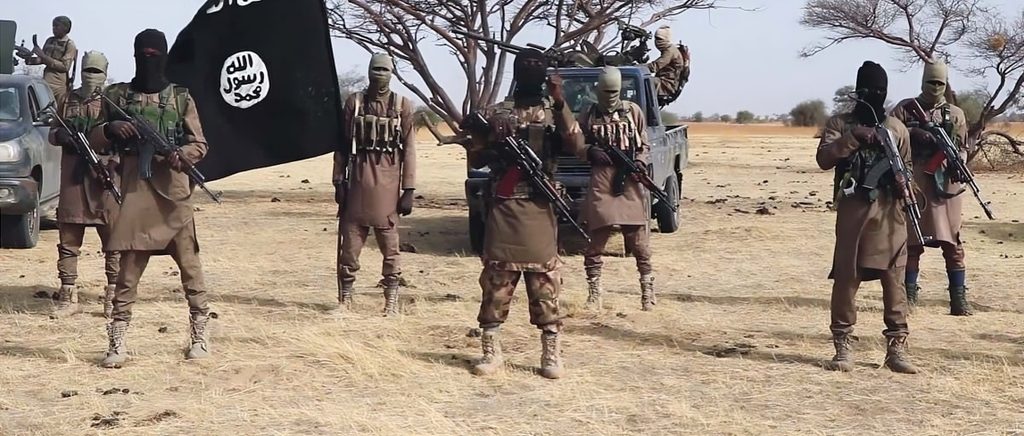
Nigeria has seen worse. The civil war was a catastrophe on a scale nothing since has matched. But that was one war, with fronts and flags. Today’s insecurity is many conflicts at once, with no front line at all. There is insurgency in the north-east, banditry in the north-west and clashes over land in the middle belt. ACLED has also flagged mass kidnappings spreading into the south.
The numbers are sobering. The 2026 Global Terrorism Index ranked Nigeria fourth in the world, with terrorism deaths up 46% to 750 in 2025. Nigeria Watch recorded at least 12,954 violence-related deaths in 2025, and 5,272 more between January and May 2026. If Boko Haram aren’t killing people, then it’s Fulani Herdsmen, or unknown gunmen: all sobriquets for agents of destruction who have done a good job making the country as unsafe as possible.
The cost shows up in daily life. Thousands of residents have abandoned farms and communities. Food gets dearer. Roads become risk calculations. Investors do the same arithmetic and take their money elsewhere.
A state’s first job is protecting its people. On that one, the report card is not kind.
So, Is Independence Day Worth Celebrating?
Here is the awkward question. If things are this mixed, why raise the flag?
Because independence was never a promise of comfort. It was the right to run your own affairs, and to succeed or fail on your own terms. Nigeria has done both, loudly.
Still, a wry note is warranted. A 66-year-old country that cannot reliably keep the lights on, or its citizens safe, should celebrate with fewer fireworks and more humility. Perhaps a moment of silence for the grid.
The direction is not hopeless. The World Bank projects poverty slipping gradually to about 59% by 2028. That is progress at the speed of a committee. Elections arrive in 2027, and with them the usual temptation to promise more than can be delivered.
Renewed hope, remember?
So celebrate, by all means. Celebrate the Independence Day the way you would a recovering patient’s birthday: with gratitude, a clear chart and a firm instruction to keep taking the medicine. Nigeria has moved forward in some areas, barely moved in others and slid backwards in a few. The distance still to travel is the part no speech will cover.

About The Author