



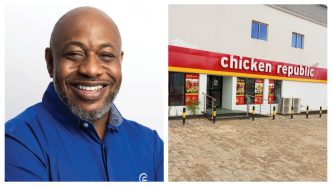
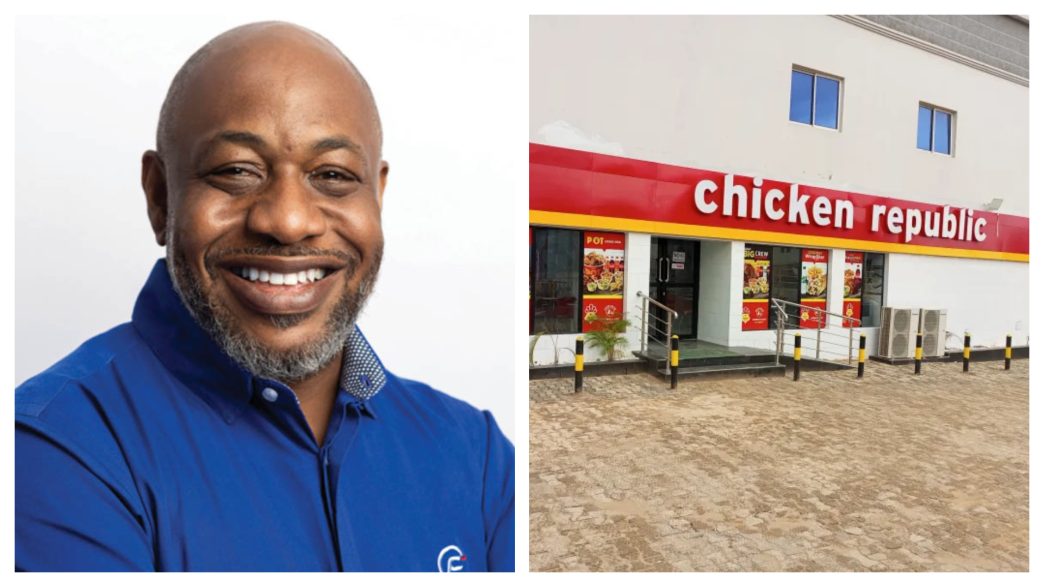
In ‘How Chicken Republic Survived Nigeria’s Toughest Economy’, Kofi Abunu, CEO of Food Concepts, breaks down how the QSR giant behind Chicken Republic and Pie Express scaled over 300 outlets while navigating inflation, competition, and operational complexity.
His approach comes down to five pillars: Leadership, Standardisation, Strategic Focus, Affordability, and People Development.
A Leadership That Shows Up

Abunu believes you cannot lead from behind a desk. For him, leadership is about active engagement at every level. 
“Every single day if I’m in the office, I take a walk around the whole business, and I greet people. It’s not just hello sir, how are you? No, it’s hello, how are you? How’s it going? You have to make that time.”
He makes it a point to personally greet staff across the board (from cleaners to department heads), not just to be present, but to genuinely check in. He also treats people management as strategic, not optional, believing it’s a core component of the business’s success. Even though he isn’t the one ‘frying chicken’ or ‘cooking rice,’ he views his time spent connecting with employees as essential.
To scale that connection, he institutionalised inclusive communication through quarterly ‘MD Communication Days.’ He spends the majority of the time answering questions from the team. By involving them in decision-making and problem-solving, he fosters greater buy-in and ensures the staff feels heard and valued.
Operational Standardisation: The Taste Must Be the Same Everywhere
To scale across Lagos, Ibadan, and beyond, consistency was non-negotiable. Centralised kitchens, known as commissaries, prepare the sauces for dishes like Jollof rice rather than individual stores. This ensures the taste is the same whether you are eating in Lagos or Ibadan. While fresh vegetables are sourced locally, the critical flavour profile is maintained because the spices are produced centrally and distributed to all outlets nationwide.
For outlets outside commissary reach, the company uses strictly documented processes, standardised digital scales, and equipment with set timers and temperatures that staff cannot override.
This system is why Chicken Republic can grow without losing quality. The customer in Ibadan gets the same meal as the customer in Lagos. This is a consistency that builds trust.
Strategic Focus: Avoid Distractions
Abunu says don’t obsess over competitors. “Keep an eye on the competition, but don’t worry about what they’re doing because they’ve all got different models. You have to find what works for your customers and for your business.”
A major decision was to divest from the company’s own poultry farm because it was not their area of expertise. Staying focused on the QSR model allowed them to scale efficiently to over 200 Chicken Republic and more than 100 Pie Express outlets.
When a franchisee wanted to add pepper soup to copy a competitor, Abunu took them to that competitor’s store to prove the success came from Jollof rice, not the extra items. The lesson was simple: focus on making sure your Jollof rice was excellent 100% of the time so customers return for the core product.
SEE ALSO: Chicken Republic Unveils Improved Smokey Jollof
Navigating Competition and Economic Pressure
The company prioritises customer value and quality. When competitors copied affordability tactics, Chicken Republic stayed on its core.
The hard economic choices were unavoidable. Chicken prices rose 70% to 100%, and the company had to pass these costs on to customers to keep the business afloat. Abunu stated that he had to review prices approximately eight times in a year. They also implemented salary increases because people’s incomes weren’t keeping pace with the rising cost of living.
On the tough balance, he said: “If understand what’s going on in the market and you know contrary to what staff may think it’s not that we don’t know it’s just how do you keep the business going and then you can’t do salaries and bankrupt the business or not do salaries at all and keep the business going, the business won’t survive.”
This is the reality of running a business in Nigeria: you cannot save everyone, but you can try to save as many as possible.
Affordability Strategy: The Volume Game
During the 2016 fuel crisis, instead of losing customers, they launched the 500 Naira Refuel Meal, with some meals having as high as a 50% discount.
“The reason it became popular was for how long it stayed. Because people come and buy a refill, and all that the company is doing is turning out a fresh product, so quality remains high, price point is low, and volume is high.
To manage costs during inflation, they kept the menu simple and restricted the Refuel deal to core items like Jollof and fried rice to protect margins while keeping the price point accessible.
SEE ALSO: Chowdeck Under Fire Again as Nigerians Question Pricing and Discounts
Investing in People to Reduce Turnover
QSR has high turnover, and Chicken Republic counters it with growth.
‘There is a poster inside every shop showing staff a potential career path within the industry. The company has developed so many people from within. One of the regional managers used to be a cashier. She is now a regional manager responsible for 30 outlets.’
The company runs a training facility called ‘The Hatchery’ and gives senior management international exposure and professional training. Abunu’s summary: “You’ve got to make the strategic management of your people a part and key of the success of the business.” The company also prioritises hiring people with international experience and adapts global playbooks locally.
As Abunu shows, in a tough economy, survival isn’t about doing more. It is about doing your core thing excellently, every single day. This isn’t just a business strategy, but a lesson for any business trying to survive in Nigeria.

About The Author