


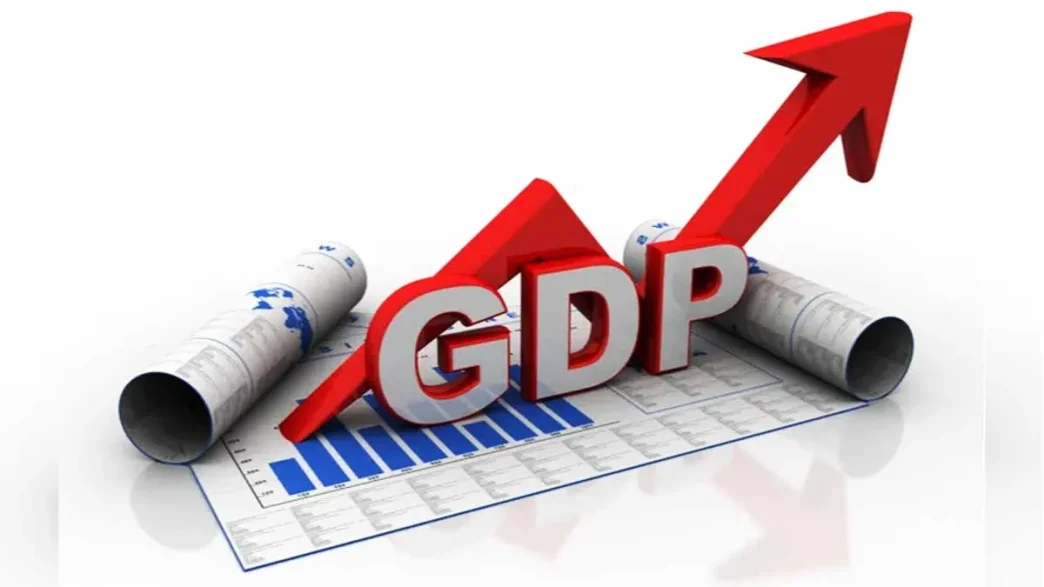
GDP is the total money value of everything that a country produces in a year. This includes things like the food we eat, the phones we use, the movies we watch, and services like banking or transportation.
It’s like measuring the size of a country’s economy. A bigger GDP usually means the country is producing more wealth.
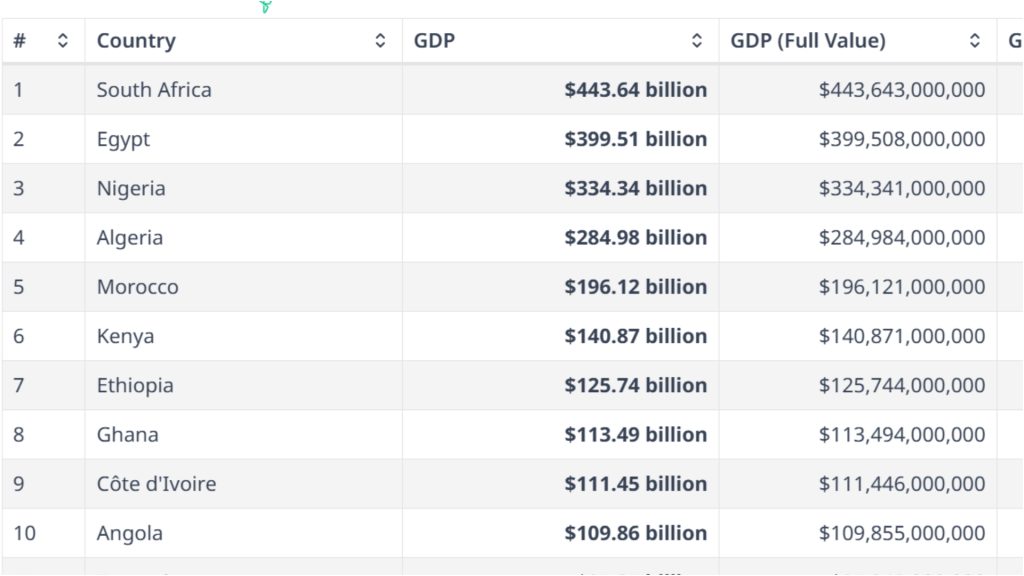
Here are the top five African countries by nominal GDP, according to the latest IMF World Economic Outlook projections for 2026 (in billions of USD). 
1. South Africa ($443.64 billion)
South Africa is the biggest economy in Africa because it has many different industries. It makes money from mining, manufacturing goods, banking and finance, and other services. Its financial markets and infrastructure are the most advanced on the continent, which helps businesses grow. However, the country also faces problems like electricity shortages and large gaps between rich and poor people.
2. Egypt ($399.51 billion)
Egypt’s economy gets a lot of its strength from the Suez Canal, which is a key route for global trade. Tourism, money sent home by Egyptians working abroad, and expanding industries and construction also add to its growth. Its location and large population help keep the economy moving, although the country faces challenges like high debt and changes in the value of its currency.
SEE ALSO: Top 10 Richest African Cities
3. Nigeria ($334.34 billion)
Nigeria is the most populated country in Africa, with over 200 million people, giving it a huge market for goods and services. Most of its economy depends on oil and gas, but other areas like farming, banking, technology, and mobile services are growing fast. However, changes in oil prices and other economic factors like corruption and insecurity have made the economy unstable.
4. Algeria ($284.98 billion)
Algeria’s economy depends mostly on oil and natural gas, which provide most of the government’s income. The country is also trying to grow other industries, but it is still very affected by changes in global energy prices.
5. Morocco ($196.12 billion)
Morocco’s economy grows from manufacturing, especially cars and airplanes, farming, tourism, and phosphate mining. Its close trade links with Europe and investments in renewable energy and infrastructure also support its development.
In conclusion, the top African economies are diverse, and each has its own strengths. Africa’s total GDP is around $3 trillion, so these countries with the highest GDP account for a significant share. Understanding GDP helps us see not just how rich a country is, but how it produces goods and services that affect people’s daily lives.

About The Author