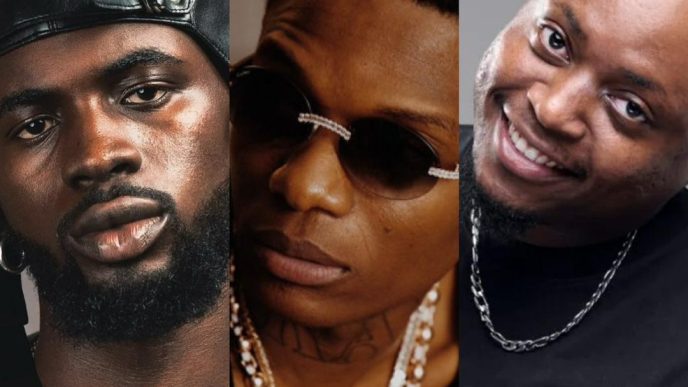



Former Recording Academy genre manager Sean Thwaites has caused a major stir after claiming he was removed from the Grammys board for enforcing the rules.

On 21 November 2025, Sean revealed he was removed from the Academy’s board, claiming the dismissal came after he ruled that the remix of Moliy’s global hit ‘Shake It to the Max (Fly)’ was ineligible for both the Best Global Music Performance and Best African Music Performance categories. 
According to him, his decision, which he says was backed by the Academy’s VP of Awards, triggered an internal friction that eventually cost him his role.
‘Shake It to the Max (Fly)’ by Moliy, a Ghanaian artist, was released in late 2024 and gained viral popularity, particularly on TikTok, before a remix featuring Skillibeng and Shenseea was released in 2025.
Why Was Moliy’s ‘Shake It to the Max’ Remix Disqualified From The 2026 Grammy Awards

Although the remix, featuring Jamaican artists Shenseea and Skillibeng, arrived within the eligibility window (released 21 February 2025), carried a unique ISRC code, and included new verses and a revised intro, the submission was marked as a ‘remix.’
Under the current Grammy guidelines, remixes are not allowed in the Best Global Music Performance and Best African Music Performance categories, regardless of how much of the material is newly composed.
Moliy’s label, Gamma, protested the ruling, arguing that about half of the song is newly composed and should qualify as a ‘new recording.’ However, their appeal was rejected.
What Are People Saying?
This decision shocked fans because ‘Shake It to the Max’’ has been one of the year’s biggest international records, topping the U.S. Afrobeats Chart and entering the Billboard Global 200 Top 10.
For many Nigerians and Africans, the disqualification and now Sean’s dismissal are yet another example of the Grammys being out of touch with how Afrobeats, Amapiano, and Dancehall operate, where remixes and genre-blending are part of the culture.
Sean, still shocked by his dismissal, said there were no prior warnings, internal concerns, or performance issues in his job. In fact, just months earlier, he claimed he had received a performance review and a pay rise.
Sean also made a more troubling claim that several Black employees in the awards division were removed around the same period. This has raised questions about fairness, transparency, and representation within the Academy, especially in categories created to honour African music.
It does appear that Grammy rules are still built for a traditional American music system, not today’s global, collaborative, remix-heavy landscape.
For African artists and labels aiming for Grammy recognition, submissions must be carefully strategised, and ‘remix’ labels may hurt eligibility.
As Africa’s sound continues to dominate global charts, moments like this only fuel growing calls for more inclusive, culturally aware award systems.
About The Author