When President Bola Tinubu ordered the withdrawal of police officers from VIPs last week, many Nigerians had just one reaction: “Again?”
That’s because this is far from the first time the country has attempted to free thousands of police officers from convoy duty and return them to actual policing. In fact, it’s a full-blown Nigerian tradition; almost as regular as budget padding scandals and fuel scarcity rumours.
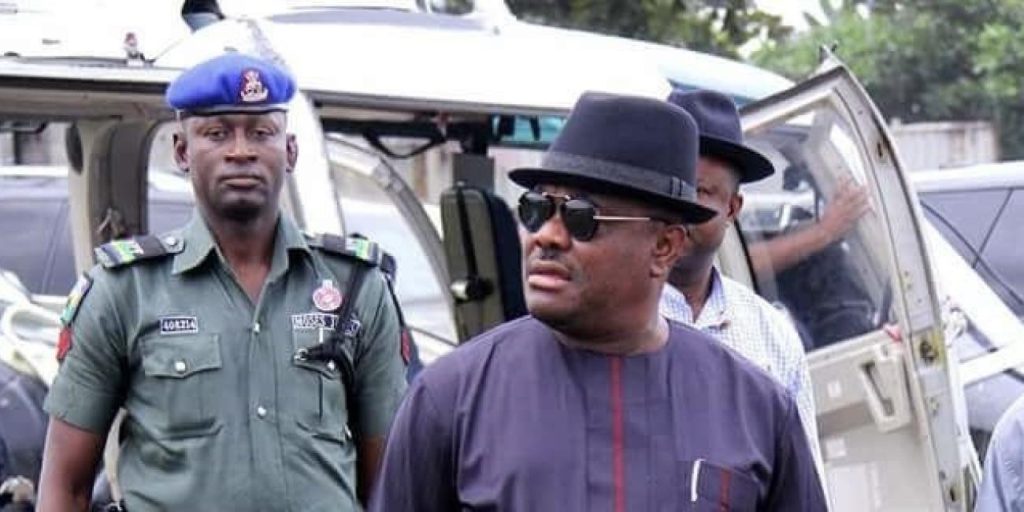
Here’s a timeline of 10 previous attempts, stretching all the way back to 2003. 
1. Tafa Balogun (2003)
Mustafa Adebayo Balogun (a.k.a Kumawu) was a Nigerian police officer and 11th Inspector General of Police from March 2002. But he was forced to retire because of widespread charges of corruption in January 2005.
Balogun’s first major attempt targeted judges and politicians, arguing that police officers were being misused as personal aides. The move sparked controversy, with state governments (including Lagos, led by Tinubu) pushing back. Within weeks, police escorts quietly returned to many officials.
2. Tafa Balogun Again (2004)
Balogun tried again, focusing on private individuals who had acquired police orderlies through informal channels. The order aimed to restore professionalism but faced fierce resistance from wealthy elites, leading to inconsistent enforcement.
3. Ogbonnaya Onovo (2009)
Ogbonna Okechukwu Onovo is a former Inspector General of the Nigerian Police (IGP), who served from July 2009 to September 2010
Onovo issued a sweeping seven-day ultimatum for officers guarding former presidents, ministers, legislators, governors, and spouses of public officials to return to base. Only a small circle of top officeholders was authorised to retain escorts. He estimated that over 100,000 officers were attached to VIPs, many illegally. The scale made implementation extremely difficult.
4. Hafiz Ringim (2010)
After succeeding Ogbonnaya Onovo, Ringim reinforced Onovo’s order and created a monitoring unit to track non-compliance. Officers were threatened with arrest if found guarding unauthorised VIPs. But again, enforcement collapsed under political influence.
5. Mohammed Abubakar (2012)
Abubakar took over from Ringim and framed his withdrawal policy as part of an integrity reform to rebuild public trust. He cancelled approved police guards for private individuals and corporate bodies, calling it a drain on public security. Despite the bold framing, many VIPs retained escorts through back channels.
6. Solomon Arase (2016)
Solomon Ehigiator Arase was the 18th Inspector General of Police after Suleiman Abba was sacked. He was also the chairman of the Nigeria Police Service Commission.
Solomon Arase emphasised the manpower crisis: too many officers doing convoy work, too few in communities. He ordered immediate withdrawal and redeployment to operational duties. Within weeks, many high-profile politicians regained their police details, highlighting entrenched political pressure.

7. Ibrahim Idris (2018)
A Nigerian police officer who served as the Inspector General of Police (IGP) from 2016 to 2019, Ibrahim Idris, launched one of the broadest withdrawals in history, targeting politicians, individuals, corporations, and even religious organisations. Commissioners of Police were told to approve escorts only after proper threat assessments. Officers were spotted back with VIPs almost immediately, signalling near-total failure.
8. Mohammed Adamu (2020)
In the aftermath of #EndSARS, Adamu withdrew escorts from over 60 individuals and institutions, including Femi Fani-Kayode and Christ Embassy. It gained media attention but was selectively enforced and largely abandoned within weeks.
9. Usman Alkali Baba (2021)
Baba declared firmly that the constitution did not allow private police orderlies and ordered immediate withdrawal. Despite the legal backing, enforcement was inconsistent. Many VIPs retained escorts through political influence.
10. Kayode Egbetokun (2023–2025)
Egbetokun advocated replacing PMF escorts with a Special Intervention Squad. In November 2023, he clarified that the withdrawal applied only to “non-entitled VIPs.” In April 2025, he renewed the directive with a fresh redeployment order. Implementation showed progress, but VIPs in power centres soon regained police protection.
So, will Tinubu’s version finally work?
This time, VIP protection shifts from the Police to the NSCDC, a structural change that previous attempts never attempted. Whether it breaks the cycle or becomes withdrawal attempt No. 11… Nigerians are watching.
About The Author