



If you ask Africans about therapy, the replies usually fall into three categories: “I need it.” “I can’t afford it.” “Let me survive first.” This explains why the World Health Organization estimates that 30% of Africans will experience a mental health condition, but only a tiny fraction seek formal support.
For decades, therapy felt like a foreign idea; something for people who journal, drink matcha, and say “my therapist thinks…” But in 2025, something is changing.
People are stressed, overwhelmed, and finally admitting they need real help. We have chosen to no longer sleep it off, pray harder, or talk to that auntie or friend whose advice may or may not ruin your life. 
To understand what’s really going on, we spoke to everyday Nigerians and a certified therapist who works across Africa. Here are their real stories.

1. “I just want to talk without being judged.” — Kunle
Kunle has never tried therapy, but the desire is there.
“Yes, I want to see how effective it can be. And it’s always a good idea to share without the fear of being judged.”
His only barrier is Life. According to him, “I haven’t taken the time to try it. When things get stressful, I turn to my siblings or do fun things.” When asked what he thinks of people who go, he believes, “They’re intentional and passionate about living a good life.”
Would he go if it were cheaper? “Of course, yes!” Kunle believes Africans need therapy the most, but many still think it’s “unnecessary.” He believes that the mindset is slowly dying, and he might be right.
2. “I’ve tried therapy twice but had problems both times.” — Christy
Christy has been in therapy twice. The first time was a free office-sponsored session. In her words, “We spoke twice but couldn’t continue because the office wasn’t paying. It was nice, but we needed more time.” Her second attempt was an online free counselling platform. For her, “Their replies were slow, so I just left the convo.”
Sidenote: “Christy, will you consider paying next time?”
Well, the cost might be a barrier because when asked what she thinks of therapy-goers, she said, “Honestly, I think they’re rich because therapy is expensive!” This explains why when she’s stressed, she turns to friends, prayer, colouring, and (plot twist) Gemini AI.
When asked if she would go again, her answer was, “Yes, because I need it.” But for other Africans (which may or may not include her as well), the Funmilayo Ransome-Kuti in her broke out: “I don’t know. Let people first eat, pay for electricity, and survive terrorists.”
3. “I’ve seen therapy work for people I love.” — Amina
Amina has never been to therapy. This isn’t because she’s against it, but because she hasn’t needed it yet. However, she agreed that she’s seen how it helped people close to her. For now, when she’s stressed, she turns to God, friends, her partner, or she takes a walk.
For those who use therapy, she believes: “They’re brave. It takes courage to be that vulnerable with a stranger.” When asked if she would go if it were cheaper, she replies: “Maybe.”
But does she think Africans will embrace therapy? Her reply was: “Yes. Mental health is buzzing now, so therapy goes along with it.”
4. “Therapists are few and the ones available are expensive.” — Grace
Grace wants therapy badly, but she hasn’t been in a session yet. Her reasons are that “There are very few therapists in Nigeria and the ones available are quite expensive.” This echoes Christy’s view.
When stressed, she turns to God, family, or sleep. Still, she believes those who use therapy are “Helpful and brave. It takes courage to open up.”
Apparently, she would love to go if it were cheaper and more accessible. According to her, “Life is already hard. Talking to a professional helps.” For other Africans, she also said, “Yes. We resist new things at first, but eventually we warm up.”
5. “I want to understand my mind, but Nigerian therapists have a reputation.” — Tunde
Tunde is curious about therapy. He agrees that he’s always been interested in how his mind works. As to why he hasn’t tried it yet, he said, “I’ve heard negative things about Nigerian therapists. If I were abroad, I would have tried.”
When stressed, he chooses solitude and occasional alcohol. But, he believes therapy could radically improve Nigerians, as “A lot of Nigerians are not well adjusted. Therapy works in first-world countries for a reason.”
There’s a great chance that he will go for therapy if it becomes cheaper and he agrees that Africans will adapt to therapy as we get more modern.
6. “I haven’t needed it, but I’m open to it.” — Bunmi
Bunmi’s relationship with therapy is simple. She’s willing to try it if she has a reason to. When stressed, she turns to friends, her partner, or solitude.
Her view of therapy-goers is that they believe it is helpful, and she supports that. She is also willing to go if therapy is cheaper. In her own words, “I can consider it. Sometimes you need someone who won’t judge you.”
As for Africans, she believes we will embrace therapy because we are evolving.
7. “Cost doesn’t matter. When I’m ready, I’ll go.” — Oluwatosin
While Oluwatosin would love to try therapy, he hasn’t tried it yet because he believes it isn’t the right time. He copes with stress using music, comedy, and gaming, and views therapy-goers as people who are “intentional about their lives.”
It doesn’t matter to him whether it is cheaper or not, as he will go if he needs it. When asked if he believes therapy will grow in Africa, his answer was a prophecy that echoes our current reality: “Definitely. This upcoming generation will need a whole lot of therapy.” That sounds like a threat too.
Do Africans Use Therapy? Here’s What The Therapist Believes?

Chigozie Chente: Emotions Doctor, a certified trauma, grief, couples, sex, and mental health therapist, has watched the shift firsthand. In his words, “Africans, especially Nigerians, are using therapy now more than ever. Young people, professionals, and overwhelmed parents. Even men who are finally saying ‘I am not fine.’”
When asked why Africans struggle to seek help, he lists two major barriers:
- Cost and survival pressure
- Lack of information
He says that many don’t know where to find therapists or that affordable and free options exist. His belief is that: “People think therapy is Western. But our grandmothers were our first therapists. Silence is what is killing us.”
Who Then Comes to Therapy?
According to the Emotions Doctor, in Africa, it is mostly middle- and high-class people aged 18 to 35, mostly women, but men are quietly catching up. As for Nigerians, the location of clients is often either Lagos, Abuja, or Port Harcourt
The common problems they often bring include:
- Hustle burnout
- Financial pressure
- Childhood trauma
- Relationship chaos
- Identity confusion
- Loneliness
- The pressure to “blow.”
- Social media anxiety
- Family dysfunction
- Emotional neglect
What Do Africans Use Instead of Therapy?
When stress hits, Africans reach for coping mechanisms:
- God
- Friends
- Solitude
- Music
- Movies
- Comedy
- Alcohol
- Sleep
- Gaming
- Colouring
- Talking to their partners
- “Just pushing through” (our innate talent)
These methods soothe, distract, or numb. But they rarely heal.
How Accessible Is Therapy in Nigeria?

Here’s the reality:
1. There are fewer than 300 psychiatrists for over 200 million Nigerians
That’s one psychiatrist per 700,000+ people, which is one of the worst ratios globally. Therapists, counsellors, and psychologists are slightly more, but still nowhere near enough.
2. Therapy is Still Considered Expensive
Here, we will use the Emotions Doctor’s rate card as a benchmark:
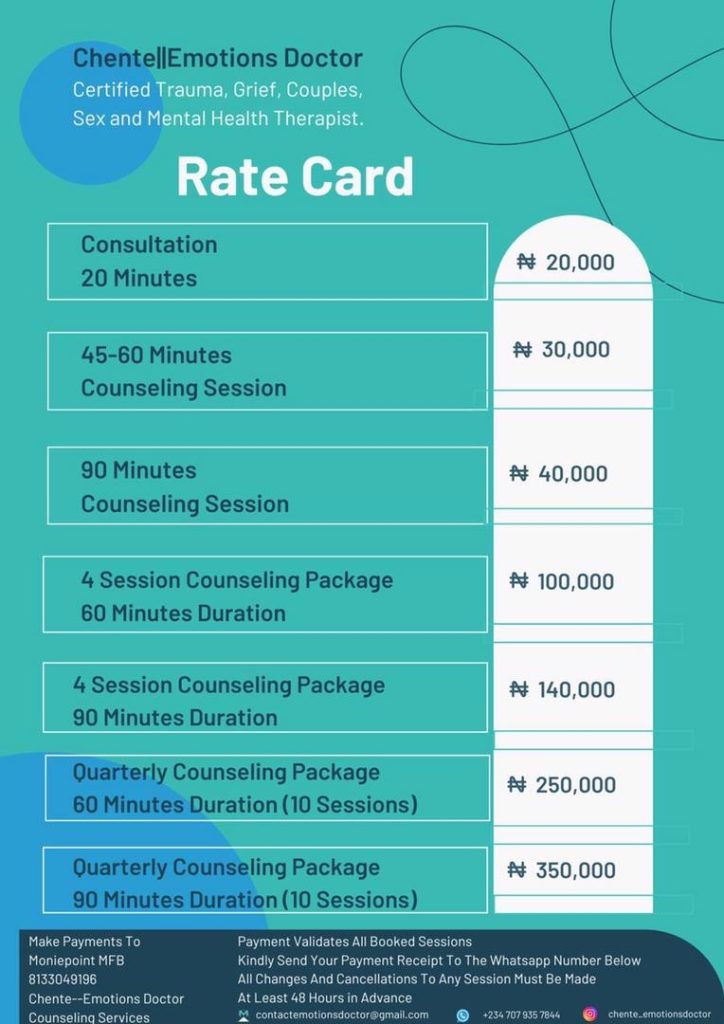
He clarifies that “The 20-minute consultation helps determine how many sessions a client will need.”
3. Many People Require Multiple Sessions
Depending on severity, people may need 4–12 sessions for mild issues, 3–12 months for deeper trauma, and long-term support for chronic mental health conditions. This means therapy can cost anywhere from ₦20k to over ₦350k in a quarter.
4. But Affordable and FREE Therapy Exists
NGOs like MANI (Mentally Aware Nigeria Initiative), She Writes Woman, The Sunshine Series, and Heartfelt Initiatives offer subsidized or completely free support. However, very few Nigerians know this, and that’s part of the problem.
Why Africans Need Therapy More Than We Admit
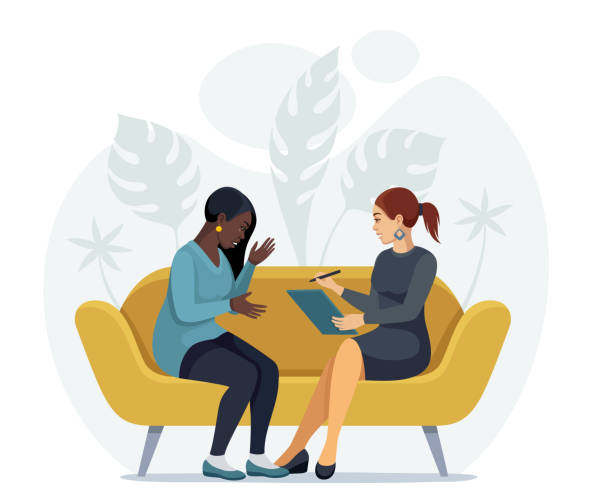
Africans carry unseen emotional labour that generations before us never unpacked. Some of them are:
- Childhood trauma normalised as “training.”
- Financial stress
- Family pressure
- Hustle culture burnout
- Toxic relationships
- Religion-induced silence
- Domestic trauma
- Community expectations
- Lack of emotional education
With therapy, you get:
- Someone who won’t judge
- A space to talk without shame
- Tools for managing emotions
- Clarity about your patterns
- A chance to break generational trauma
- Validation that your pain is real
- Support you don’t have to repay
- Healing that doesn’t depend on luck
As the therapist says, “Seeking help is not weakness. It is wisdom.”
So, Do Africans Use Therapy?
Yes. We use therapy quietly, but consistently, and the number is increasing. Therapy in Africa isn’t Western anymore. It’s becoming a coping mechanism for a generation trying to survive Africa and life itself. Young people are redefining strength. It’s no longer about bottling everything up, but about finally learning how to unpack.
As one Lagosian perfectly put it: “People who go to therapy are just intentional.’ In a city like Lagos and a continent like Africa, where every day feels like a battle for sanity, intentionality might be the new strength.
Real names were changed to protect identities.
About The Author