


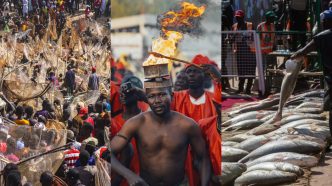
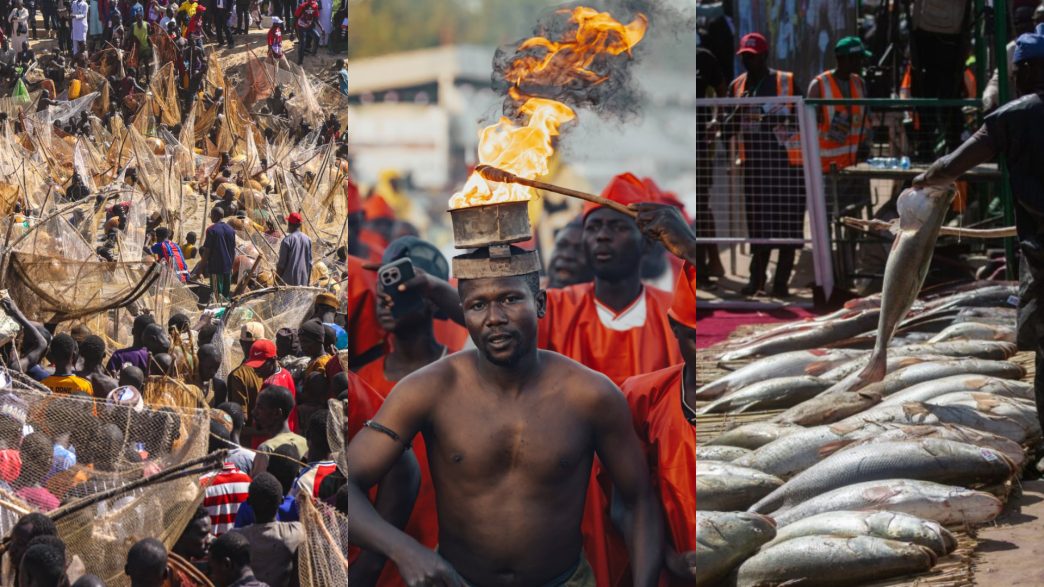
The Argungu International Fishing and Cultural Festival held just a few days ago has brought back memories of something we once learned in school but have never truly seen come alive.
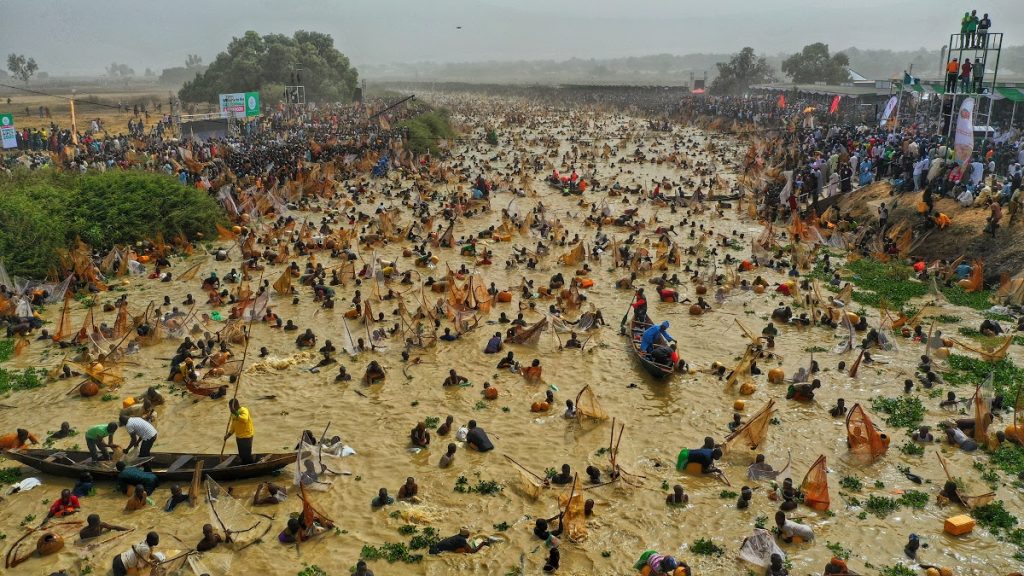
In a viral video, we saw 40,000 fishermen sprinting towards the river with their nets and calabashes, determined to catch the biggest fish and win the grand prize.
But the real focal point has never been the fish; it has always been the festival itself. 
This festival, which dates back to 1934, is one of Nigeria’s oldest and most important cultural events. So, what exactly happens there?
DID YOU MISS? In Ghana, People MUST Dance at Funerals—Here’s Why
The history of the Argungu Festival
The Argungu Fishing Festival was first organised by the Emir of Argungu, Muhammadu Sama, in 1934 to celebrate peace between the Kebbi Kingdom and the Sokoto Caliphate after years of conflict.
What started as a peace celebration later became a major cultural event that strengthens unity between communities.
Over the decades, the festival grew into one of Nigeria’s most important cultural gatherings. It also gained global recognition and was listed by UNESCO as an Intangible Cultural Heritage of Humanity.
However, the festival has also faced challenges. It stopped for more than a decade between 2009 and 2020 because of bandit attacks and insecurity in northwest Nigeria.
The rising insecurity forced its suspension, thereby affecting tourism, local businesses, and cultural life.
Its return in recent years has become a powerful symbol of resilience, stability, and renewed community pride.
President Bola Ahmed Tinubu, who was present at the festival, pledged to sustain the festival, which, according to him, is fostering national unity and drawing international attention to Nigeria.
How the Argungu festival is done
The Argungu Festival usually takes place between February and March and lasts for four days. It marks the beginning of the fishing season in Argungu.
The main activities include:
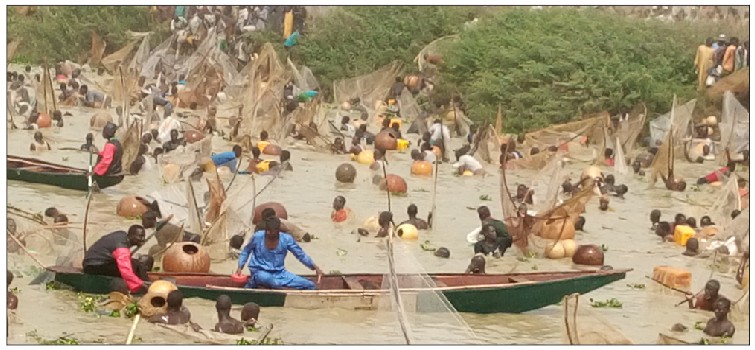
Mass fishing competition: Hundreds of fishermen enter the Matan Fada River at once and compete to catch the biggest fish using traditional methods. The fishing starts when a ceremonial gunshot or horn is fired, signalling hundreds of fishermen to enter the river at once using traditional tools.
Kabanci water events: These include hand fishing, canoe racing, and other water competitions that test strength and skill.
Durbar procession: Horse riders in colourful traditional attire parade through the town to honour the emir and celebrate heritage.
Cultural performances: Local groups perform traditional music, dances, and storytelling that reflect the history of the people.
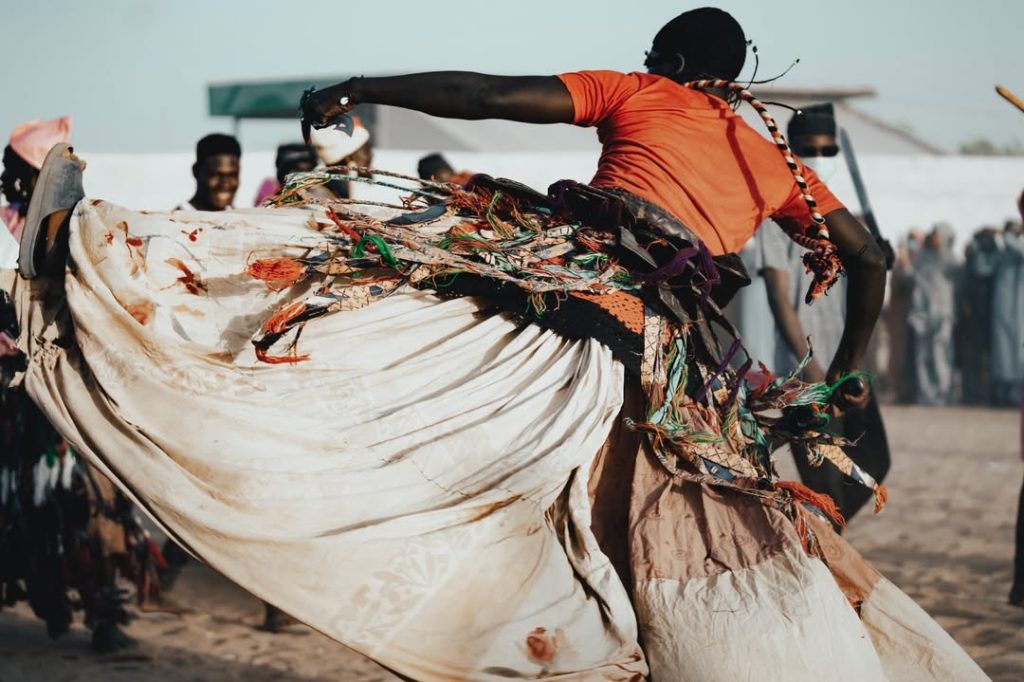
Wrestling and boxing: Traditional sports showcase bravery and physical strength.
Women play an important role by cheering, singing, and performing cultural dances, helping preserve traditions passed down through generations.
ALSO READ: People in This African Country Talk to Birds to Help Them Hunt
Biggest highlight of the 2026 Argungun festival
An official holds a fish caught during the Argungu Fishing and Cultural Festival in Argungu Town, Kebbi State, in northwest Nigeria, on February 14, 2026. (Photo by TOYIN ADEDOKUN / AFP)
The 2026 edition, the 61st in its modern form, which was held from February 11th to 14th, drew thousands of visitors, fishermen, and tourists from across Nigeria and beyond.
The main fishing competition remained the centrepiece of the festival. This year, Abubakar Usman from Maiyama Local Government Area emerged as the winner after catching a massive 59-kilogram fish at the Matan Fada River.
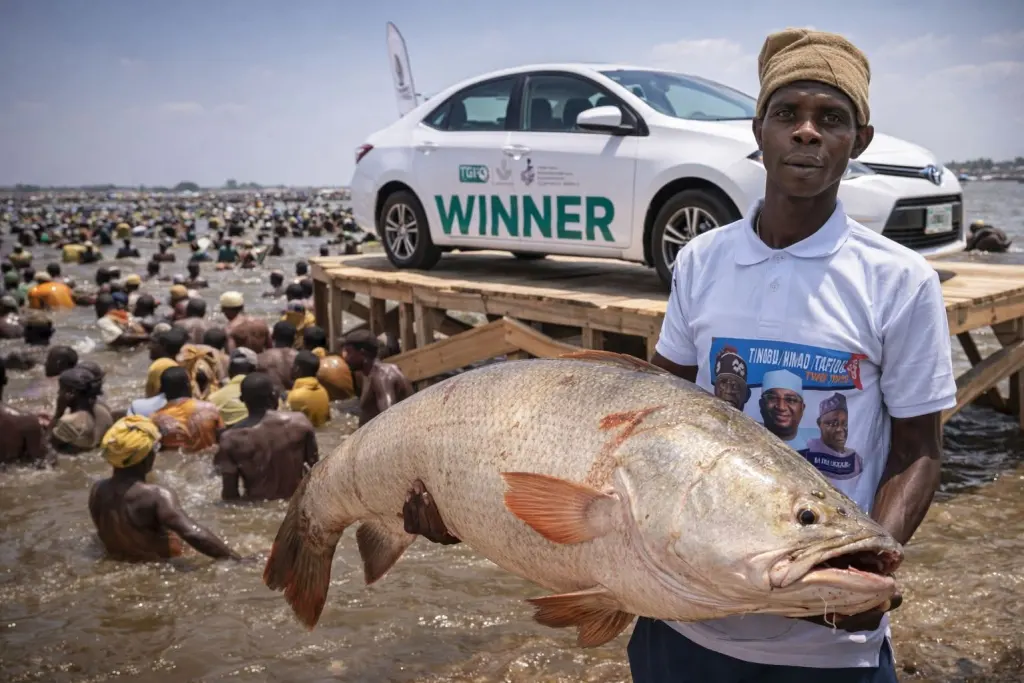
His catch earned him the grand prize, which includes two brand new saloon cars, sponsorship to Saudi Arabia for the next Hajj, and ₦1 million in cash.
Other top winners included:
- Abdullahi Garba from Argungu, who came second with a 40 kg fish, got 1 brand-new saloon car, Hajj sponsorship, and ₦1 million in cash.
- Nasir Garba and another contestant, who tied for third place with a 33 kg fish each, got a brand new motorcycle and ₦750,000 naira each.
The Argungu Festival represents unity, peace, and cultural identity. It also boosts tourism and brings economic benefits to Kebbi State.
Today, the festival stands as one of West Africa’s most iconic cultural events, as it also helps preserve traditional fishing techniques and cultural practices.
About The Author