



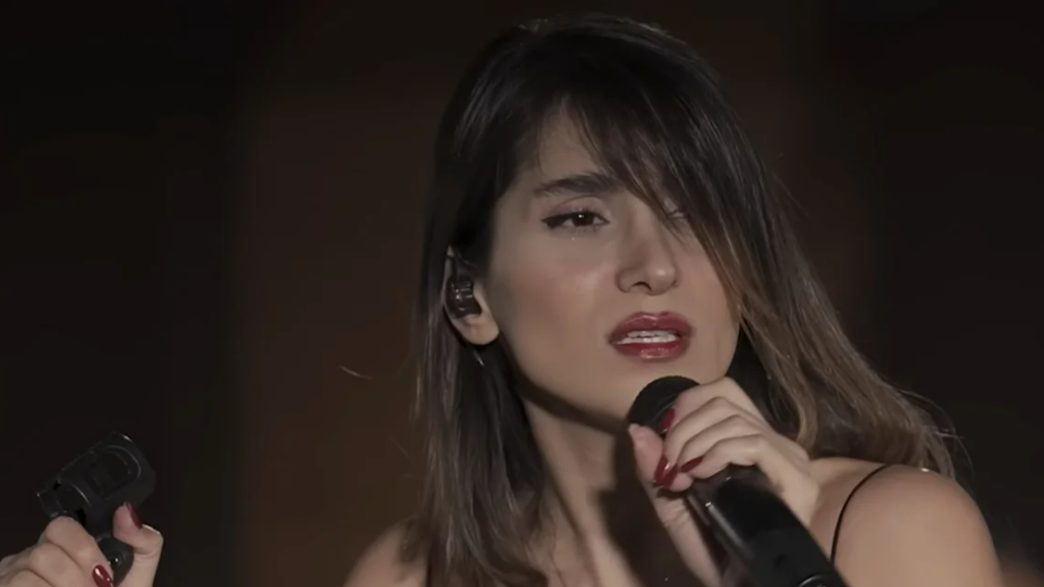
Iranian singer Parastoo Ahmadi and four members of her production team have received 74 lashes each after authorities punished them over a concert video in which she performed without the mandatory hijab.
Iranian authorities carried out the flogging in the city of Qom on Monday, November 23, following a court ruling against the 29-year-old singer and her collaborators, according to her lawyer and reports from BBC and Reuters.
The punishment stems from a December 2024 YouTube performance in which Ahmadi sang in a sleeveless dress without covering her hair, accompanied by male musicians. The performance attracted millions of views and sparked a legal case that has now culminated in the corporal punishment of the singer and four members of her team. 
But beyond the punishment that has made headlines around the world, who is Parastoo Ahmadi, and how did a singer from northern Iran become a symbol of defiance against restrictions on women and artistic expression?
Who is Parastoo Ahmadi?
Parastoo Ahmadi is an Iranian singer and musician born in April 1997 in Nowshahr, a city in the Mazandaran Province of northern Iran.
She developed an interest in music early, studying vocal techniques and traditional and folk music from her teenage years. Ahmadi later graduated in film directing from Soore University in Tehran, combining an artistic background that extends beyond music.

SEE ALSO: Who Is Greene Da’monte Khiree, The US Basketball Player Arrested With Cannabis in Nigeria?
Her musical style draws from Iranian traditional music and Mazandarani folk songs, while some of her performances have carried political and social messages.
Ahmadi became more widely recognised during Iran’s 2022 protest movement, which erupted after the death of Mahsa Amini in police custody following her arrest over alleged hijab violations.
During the protests, Ahmadi performed Az Khoon-e Javanan-e Vatan (From the Blood of the Youth of the Homeland), a patriotic song that resonated with protesters and drew attention to her music.
The concert that brought Parastoo Ahmadi international attention
On December 11, 2024, Parastoo Ahmadi livestreamed what she described as an “imaginary concert” from the historic Deir-e Gachin Caravanserai near Qom.
She performed without an audience, wearing a sleeveless black dress and leaving her hair uncovered. Accompanied by male musicians, she sang traditional and contemporary Iranian songs in a performance that challenged restrictions on women’s public singing and mandatory hijab rules.
Ahmadi introduced the performance by expressing her desire to sing for the people she loved, describing singing as a right she could not give up.
The livestream quickly gained millions of views, drawing praise from viewers who saw it as an act of courage and defiance.
Why Iran flogged Parastoo Ahmadi
Iranian authorities opened a case against Ahmadi and members of her production team following the concert. Police arrested her and some of her collaborators days after the performance, although they were later released on bail.
In June 2026, a criminal court in Qom convicted Ahmadi and eight other people involved in the production. The court accused them of offending public decency by producing and publishing content it considered obscene and immoral.
The defendants received 74 lashes each, a two-year ban on artistic activities and a two-year travel ban. An appeals court upheld the sentences in September, paving the way for authorities to enforce them.
On November 23, 2026, authorities carried out the flogging against Ahmadi and four male members of her team – musicians Soheil Faghih-Nasiri, Amin Taheri and Amirali Pirnia, and producer Mohsen Lashkari – according to her lawyer and reports from Iranian media.
Human rights groups condemn flogging
The punishment has renewed condemnation of Iran’s treatment of women and artists.
Human rights groups describe flogging as cruel, inhuman and degrading punishment, while critics say authorities use harsh penalties to intimidate people who challenge restrictions on expression and personal freedoms. The case also highlights the risks Iranian women face when they challenge compulsory hijab rules or restrictions on their participation in music and public life.
Ahmadi’s case also recalls the wider Woman, Life, Freedom movement, which followed Mahsa Amini’s death in 2022 and brought international attention to Iran’s restrictions on women.
For many supporters, Parastoo Ahmadi’s story is no longer simply about a singer punished for a performance. It has become a symbol of the struggle for freedom of expression, women’s rights and the ability to create art without fear of state punishment.
ALSO READ: Meet British-Ghanaian Singer RAYE With 11 Nominations for the 2027 Grammy Awards

About The Author