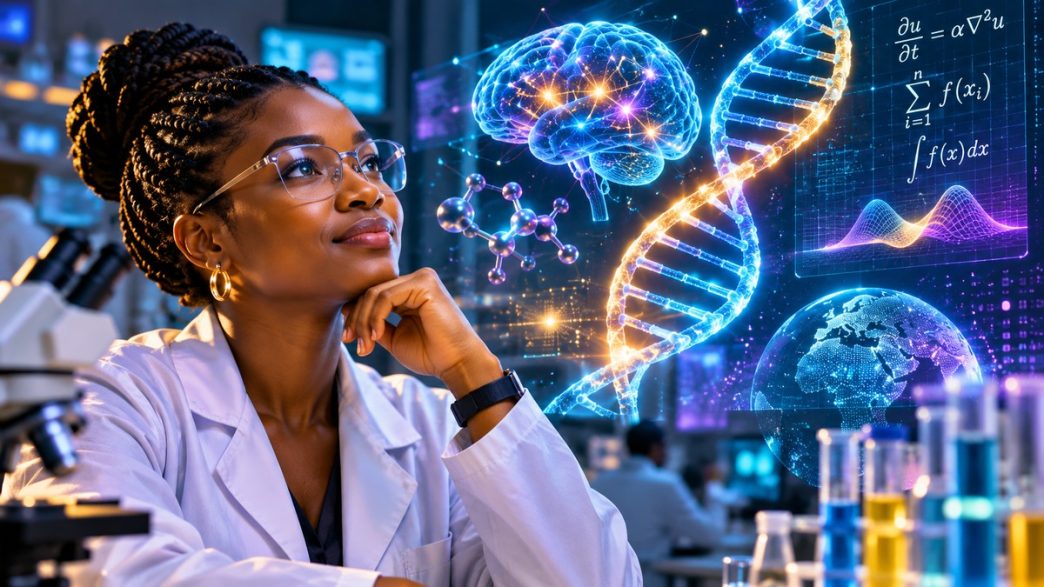
For generations, scientists have devoted years to questions that seem to have no easy answers. Some involve understanding diseases, decoding the human genome or proving complex mathematical theories. Now, AI scientific discovery is changing how researchers approach these difficult problems, helping them examine enormous amounts of information and uncover connections that might otherwise remain hidden.
Artificial intelligence is no longer just helping scientists organise their work. In some cases, it is suggesting new research directions and contributing to breakthroughs that once appeared out of reach.
AI scientific discovery is opening new doors in biology
One remarkable example emerged in October 2026, when OpenAI, PerturbAI and Scripps Research reported an experiment involving thousands of AI agents. 
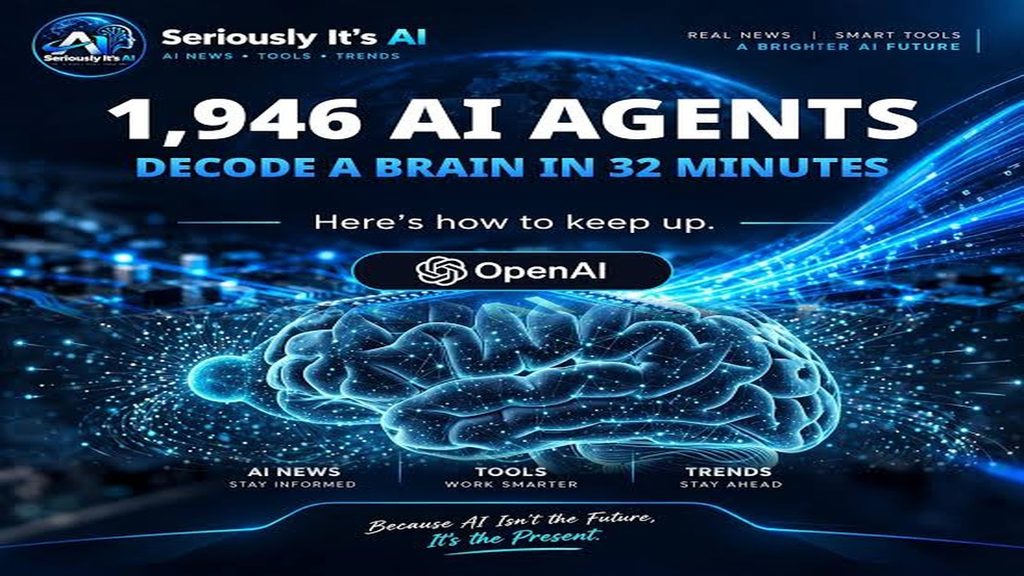
The researchers used these agents to analyse existing experimental data from millions of mouse brain cells. Their task was to identify relationships between disrupted genes, changes in brain cells and scientific findings that could help researchers understand diseases such as Alzheimer’s and Parkinson’s.
The analysis took just 32 minutes.
According to the research team, carrying out comparable human analysis and literature reviews one gene disruption at a time could take months or even a year.
More importantly, the AI agents identified unexpected biological connections, including a possible relationship between cholesterol regulation and neurodegeneration.
These findings do not represent a cure for either disease. Instead, they give scientists promising leads to investigate through further experiments.
READ ALSO: New AI Tool Can Predict Cancer Survival Chances Using Selfies in Groundbreaking Study
Understanding the human genome with greater precision
Another development came from Google DeepMind in November 2026.
Its new model, AlphaGenome 2, is designed to help researchers understand how variations in DNA affect different types of human cells.
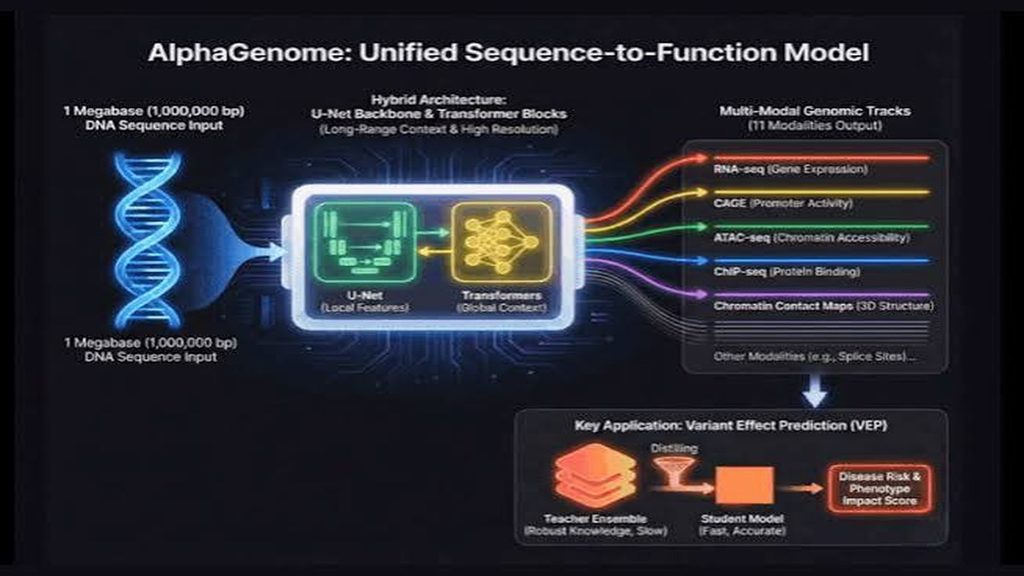
Every cell in the human body carries the same DNA blueprint. However, different cells activate different genes to perform their functions. Understanding how genetic variations influence this activity is essential to investigating inherited conditions and complex diseases.
AlphaGenome 2 was trained using more than 100 million individual cell profiles across 68 tissues. It can predict how DNA variations affect specific cell types, helping researchers identify genetic changes that might otherwise escape attention.
The model is available for non-commercial research through an API, while commercial research access is in private preview.
This is an important development because understanding a genetic variation is not always enough. Scientists also need to know which cells it affects and how that effect contributes to disease.
Can AI tackle mathematical problems once considered impossible?
The possibilities extend beyond biology.
In September 2026, OpenAI announced that an internal AI system had produced a proposed solution to the famous Navier–Stokes existence and smoothness problem.
The problem concerns equations describing how fluids move. Mathematicians have struggled with the question for roughly 90 years, and it is one of the prestigious Millennium Prize Problems.
OpenAI reported that its system generated a proof and provided a formalisation for verification.
However, the announcement also attracted controversy and scrutiny within the mathematical community. Questions about the proof, its origins and the recognition of human contributions have made the development more complicated than a simple declaration that AI has solved mathematics.
Nevertheless, it has intensified discussions about how advanced AI systems could contribute to mathematical research.
AI is helping verify complex technology
Scientific discovery is not limited to laboratories and mathematical equations. It also includes making the technology people depend on safer.
In November 2026, Google DeepMind introduced AlphaProof Code, an AI-assisted framework that helped researchers formally verify key security properties of the code underlying Signal’s cryptographic protocol.

The team reported generating millions of lines of machine-checked proof code.
Formal verification allows researchers to establish, mathematically, whether software satisfies specified security requirements. Traditionally, this work can demand years of specialist effort.
The development demonstrates how AI agents can work alongside human experts to examine complicated systems more extensively.
READ ALSO: The Human Body, Enhanced: Could Robotic Limbs Change the Way We Live and Work?
Does this mean scientists will become unnecessary?
Not at all.
AI can analyse data, identify patterns and suggest explanations. However, a promising prediction is not automatically a scientific discovery.
Researchers still need to examine the evidence, test hypotheses, repeat experiments and determine whether results hold up under independent scrutiny.
This distinction is particularly important in medicine. A computer-generated prediction about a disease does not automatically become a treatment. It must pass through rigorous scientific testing and, where relevant, clinical trials.
There are also concerns about errors, biased datasets, transparency and the cost of developing advanced AI systems.
A new chapter in scientific discovery
The growing role of AI scientific discovery raises an exciting possibility: researchers may soon investigate questions that previously demanded more time and resources than they could reasonably commit.
AI could help scientists explore more possibilities, identify overlooked connections and decide which experiments deserve attention.
Yet the most meaningful progress will probably come from collaboration between human expertise and machine intelligence.
The question may no longer be whether AI can contribute to scientific discovery. It may be how responsibly we can use its growing capabilities to answer questions that have challenged humanity for generations.

About The Author