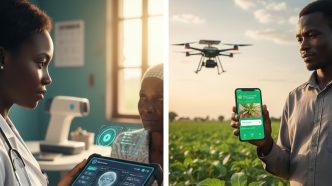
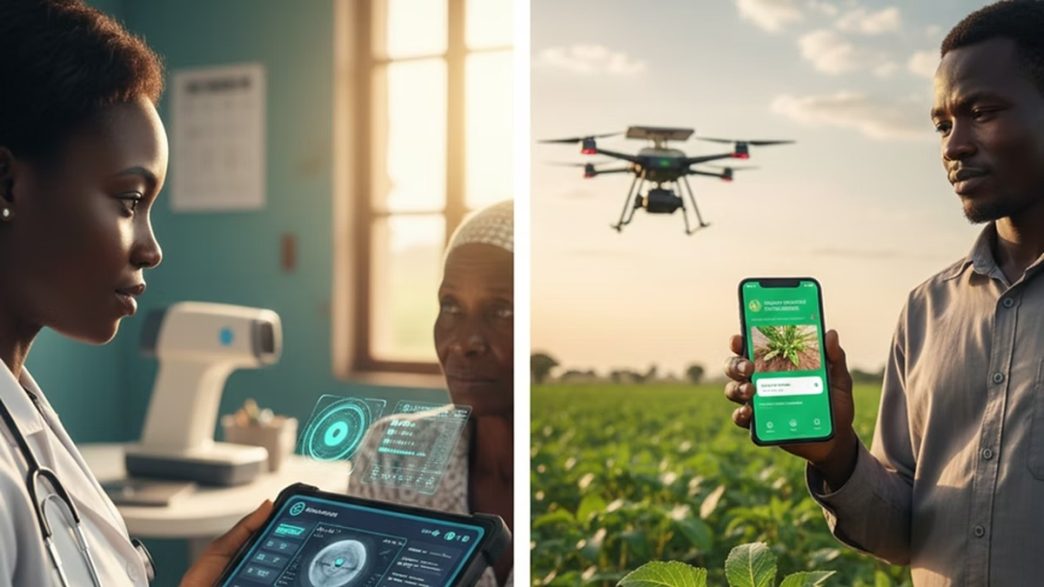
Artificial intelligence has become part of everyday conversations. From writing emails and answering questions to creating images and summarising documents, tools such as ChatGPT have introduced millions of people to its possibilities. However, there is much more happening beyond chatbots.
Across the world, innovators are building AI-powered solutions that can help farmers improve their harvests, support healthcare workers, break language barriers and even process information in space. Interestingly, some of these exciting developments are emerging from Africa.
These innovations show that artificial intelligence is no longer just about what machines can say. It is increasingly about what they can do. 
AI innovations in Africa are solving everyday problems
One of the most interesting developments came on November 11, 2026, when Google announced the first 10 startups selected for its Africa Applied AI Lab.
The companies were chosen from thousands of applications across more than 45 African countries. They will receive early access to Google’s AI models, technical mentorship and guidance from venture capital partners to help develop their products.
What makes this initiative particularly interesting is the variety of problems these startups are tackling.
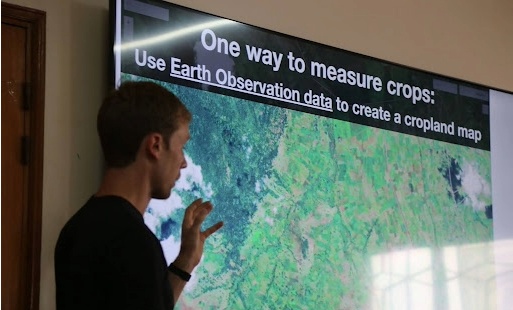
Take Tolbi, a Senegalese technology company combining satellite imagery with voice guidance to help smallholder farmers improve their yields. Its technology can analyse images of farmland and provide farmers with advice through voice messages, including when to water and harvest their crops.
In Uganda, Crane AI Labs is developing offline AI tools for healthcare workers and schools. Its technology is designed to run on affordable mobile phones without requiring an internet connection.
For communities where connectivity remains a challenge, this could make digital assistance more accessible.
AI is breaking language and accessibility barriers
Language is another area where AI innovations in Africa could make a significant difference.
Many artificial intelligence systems struggle to understand African accents, local languages and the natural way people switch between languages during conversations.
Nigerian startup Intron is working to address this challenge. It develops speech recognition technology designed to understand African accents and code-switched speech. Its applications include healthcare and enterprise services.

Meanwhile, Viamo is taking accessibility a step further. The Pan-African company is bringing generative AI to people who do not own smartphones.
Through ordinary phone calls, users can ask questions in local languages and receive spoken responses. This means someone with a basic mobile phone can access AI assistance without downloading an application or purchasing an expensive device.
Imagine a rural resident accessing useful information simply by dialling a number. That is the kind of practical innovation that could make technology more inclusive.
From WhatsApp businesses to satellites in space
Not all AI innovations focus on healthcare and agriculture. Some are transforming how businesses operate, while others are exploring possibilities beyond Earth.
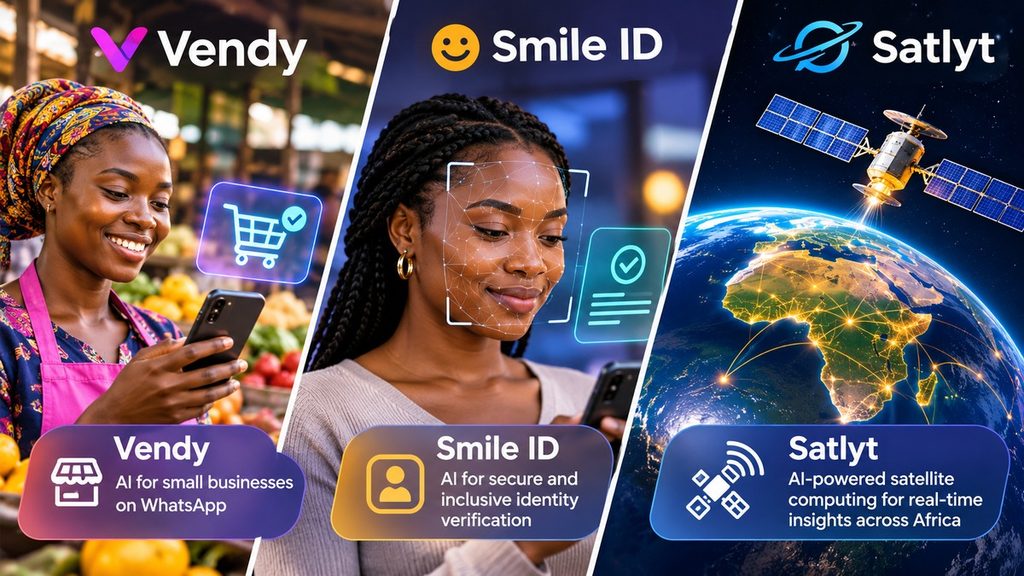
Nigerian startup Vendy allows businesses to operate storefronts and accept payments directly through WhatsApp. This gives customers a simpler way to interact with businesses without leaving a familiar messaging platform.
Another Nigerian company, Smile ID, uses computer vision to verify identities and help financial institutions onboard customers securely.
Then there is Satlyt, a Kenyan startup exploring satellite computing. Its technology aims to turn satellites into connected computing nodes, allowing data to be processed in orbit rather than sending every piece of information back to Earth.
These examples demonstrate how artificial intelligence can support different industries, from small businesses and financial services to advanced space technology.
AI innovations beyond Africa
The movement is not limited to African startups.
Around the world, researchers and technology companies are exploring ways to use AI in robotics, healthcare, scientific research and industrial operations.
Robotics developers are building machines that can perform physical tasks in warehouses, factories and other workplaces. Scientists are also using AI to analyse biological information and investigate complex diseases.
In addition, specialised AI agents are being developed to carry out tasks across different software systems, reducing the need for people to handle every step manually.
The direction is becoming clear. Artificial intelligence is moving beyond responding to questions towards helping people complete practical tasks.
READ ALSO: New AI Tool Can Predict Cancer Survival Chances Using Selfies in Groundbreaking Study
The challenges behind the excitement
Despite these remarkable developments, the growth of AI comes with important concerns.
Privacy, data protection, affordability and reliability remain significant issues. AI systems can make mistakes, produce misleading information and reflect biases in the data used to train them.
For African innovators, there is also the challenge of developing solutions that can operate within local realities, including limited electricity, unreliable internet connections and the cost of computing infrastructure.
Therefore, building useful AI requires more than technical expertise. It also demands responsible development, local understanding and proper human oversight.
READ ALSO: How Google’s Gemini AI Hacked Three Real Companies During Security Test
The future of AI is bigger than chatbots
The extraordinary thing about these developments is not simply that machines are becoming more intelligent. It is that people are finding new ways to use that intelligence to address problems around them.
A farmer receiving timely agricultural advice, a nurse accessing offline assistance or a business owner serving customers through WhatsApp may find these innovations far more valuable than another chatbot.
As AI continues to evolve, some of its most meaningful contributions may come from solutions that people can use in their everyday lives.
Perhaps the real question is no longer what artificial intelligence can tell us, but what we can build with it.

About The Author