A photograph from a final-year project defence at the University of Lagos has triggered one of the more pointed debates about privilege and institutional standards in Nigeria.
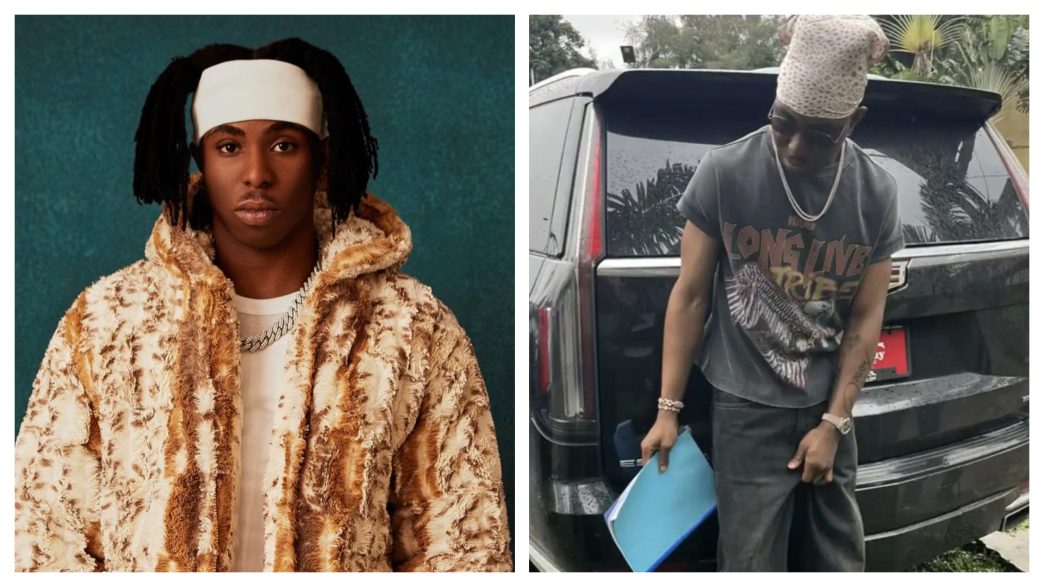
The student at the centre of it is Folarin Odunlami, known professionally as Fola, an Afrobeats and Afro-K&B singer with a growing following among younger Nigerian audiences. In late July 2026, Fola defended his final-year project in the Department of Economics Education at the Faculty of Education, UNILAG.
The Photo That Started It
The viral image shows Fola standing alongside his classmates after the defence, and the contrast was immediate and impossible to ignore. 
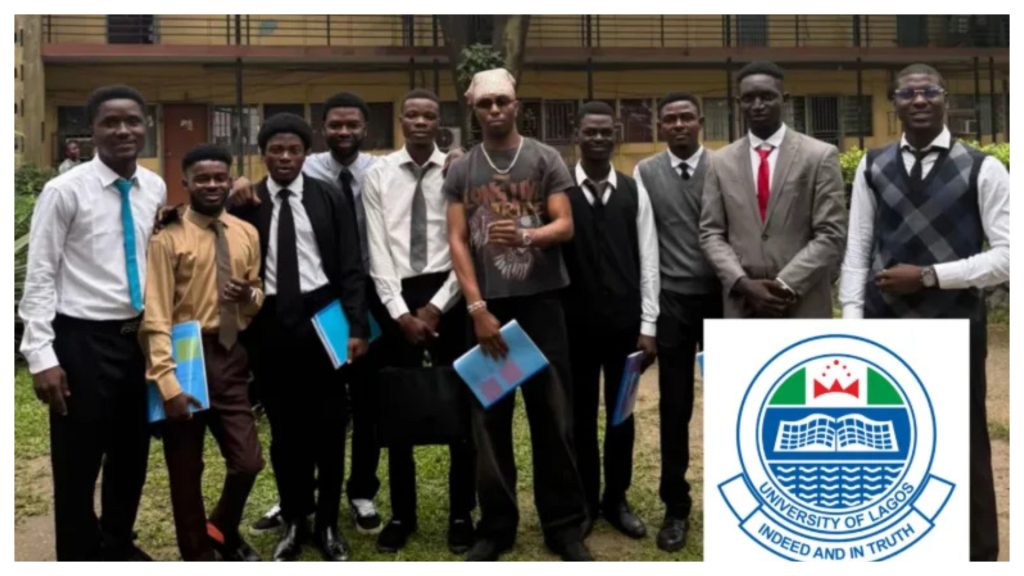
His classmates dressed in formal corporate wear (shirts, ties, suits, and vests) holding their blue project files. Fola stood among them in baggy trousers, a graphic T-shirt, a scarf, sunglasses, chains, and accessories. Reports also circulated that he arrived on campus in a Cadillac Escalade.
The image spread quickly with a caption that framed the conversation directly: ‘A student showed up to his project defence in casual wear because he is rich. What are we doing to this generation?’

The post questioned the responses of the authorities who allowed the defence to proceed, adding: ‘Look at his classmates. Instead of seeing the dysfunction with the authorities allowing him to defend his project dressed like this, people are hailing him. What will it cost this young man to wear a shirt and tie like his mates for just two to three hours?’
The Backlash
The loudest criticism centred on the perception that Fola’s celebrity status and wealth led to treatment other students do not receive.
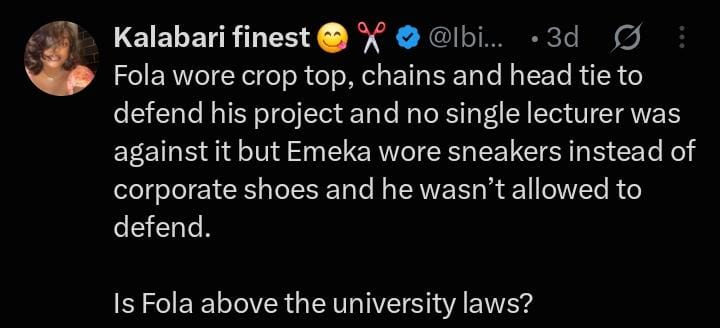
One widely shared comment read: ‘Fola wore a crop top, chains and head tie to defend his project and not a single lecturer was against it, but another student wore sneakers instead of corporate shoes and wasn’t allowed to defend. Is Fola above the university laws?’
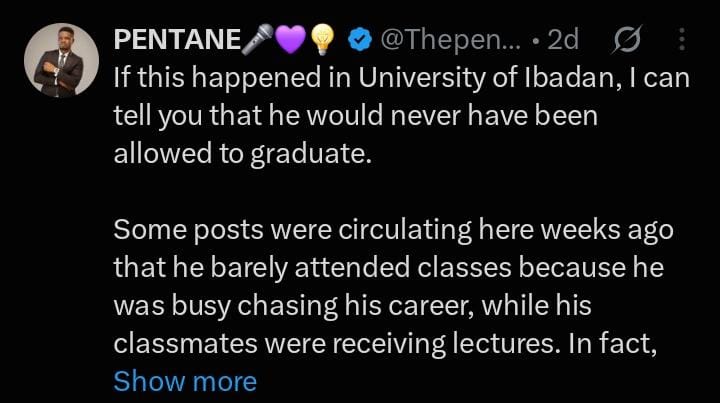
Another user claimed that such an appearance would not have been tolerated at comparable institutions: ‘If this happened at the University of Ibadan, I can tell you that he would never have been allowed to graduate.’
Several commenters alleged that other students had previously been turned away from their defence sessions over dress code violations, making Fola’s case appear to represent an unequal application of the rules.
SEE ALSO: Do You Know the Real Names of Afrobeats Artists and Their State of Origin?
The Defence
Others pushed back on the criticism, directed at both the public reaction and the assumption that a rule was broken.
One comment made a point that added nuance to the conversation: ‘It’s not even about his money or fame. The truth is, wearing corporate attire for project defence isn’t a strict requirement in many schools for courses that are not professional. I don’t think UNILAG enforces it that seriously. It’s really not that unusual.’
The argument being made here is that the outrage may be partly based on an assumption about rules that are not uniformly written or enforced, and that applying a standard retroactively to Fola’s case, simply because of how he looks or what he drives, carries its own problems.
SEE ALSO: Meet Nigeria’s 10 Meta AI Circle Members
The Bigger Question
What the photo has really surfaced is something Nigerian universities have long navigated quietly, which is the relationship between institutional rules and the people wealthy or famous enough to test them.
If the dress code was clear and was waived for Fola because of who he is, that is a problem of unequal enforcement that deserves to be named directly. If the dress code is not formally enforced for non-professional courses and was never going to apply here regardless of who the student was, then the conversation is really about what people expect from public figures; and whether fame changes the standard others hold you to even when no rule has been broken.
Either way, the fact that one image of a student in chains and sunglasses at a university defence has prompted this level of conversation says something about how closely Nigerians are watching the spaces where wealth, education, and fairness meet.
As of the time of reporting, the University of Lagos has made no official statement confirming that any dress code was violated or that Fola received any form of special treatment. No lecturer or faculty official from the Department of Economics Education has spoken publicly about the incident.

About The Author